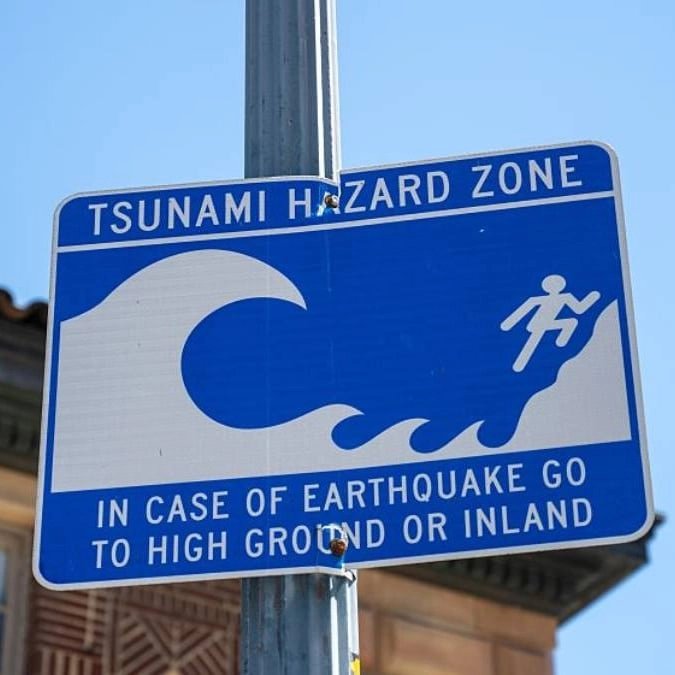
Scientists issue warning over 1,000ft ‘mega tsunami’ that could submerge US states and drown millions in minutes


Planet Earth is changing in front of our very eyes, and in case you haven't realized, that's not always for the best.
While we're living in a technologically advanced era where the likes of artificial intelligence could take the human race into a whole new chapter, it seems we've left our own little third rock from the Sun to suffer.
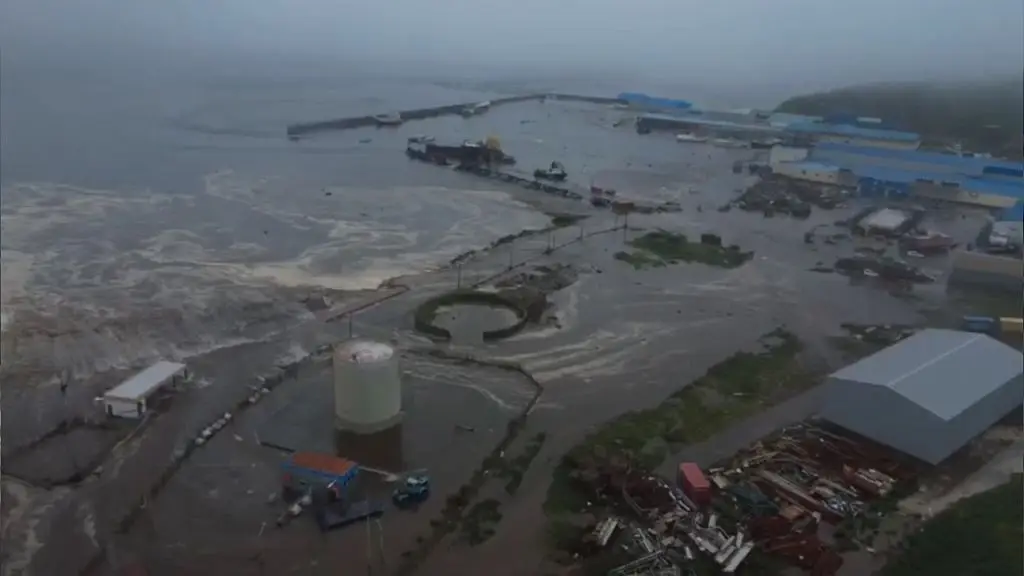
Amid continued fears that climate change is affecting Earth faster than scientists first thought, there are continued incidents of extreme weather, ranging from California wildfires to Alaskan floods, Ring of Fire volcanoes blowing their top, to Russian Earthquakes triggering tsunamis in America.
Major hubs like New York and Houston are reportedly the most at risk of these climate change catastrophes, and now we have another to worry about.
Advert
While we previously reported on a so-called 'mega tsunami' with 100ft waves, that could be a mere drop in the ocean compared to the latest predictions.
We know the Cascadia Subduction Zone is a cause for concern, with the North American fault line stretching 1,000 kilometers from Canada's northern Vancouver Island to Cape Mendocino in California.
Fears about 100-foot waves have since been eclipsed by concerning foreshadowing of waves that are 10 times the size. New research was led by geoscientist Tina Dura, with Virginia Tech publishing a paper in the Proceedings of the National Academy of Sciences. It estimates that there's a 15% chance of the Cacadia Subduction Zone being hit by a magnitude 8.0 or greater earthquake in the next 50 years.
Stress has been building for the past few centuries as the oceanic Juan de Fuca Plate is forced beneath the North American Plate. If a megastunami is triggered by an earthquake of this size, cities including Seattle and Portland (with millions of residents) could be overwhelmed in minutes.
Most concerning, this kind of natural disaster could see coastal land drop by as much as 6.5 feet. Scientists reiterated this would likely "happen within minutes, leaving no time for adaptation or mitigation," which further amps up the idea of a catastrophic death toll.
The Federal Emergency Management Agency suggests the quake itself could lead to 5,800 deaths, with the resulting tsunami claiming another 8,000, but if these major cities are hit like some predict, it would surely be much higher.
Speaking to BBC Science Focus, Dura explained: "We talk about climate-driven sea level rise, which is occurring at three to four millimetres a year, and that does eventually add up.
"But here we’ll have two metres of sea level rise in minutes. Why aren’t we talking about that more?”
The CSZ is capable of producing quakes above magnitude 9.0 every 450 to 500 years, as historical records point to the last one occurring on January 26, 1700. Contemporary reports place it anywhere between 8.7 and 9.2, proving just how deadly a modern quake could be.
For those who suggest the idea of 1,000ft waves is being overhyped by scaremongers, others remind us of the 1958 surge at Alaska's Lituya Bay, with waves said to have topped 1,700 feet as the local shoreline was completely reshaped.
Mother Nature has given us enough reasons to watch our backs throughout history, but hopefully, 1,000-foot waves and mega tsunamis will remain ideas for Hollywood movies.