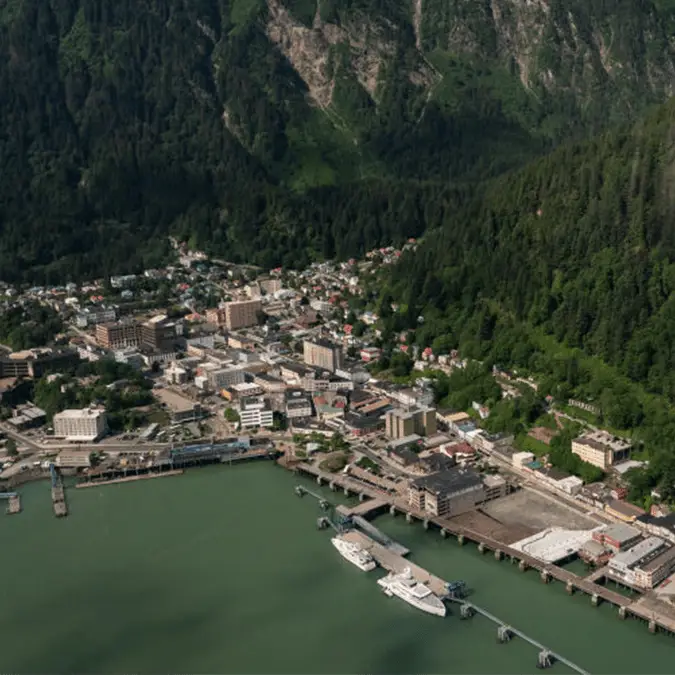
Citizens fear Alaskan capital could be swallowed under water following major glacier outburst


Alaska's capital city is currently battling the forces of Mother Nature, with a massive glacier outburst threatening to flood Juneau as water has already started flowing onto its streets. Juneau's 31,000 residents are currently under evacuation warnings as authorities battle to keep them safe.
Thankfully, newly installed river barriers have managed to hold back record levels of snowmelt and rainwater that are poised to flood the Alaskan capital.
If active volcanoes weren't enough to worry about, Juneau's National Weather Service (NWS) office issued the warning about glacial outburst water flowing into the Mendenhall River.
Homes are at risk due to water escaping from the basin that's dammed by the Mendenhall Glacier. Spanning a whopping 21.9 kilometers, the Mendenhall Glacier is a popular tourist attraction that's been monitored by the Juneau Icefield Research Program since 1942. The glacier is said to have retreated 4km since the Mendenhall Lake was created in 1929 and 5km since 1500, showing how the trend is continuing at an exponential rate.
Advert
Since 2011, there have been periodic glacial floods from the Suicide Basin and into the downstream Mendenhall River, remembered for a notable release in 2023 that destroyed two buildings.
Over the past two summers, around 300 homes have been flooded, with increased worries about this becoming an annual tradition.
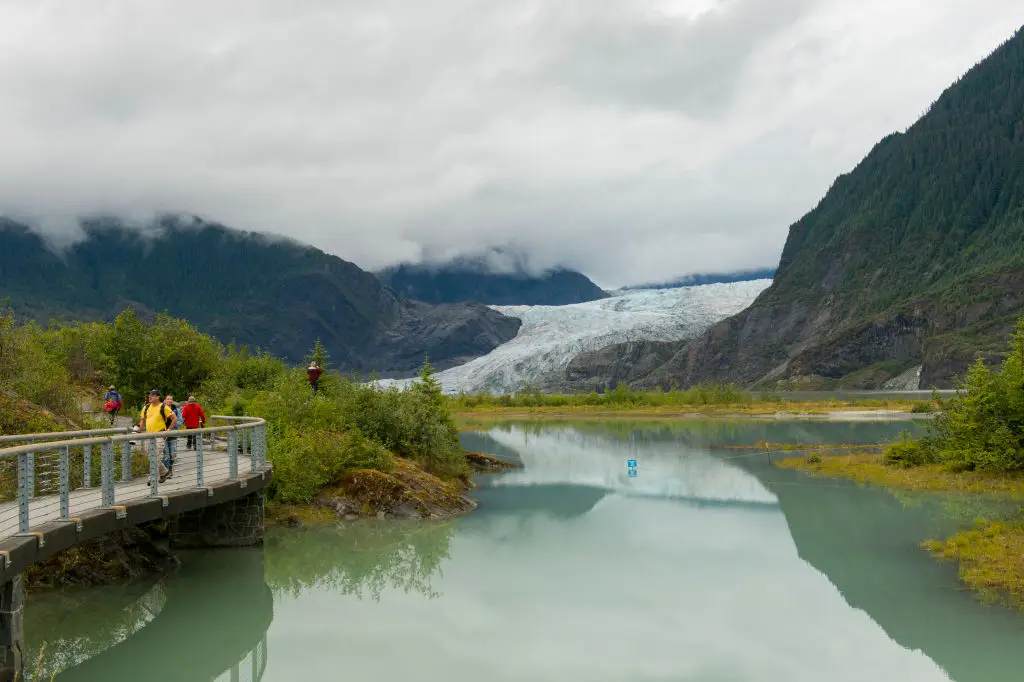
Praising the installation of the barriers, Juneau city manager Katie Koester said they "really have protected our community" and added: "If it weren’t for them, we would have hundreds and hundreds of flooded homes."
According to the Juneau city website, glacial lake outbursts occur when a lake of melting snow and ice are forced to rapidly drain, comparing it to pulling the plug from a bathtub. When the meltwaters rise to a specific level, they can come over the top of the glacier that typically holds them back.
Although the glacier is located 19km from Juneau, water levels reached 9.85ft on August 13. This was accompanied by messages stating: "Don’t wait, Evacuate TONIGHT." The NWS reiterates that major flooding levels start at 14ft, but by Wednesday morning, they'd climbed to over 16ft.
Speaking in a press conference (via the Juneau Empire), meteorologist Nicole Ferrin explained: "This will be a new record, based on all of the information that we have."
This comes after Alaska Governor Mike Dunleavy issued a state disaster declaration at the end of last week, citing the "imminent threat of catastrophic flooding from a glacier lake outburst flood (GLOF)" around Juneau.
The all-important barriers were installed to hopefully prevent widespread flooding. 10,000 'Hesco' barriers are effectively giant sandbags that were put in place to protect over 460 properties.
Some water made it into yards through drains that were installed under the barriers, while trees floating down the flooded river managed to damage others. Ultimately, the fortifications stood strong.
That's all well and good for now, but with Alaska’s average annual temperature rising 3.1°F in the past century, and the National Oceanic and Atmospheric Association (Noaa) saying it's warmed twice as fast as the rest of the USA in the last few decades, the state's glaciers are said to be among the fastest-melting in the world.