
Ground breaking new study uncovers weight-loss drugs' 'biggest benefit' from yet


A ground breaking new study has revealed what could be the ‘biggest benefit’ to come from weight loss drugs.
This comes after GLP-1 medication has taken the weight-loss industry by storm in recent years, with millions of people trying out the drug as a way to treat obesity.
While many have shared their success stories with drugs, which come in the form of a weekly injection, some have reported experiencing some pretty nasty side effects.
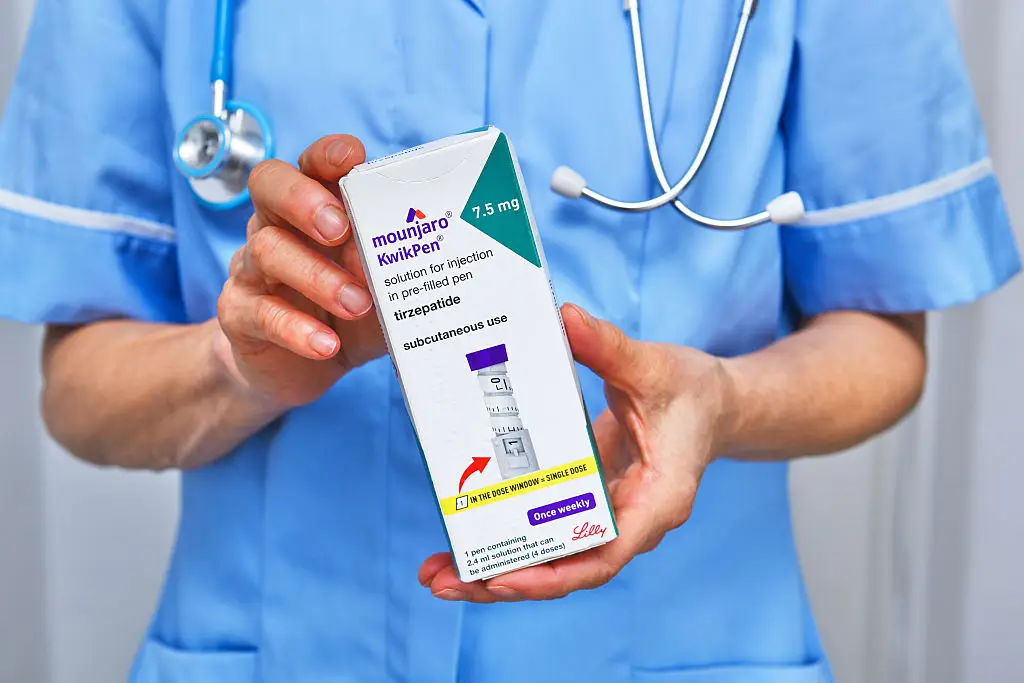
However, a new study suggests that Mounjaro in particular could be linked to an incredible health benefit, with research linking the medication with a decrease in a person’s chances of developing pancreatic cancer.
Advert
In fact, the study in Chicago went on to suggest that Mounjaro can be linked to a roughly 50% lower risk of developing pancreatic cancer over a five-year period.
Speaking to the Daily Mail, Dr Rachna Shroff, who is a gastrointestinal cancer expert, said: “Chronic pancreatitis is a major risk factor for pancreatic cancer. So to see such a significant drop in cancer incidence among people using GLP‑1 drugs is remarkable.”
The findings are still at an early stage, so it is not confirmed exactly how or why the GLP-1 drug might have this impact on pancreatic cancer in particular.
Dr Shroff explained: “The thinking around pancreatitis is that GLP‑1s slow the movement of bile and digestive enzymes to make users feel fuller for longer without having to eat more.
“But if that process slows down too much, problems can occur.”
Dr Shroff went on to say: “So far, there isn’t any real-world data that suggests the average GLP-1 patient is at increased risk of pancreatitis or pancreatic cancer.
“In fact, we are seeing the opposite. There’s now data emerging suggesting the jabs may be protective. If this is the case... that’s a really big deal for a disease that is often diagnosed at a late stage and is notoriously difficult to treat.
“But this is just the tip of the iceberg and we need more research to back up these claims.”
Dr Brian Wolpin, from the Dana-Farber Cancer Institute, added: “There could be some trade-off if there is a higher risk of pancreatitis. But the data I have seen so far has not shown an increase in pancreatic cancer risk among users, giving us hope that these drugs could one day help in the fight against this deadly disease.”
Meanwhile, another study found that the jabs could also help to slow the symptoms of several other types of cancer, including lung, liver, breast and bowel.