
Doctor reveals truth behind 'Ozempic penis' as men claim to experience unexpected side effect


Whatever you want to call it, it seems your pecker, rooster, wang, meat and two veg, trouser snake, pork sword (or the many other slang terms) are giving some of you a major cause for concern.
This concern doesn't come from the leg-crossing fear you'll get a penile fracture this Christmas, but the simple worry about whether size matters.
It might feel like we've also only got one thing on our minds recently, having covered everything from this year's Pornhub trends to which country in the world has (apparently) the biggest average penis size.
Then again, as one wildly varying survey of Americans shows, some of you are growing your noses rather than your Lil' Billy.
Advert
LADbible's 'For F**k's Sake' campaign has been trying to dispel the many myths and stigmas attached to the pornography industry, but with the average 'big d*ck’ skin flick featuring penises that are 32% bigger than the average, it’s no wonder that some are left feeling like they're falling a little 'short' in the dong department.
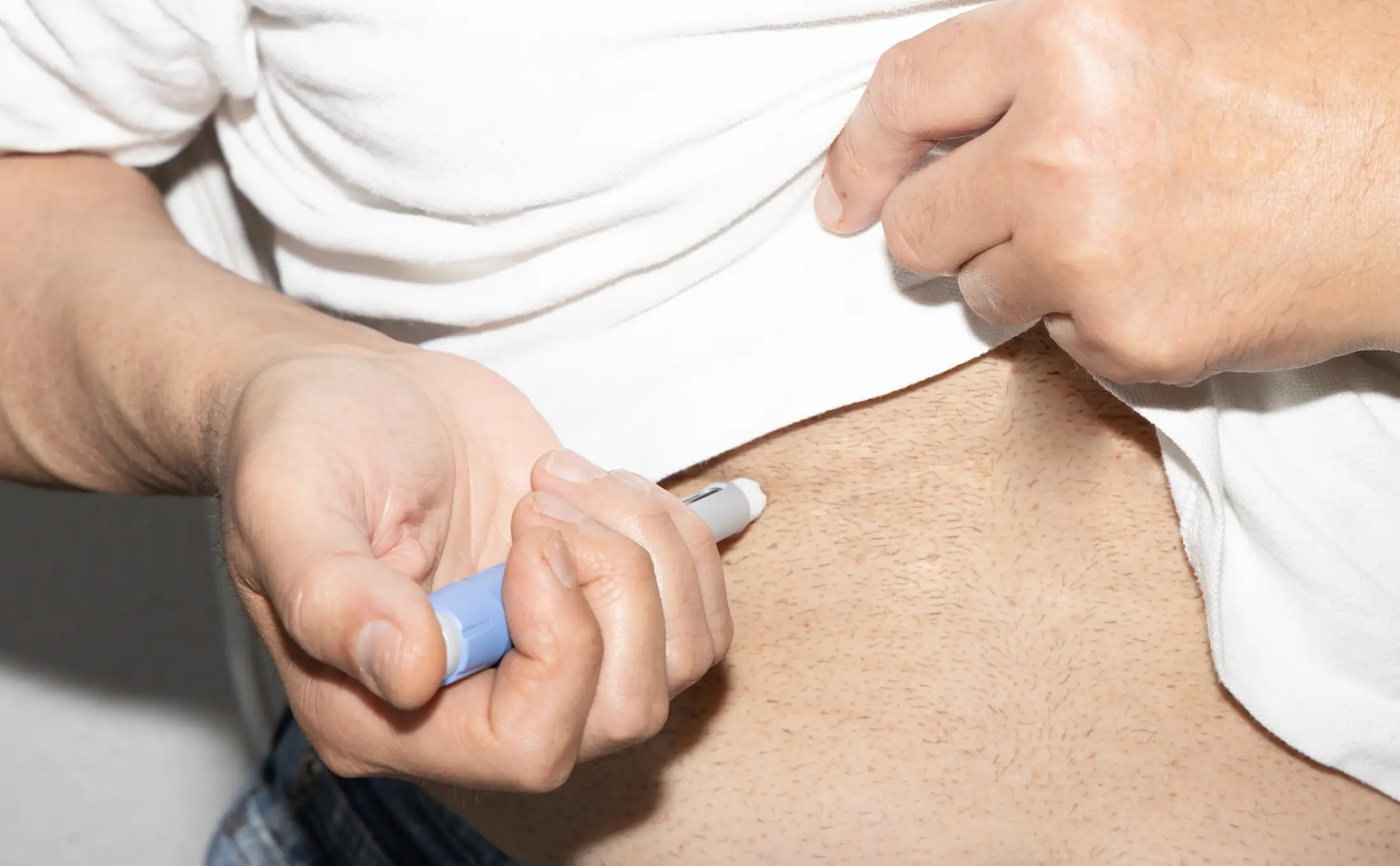
One unexpected way that's apparently adding a few extra centimeters to your Johnsons is due to Ozempic.
While the controversial weight loss drug has been praised for helping hearts and potentially reversing signs of liver damage, there are equal concerns about everything from pancreatitis to a mental health crisis.
We'd like to reiterate that you should always consult a medical professional before thinking about taking the so-called skinny jabs, but according to some men, they've noticed an unexpected growth due to a phenomenon known as 'Ozempic penis'.
Ozempic penis is so prevalent, it's said to have played a part in the average penis size in the United Kingdom rising by 0.46 inches between 2022 and 2024, but is there any actual science to this?
Although Dr. Rena Malik says Ozempic penis is a real thing, it might not be the miracle jab you think it is.
Breaking down exactly what Ozempic penis is on her YouTube channel, the urologist and pelvic surgeon said she's a 'big fan' of GLP-1 injections because obesity is one of "the biggest threats to men's urologic and sexual health, and 73% of the US population is overweight or obese."
In terms of how the likes of Ozempic and Wegovy work, Malik says that patients are losing an average 15% of their body weight, with 86% of those taking semaglutide losing over 5% of their body weight.
She maintains that weight can have cardiovascular benefits and increase blood flow, which includes the blood flowing to your private parts, and in turn, giving better erections.
Another proposed benefit is that losing weight can have a psychological effect, where you might be feeling better about yourself and more sexually virile.
In terms of things growing down there, Malik reiterated it's not the actual medication that's doing it: "When you lose weight, that pubic fat pad or that area above the penis, sometimes called the FUPA, is getting smaller, too.
"The penile shaft that goes deep into the pelvis and turns into the peraneum is becoming more visible. So, you're seeing a lot more of the penis than you did before."
While it sounds like a bit of smoke and mirrors, Malik concludes that it's not as simple as Ozempic and the others being a miracle boner booster.
She notes that some people are growers instead of showers, while other factors, including the temperature of a room, arousal, and stress levels, all come into play. More than this, testosterone levels can fluctuate throughout the day, meaning measurements tend to be inconsistent.
In the end, Malik concluded: "Bottom line, can it help improve length? Absolutely, but not for the reasons you think."
Novo Nordisk, the company that makes both Ozempic and Wegovy, said in a statement: "Patient safety is of the utmost importance to Novo Nordisk, and we recommend patients take these medications for their approved indications and under the supervision of a healthcare professional.
"We continuously collect safety data on our marketed GLP-1 receptor agonists medicines and work closely with the authorities to ensure patient safety. As part of this work, we continue to monitor reports of adverse drug reactions through routine pharmacovigilance.
"We recommend that any patient experiencing side effects while taking GLP-1 RA medicines, including Wegovy®▼and Ozempic® (semaglutide injection), report them to their healthcare provider and via the MHRA Yellow Card scheme: https://yellowcard.mhra.gov.uk/."