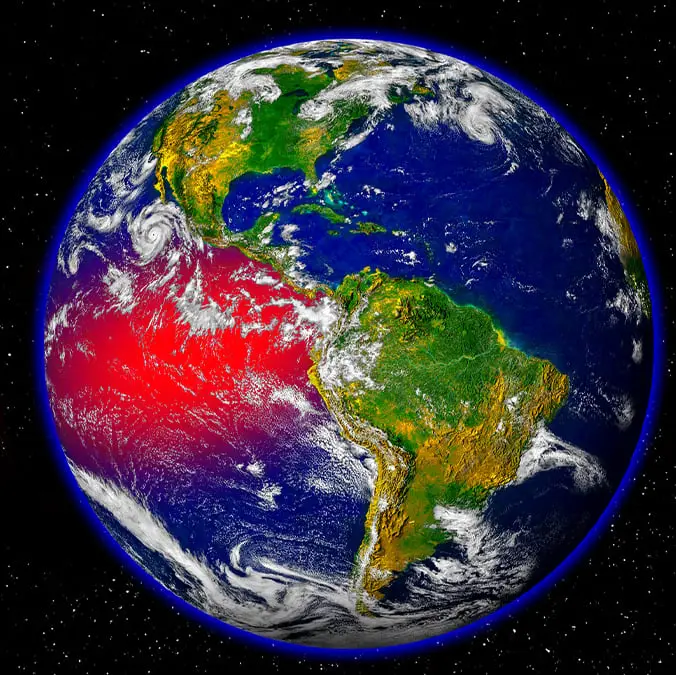
NASA data shows a giant El Niño wave will trigger a record-shattering global event by 2027


With fears growing surrounding an upcoming ‘super El Niño’, NASA data has now been made public through a WMO report which revealed just what we can expect.
An El Niño is a complex climate condition which can have a ripple effect around the world - and the larger the weather event, the more of an impact it will have.
This can lead to global climate disasters including droughts and floods in certain regions.
Now, a report published by WMO (World Meteorological Organization) has found that there is a whopping 91% chance that the global mean near-surface temperature will temporarily exceed 1.5°C above the 1850-1900 mean.
Advert
In case you didn’t know, 1877 was the year that Earth experienced a ‘super El Niño’ that led to one of the deadliest climate disasters in recorded history.
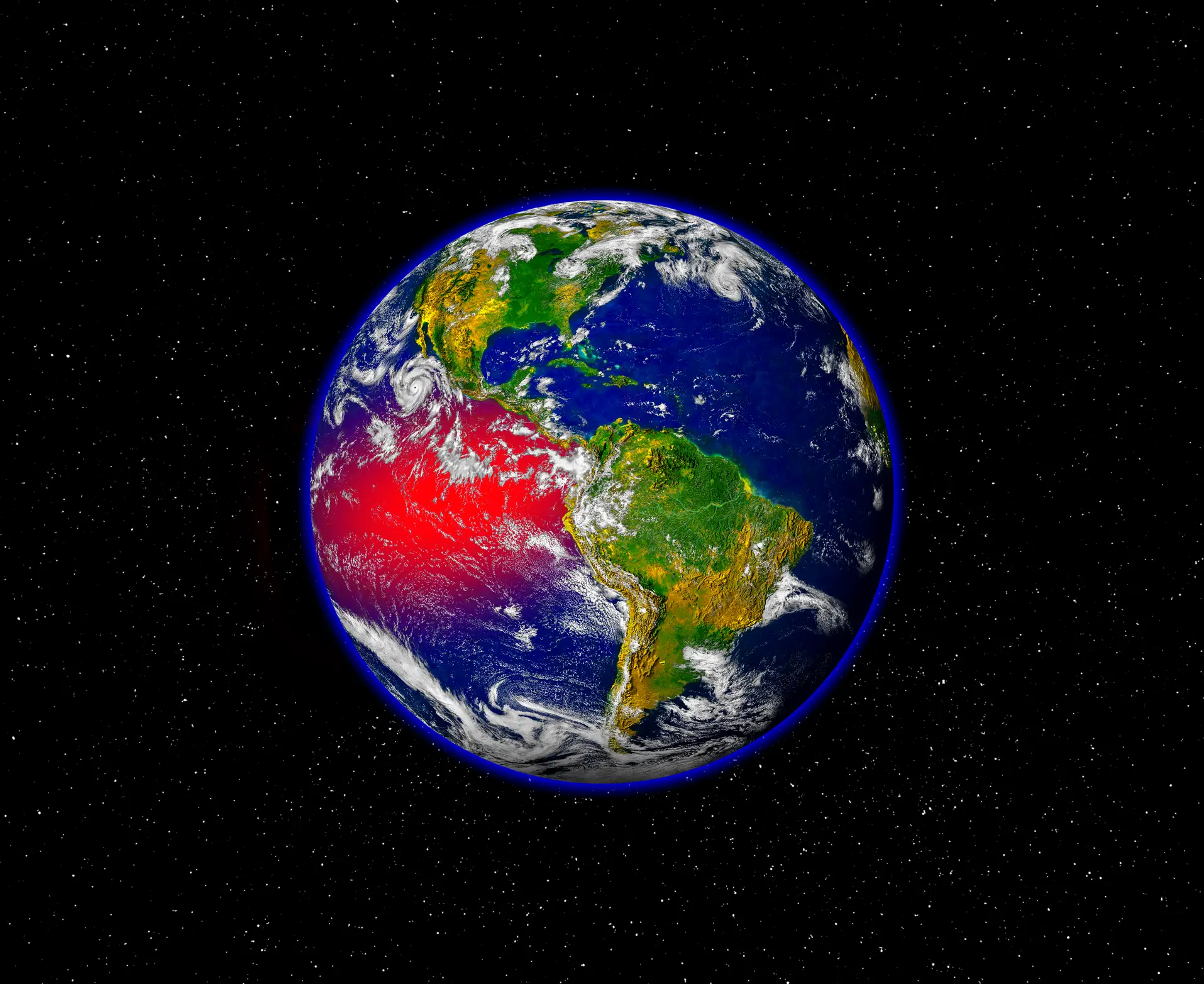
In the report, it goes on to say that the ‘five-year predicted average temperature in the Niño 3.4 region relative to the whole tropics indicates a preference for El Niño conditions, particularly in 2027 and 2028’.
The Niño 3.4 region refers to an area of ocean in the central Pacific that scientists monitor to track the El Niño-Southern Oscillation.
This seems to suggest that 2027 might become the hottest year on record.
Dr Leon Hermanson, who is the report’s lead author, also stated: “There is an El Niño predicted for the end of 2026, which increases the chances of the following year, 2027, being the next record-breaking year.”
NASA released 3D footage on the last ‘super El Niño’
The previous El Niño the world experienced was in 2015 and the footage is available to view thanks to NASA.
The clip was posted to YouTube, and in the video description, NASA explained: “Two back-to-back 3-D visualizations track the changes in ocean temperatures and currents, respectively, throughout the life cycle of the 2015-2016 El Niño event, chronicling its inception in early 2015 to its dissipation by April 2016. Blue regions represent colder and red regions warmer temperatures when compared with normal conditions.”
What actually happens during an El Niño?
The complex climate pattern involves the warming of sea surface temperatures in the central and eastern part of the Pacific Ocean.
When this happens it leads to knock-on effects with weather globally, including the shifting of rainfall patterns, leading to floods and droughts in certain areas.
El Niños have been classified for over 500 years, with the name actually originating from a Spanish fisherman who likened the weather event to the birth of Jesus Christ, as it typically happened around Christmas.