uniladtech homepage
  • News
    • Tech News
    • AI
  • Gadgets
    • Apple
    • iPhone
  • Gaming
    • Playstation
    • Xbox
  • Science
    • News
    • Space
  • Streaming
    • Netflix
  • Vehicles
    • Car News
  • Social Media
    • WhatsApp
    • YouTube
  • Advertise
  • Terms
  • Privacy & Cookies
  • LADbible Group
  • LADbible
  • UNILAD
  • SPORTbible
  • GAMINGbible
  • Tyla
  • FOODbible
  • License Our Content
  • About Us & Contact
  • Jobs
  • Latest
  • Archive
  • Topics A-Z
  • Authors
Facebook
Instagram
X
TikTok
Snapchat
WhatsApp
Submit Your Content
Bizarre side effect of solar panels causes rainstorms in the driest place on Earth

Home> Science> News

Published 10:27 17 Apr 2026 GMT+1

Bizarre side effect of solar panels causes rainstorms in the driest place on Earth

They have an unexpected influence on clouds above

Harry Boulton

Harry Boulton

google discoverFollow us on Google Discover
Featured Image Credit: liu mingzhu via Getty
Climate change
Science
Earth
World News

Advert

Advert

Advert

There's so much that humans have been able to achieve through advanced technology over the years, yet one phenomenon that remains still out of our control is the weather as despite wild claims made by some conspiracy theorists, there's no 'machine' that can make the rain fall or the sun shine.

It certainly would be convenient if that was the case, as not only would it relieve people of the frustration of miserable weather in some unfortunate parts of the world, but fundamentally shape lifestyle and agricultural conditions and perhaps even save lives in the case of extreme weather events.

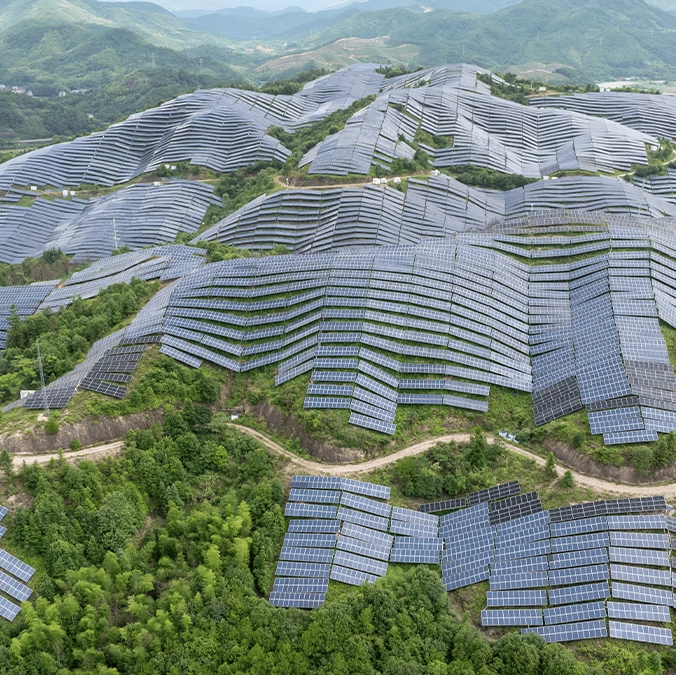
While it might not be quite as prolific or powerful as an all-encompassing weather machine, researchers have discovered an unexpected way to produce rain in one of the world's driest locations — and it all centers around the heat generated by solar panel farms.

As reported by TechRadar, a fascinating discovery has been made by scientists in the United Arab Emirates, as while the Gulf State has little trouble producing oil – something especially valuable right now in the midst of a global crisis – generating enough water is a far more challenging prospect.

Advert
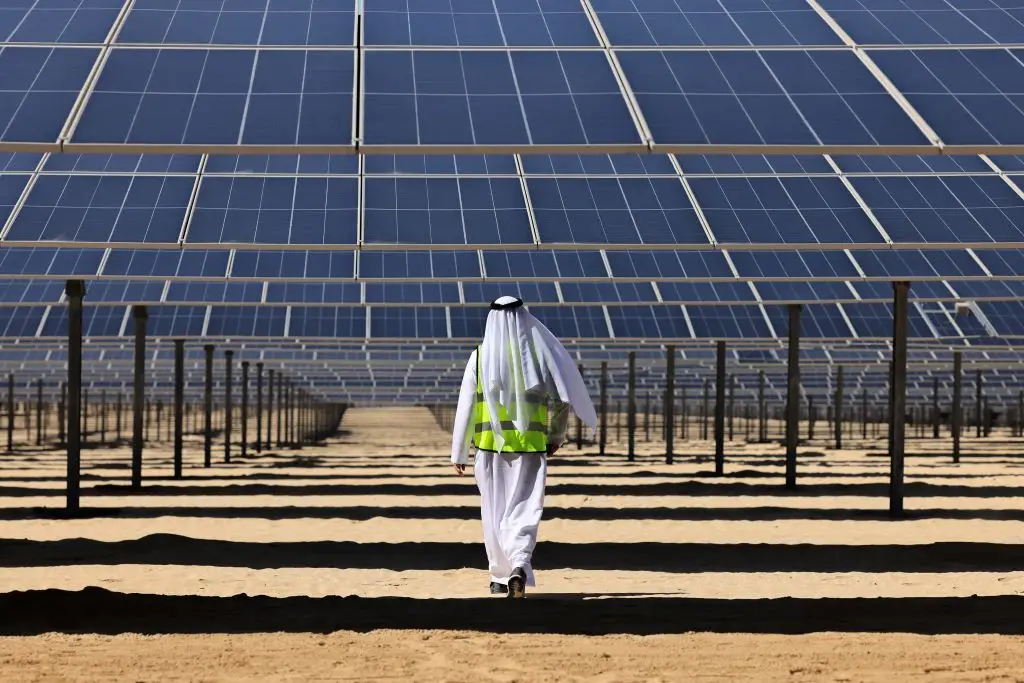
The United Arab Emirates is a prime location for solar energy, yet the black panels could also have an unexpected benefit (Karim Sahib/AFP via Getty Images)

The sheer amount of direct sunlight exposed to the nation's deserts have made it a prime location for solar energy, with the renewable sour offsetting the climate change related harm produced by fossil fuel generation in the UAE and many of its neighboring countries.

What's only came to light after the fact, however, is that these solar panels have the miraculous ability to spawn rainstorms effectively out of the air, with the potentially game-changing research revealed in a new study led by Oliver Branch at the University of Hohenheim.

"In the hyper-arid United Arab Emirates (UAE), water scarcity is reaching a crisis point due to high consumption and over-extraction and is being exacerbated by climate change," the study outlines.

"Very large 'artificial black surfaces' (ABSs), made of black mesh, black painted, or solar photovoltaic (PV) panels have been proposed as a means of enhancing convective precipitation via surface heating and amplification of vertical motion."
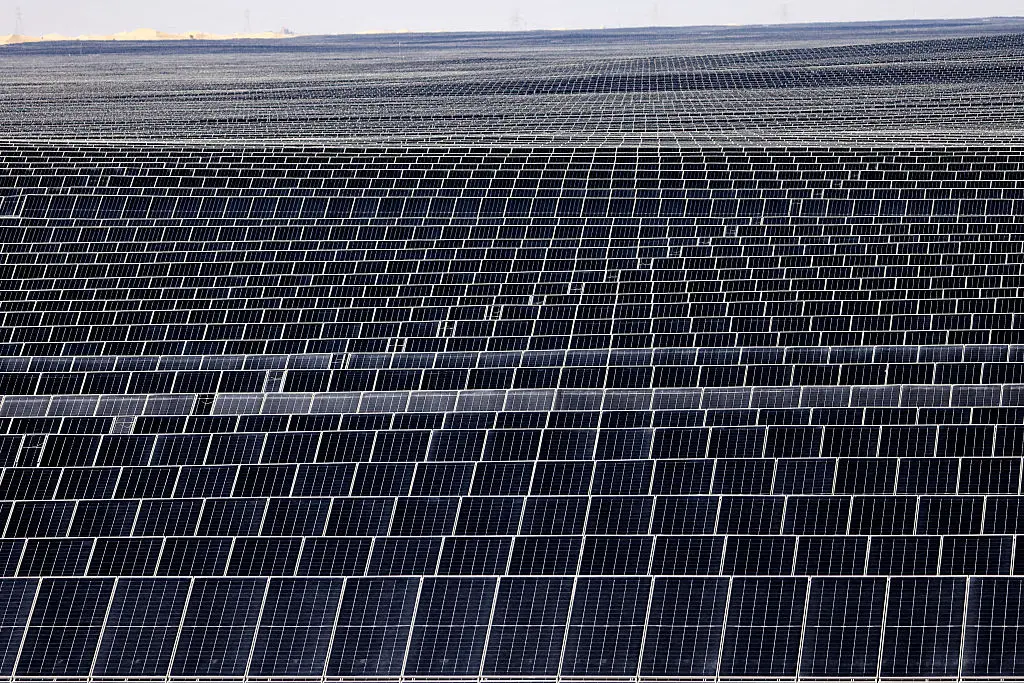
The panels create a temperature difference in contrast to the sand, driving updrafts which then lead to rain clouds (Karim Sahib/AFP via Getty Images)

Effectively, the large black solar panels not only generate energy from the Sun's rays but also heat, and this creates an extreme disparity in temperature between the panels and the reflective sand around them.

This creates an updraft that is enhanced by the high-altitude winds of the Persian Gulf, driving cloud formation and leading to rainfall in an area that suffers from extreme water scarcity.

It estimates that a solar field stretching roughly 20 kilometers (12.43 miles) would increase active rainfall by around 600,000 cubic meters, which equates to enough water for more than 30,000 people across a whole year.

Choose your content:

an hour ago
17 hours ago
18 hours ago
  • HANNIBAL HANSCHKE / Contributor / Getty
    an hour ago

    Amazon to spend $11B to stick it to Elon Musk's Starlink in major acquisition

    There's a fight to control the skies

    Science
  • Javier Zayas Photography / Getty Images
    17 hours ago

    Brightest comet of the year is passing Earth this week, make sure you don't miss it

    This could be your only chance to ever see C/2025 R3 (PanSTARRS)

    Science
  • Kymberlie Dozois Photography/Getty Images
    17 hours ago

    Study links tattoos to 29% higher risk of life-threatening type of cancer

    Tattoo pigments have the potential to migrate to regional lymph nodes

    Science
  • US Air Force
    18 hours ago

    List of 10 scientists reported missing or dead as White House break silence on disappearances

    The unfortunate trend of missing or dead scientists started with an unexplained death in July 2023

    Science
  • Shocking reality of what life is like in the hottest place on Earth with a population of just 102
  • Solar power makes history as it becomes main source of electricity for 450,000,000 people
  • Scientists warn Earth is entering stage of 'unprecedented climate change' as we risk becoming irreversible 'hothouse'
  • Antarctic Ice Sheet on the verge of a 'catastrophic' collapse causing irreversible damage