Throwing your old phone in the trash could land you a hefty fine, here’s what to do instead


We're still a few months away from needing to give our houses their usual spring clean, but if you're looking for some extra cash ahead of the Christmas period, or simply want to make some room for all your new buys from the Black Friday sales, you might want to think about having a declutter.
You might be surprised by what you find tucked away, with much more than just loose change hiding down the side of your sofa.
Even though you might not be lucky enough to find a pristine iPhone from 2007 and be able to sell it for $190,000 at auction, most of us likely have some sort of obsolete tech that's gathering dust while being worth an unexpected amount.
Sadly, for every bit of buried treasure, you've probably got something that's barely worth the effort of listing on auction sites or Vinted.
Advert
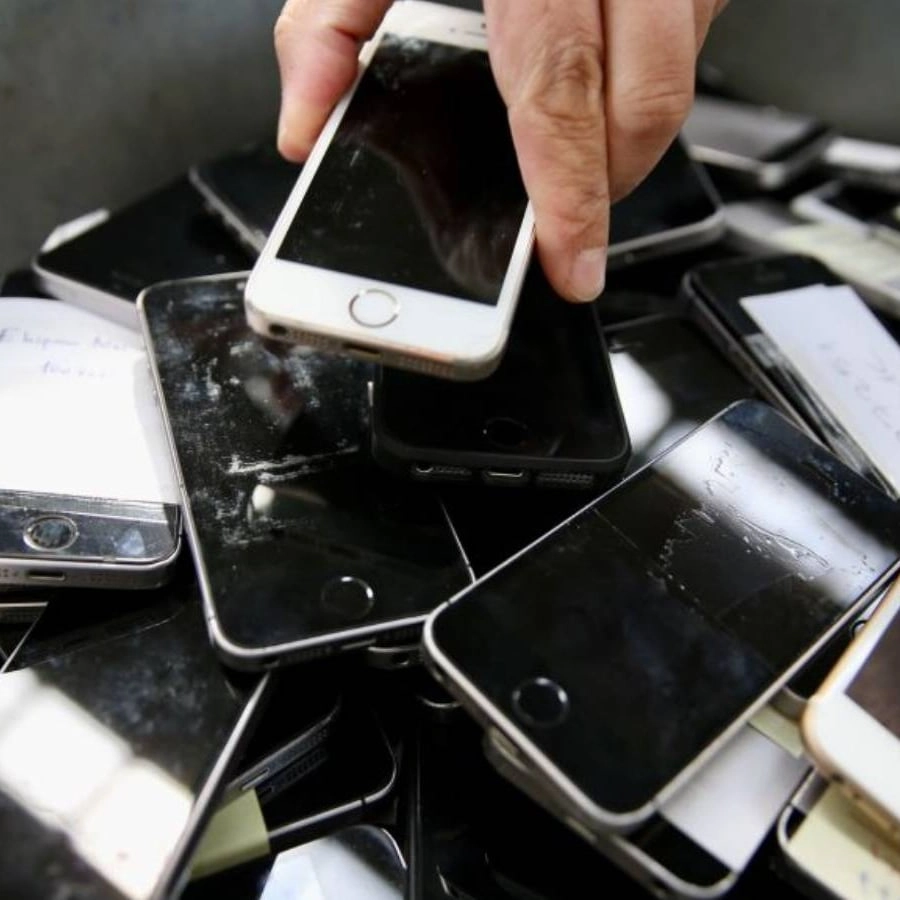
While we don't encourage throwing away any kind of tech, there's now a warning that tossing your old smartphones in the trash could land you with a heavy fine.
Why can throwing away your old phone cost you money?
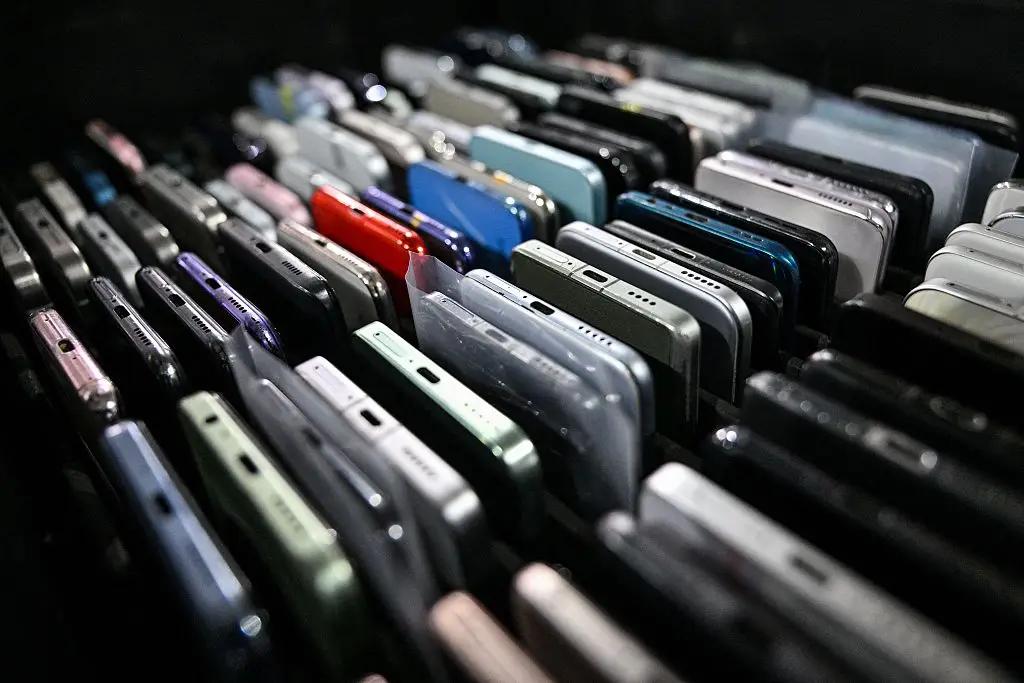
In the United Kingdom, Waste Electrical and Electronic Equipment (WEEE) regulations and local council fire-safety rules ban smartphones from being thrown out with general rubbish.
When the lithium batteries in smartphones are crushed or damaged in garbage trucks and sorting facilities, they can cause a fire.
It's said that battery-related fires cost the UK waste sector £158 million (equivalent to $207 million) every year in vehicle damage, facility repairs, and callout costs.
Mobile phone recycling comparison site Compare and Recycle says that incidents where lithium batteries have been linked to bin lorry and waste site fires have soared by 475% between 2019 and 2025.
A survey of 2,000 UK adults suggests that 20% of the country’s residents have binned a battery-powered device at some point, which would equate to some 11 million people.
Councils in the UK warn against putting electricals and batteries in bins, with devices including a crossed-out wheelie-bin symbol under UK WEEE Regulations. Those who don't comply face potential fines of up to £400/$524 for bin misuse under Defra's Simpler Recycling rules.
Antonia Hristov, head of marketing at Compare and Recycle, warned that most councils don't allow batteries or any device containing a battery from being placed in household waste or recycling bins, adding: "Households in England caught ignoring their council's bin rules can be fined up to £80, after a written warning and a notice of intent.
“Under the current rules, a battery in the wrong bin is treated as the same minor slip as a crisp packet in the recycling. But it’s a completely different problem. A crisp packet won’t set a bin lorry alight, and a battery can. The rules don’t reflect the danger these devices pose to waste workers, fire crews and communities, and that needs to change.”
A lack of education is being blamed, with 43% of those asked thinking old devices are more of an environmental risk than a fire hazard, and 24% assuming bin lorries are designed to safely handle small battery fires.
What are the rules in the USA?
It's not just in the UK where you could feel the wrath of local authorities. As reported by Dropcurb, there are currently 25 states that have some sort of e-waste laws. It comes as Americans are said to generate around 6.9 million tons of electronic waste every year, working out at about 46 pounds per person.
Roughly 15% is recycled, and while this only equates to 2% of total waste, it's about two-thirds of all heavy metals.
As there's a 'patchwork' of legislation across all 50 states, it can make the laws confusing. California is praised for being a pioneer of e-waste recycling, having processed over two billion pounds of electronics since 2005.
Fines for the illegal disposal of electronics range from $25 in Illinois to Oregon charging up to $10,000 a day for repeat offenders.
Although the Resource Conservation and Recovery Act (RCRA) classifies the cathode ray tubes (CRTs) found in TVs as hazardous waste, the likes of smartphones, laptops, and small appliances tend to fall through regulatory cracks.
Whereas Europe's WEEE Directive sets minimum collection targets for all EU member states and has reached a 42% recycling rate, the USA only hits about 15%. If it was able to match Europe's levels, an additional 1.8 million tons of electronics would be recycled every year.
What should you do instead of throwing out your old phones?

The obvious action is to recycle or use a service like Compare and Recycle. Despite safe disposal options being widely available, most old devices never get there. While focused on the UK, Compare and Recycle’s survey claims an estimated 45.7 million unused smartphones are gathering dust in UK homes.
The advice is to keep rechargeable devices out of household bins and check your local council's website for local recycling centers or collection points.
Many retailers have take-back schemes, while you can also check trade-in schemes or selling sites. Importantly, read the small print and whether your device would violate WEEE rules.
Hristov concluded: "It might seem perfectly harmless to keep an old phone in a drawer, cupboard or under the bed, then a few months later throw it in the recycling bin, wishfully thinking it will get recycled. But batteries in unused devices can age, swell or, worse, become a fire hazard - and our research shows these risks are very real.
“The ‘out of sight, out of mind’ approach doesn’t work, and it never did. Nothing we throw away really goes away; it just becomes someone else’s problem. Councils, government, and the tech industry all have a part to play in making safe disposal clearer and easier."
In the USA, Dropcurb notes that the likes of Colorado have updated its electronics disposal requirements, New York and Vermont have introduced new battery EPR laws, and Washington has passed new waste and recycling laws that include provisions for electronics.
That's all well and good, but with no new state joining the existing 25 with laws in 2026, federal legislation looks unlikely anytime soon.