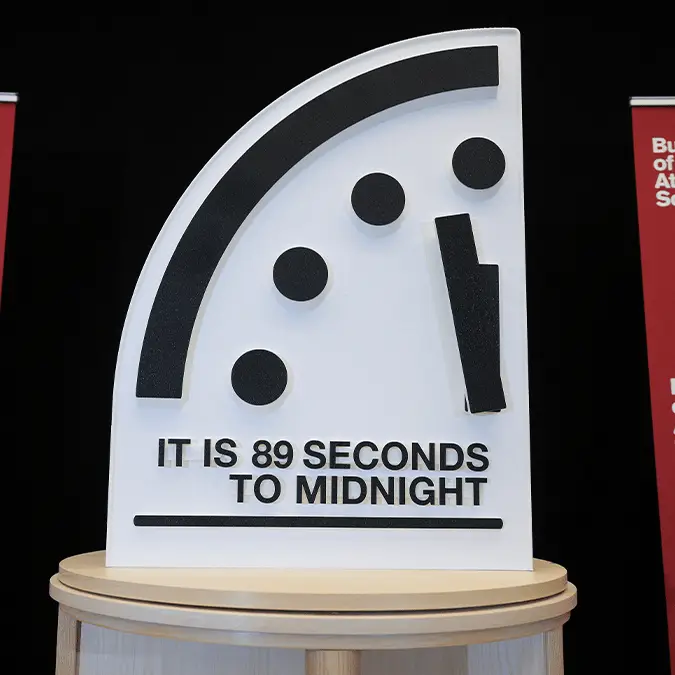
What Doomsday Clock approaching closer to midnight than ever means for society


Once again, it's that moment when the symbolic Doomsday Clock gets updated to show just how dangerously close we are to triggering a human-made global catastrophe.
And it's not looking good for 2026.
The Bulletin of the Atomic Scientists maintain the clock with the aim to ‘equip the public, policymakers, and scientists with the information needed to reduce man-made threats to our existence’.
The clock was created back in 1947 to measure Cold War tensions and nuclear threats.
Advert
Throughout its history, the clock has occasionally reflected periods of hope, like in 1991, when it sat at a fairly comfortable 17 minutes away from midnight.
But since then, it's been sliding relentlessly toward that final hour, forcing the scientists who manage it to measure danger in seconds rather than minutes because we've gotten so alarmingly close.
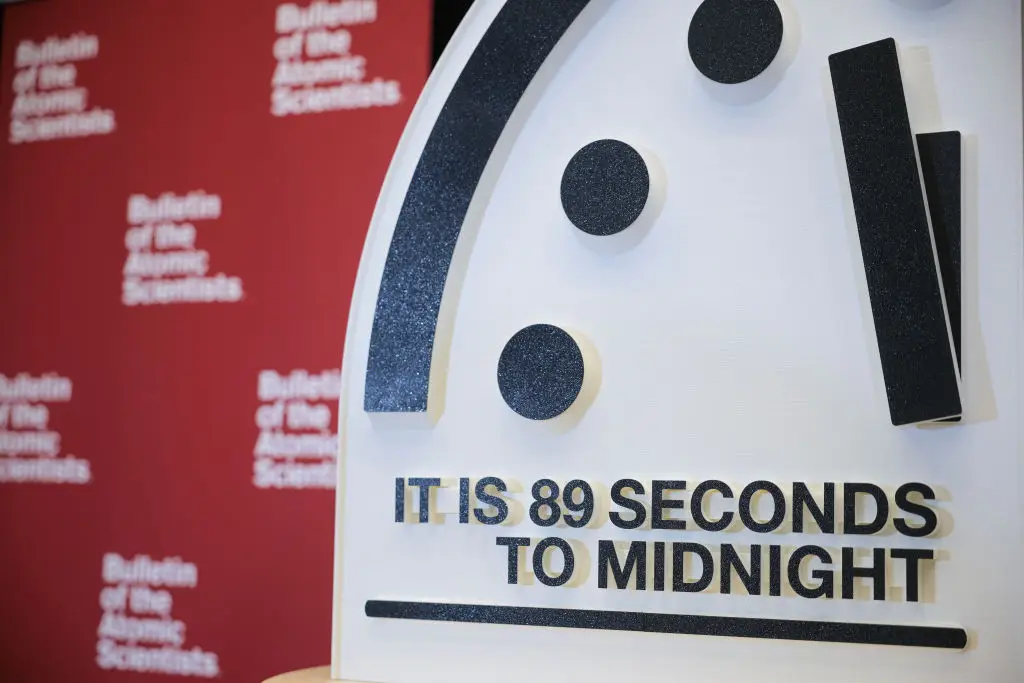
Last year, the experts moved the clock from 90 seconds to 89 seconds to midnight which they said would serve as 'an unmistakable warning that every second of delay in reversing course increases the probability of global disaster.'
Now, standing at 85 seconds to midnight, the second hand has jumped forward by four seconds, meaning we're closer to a catastrophe than at any point in human history.
So, what does this mean?
A panel of scientists pointed to several growing doom factors, including global warfare, climate change, and fast-advancing artificial intelligence.
Speaking to Reuters, Alexandra Bell, the Bulletin's president and CEO, said: "Of course, the Doomsday Clock is about global risks, and what we have seen is a global failure in leadership.
"No matter the government, a shift towards neo-imperialism and an Orwellian approach to governance will only serve to push the clock toward midnight."
Bell added that 'nothing in 2025 trended in the right direction' in regards to nuclear risks.
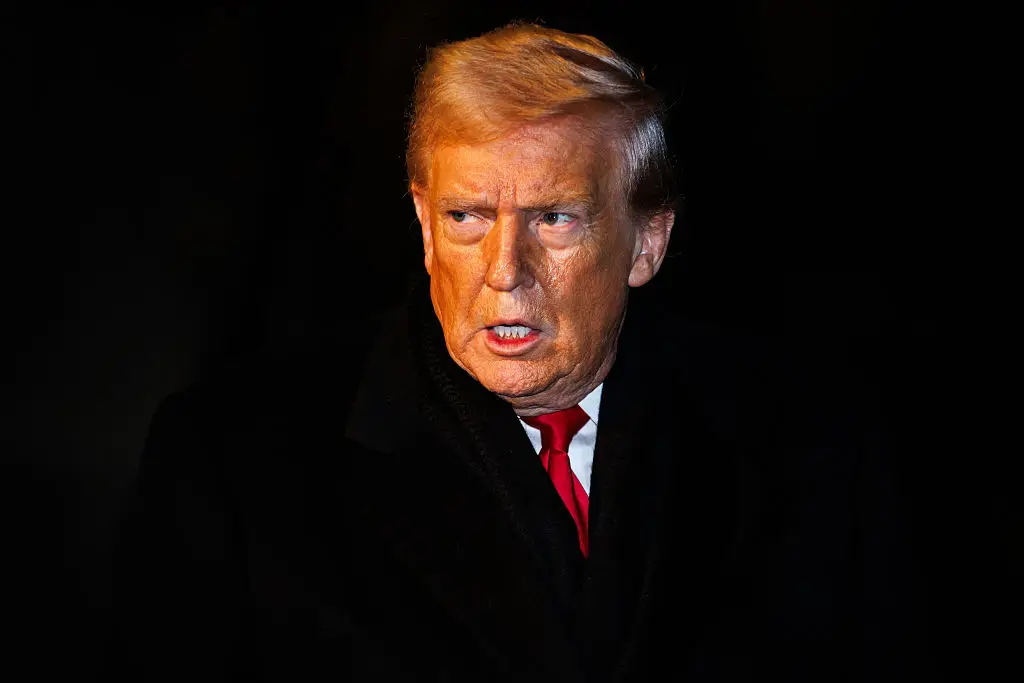
"Longstanding diplomatic frameworks are under duress or collapsing, the threat of explosive nuclear testing has returned, proliferation concerns are growing, and there were three military operations taking place under the shadow of nuclear weapons and the associated escalatory threat," the nuclear policy expert explained. “The risk of nuclear use is unsustainably and unacceptably high."
According to Bell, Russia's ongoing invasion of Ukraine, the Israeli military strikes on Iran and border clashes between India and Pakistan had contributed to the decision. Not to mention the global rising tensions since President Trump's return to power.
"Russia, China, the United States and other major countries have become increasingly aggressive and nationalistic," Bell said.
Their 'winner-takes-all great power competition' conflicts with the international cooperation that's needed to reduce risks of nuclear war, climate change, biotech misuse, AI threats and other apocalyptic dangers, Bell noted.
Adding fuel to the fire, Trump has dramatically disrupted the global order. His recent actions saw him direct the US military to resume preparations for nuclear weapons testing after more than three decades, send US forces to capture Venezuelan President Nicolas Maduro and announce plans to annex Greenland.
The US President has also made certain claims about science, academia, the civil service and news organisations, Bell reported.