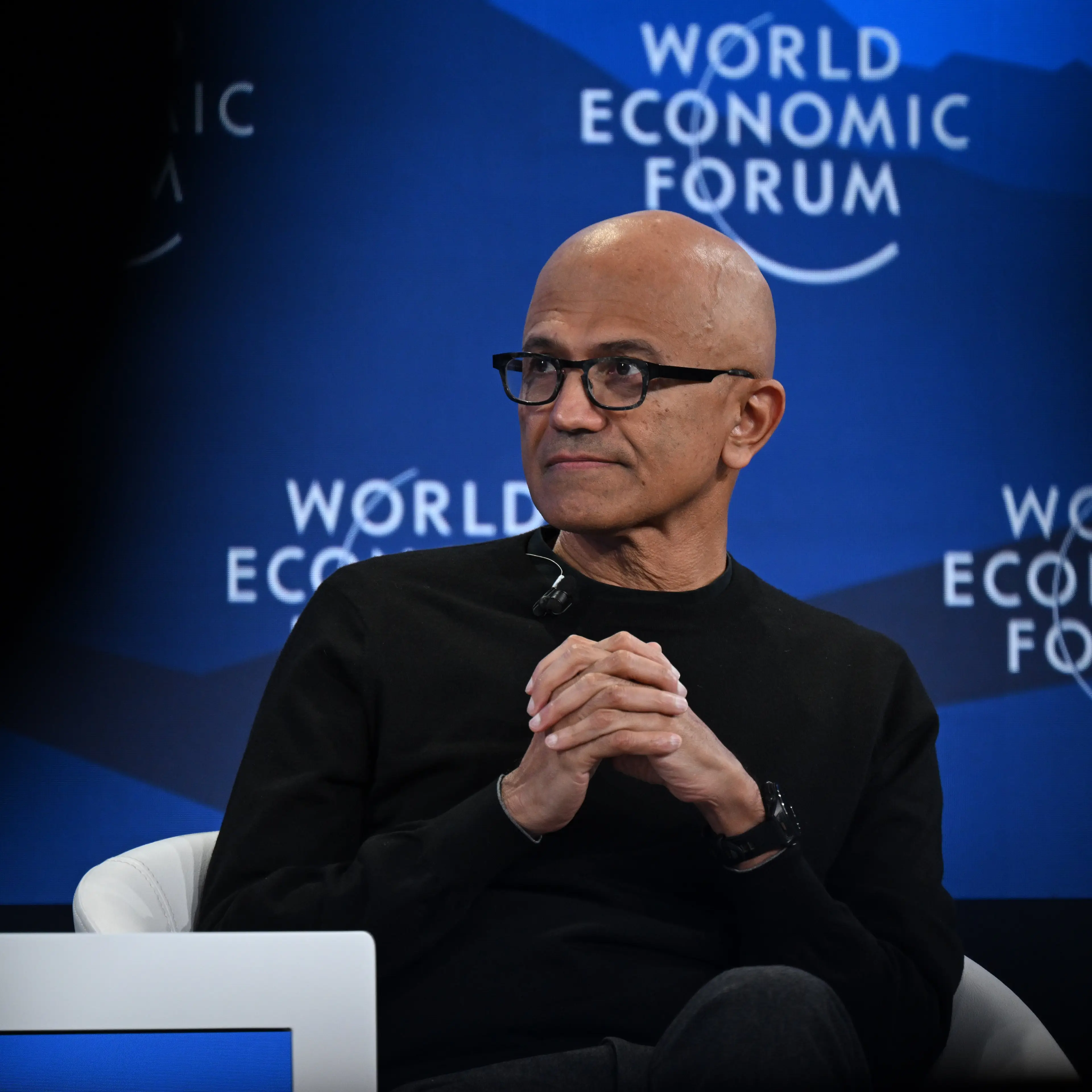
Microsoft CEO issues stark warning over which AI companies threaten to destroy whole industries


The future of artificial intelligence is here, and while things haven't quite evolved to the level of Artificial General Intelligence (AGI), many think we're on the cusp of it.
Although there are plenty of warnings about AI and what dangers it poses to the human race, many of the Big Five tech companies have baked it into their future and are adopting it at breakneck speed. We recently saw Apple cause a stir when it showed off its long-awaited Siri AI, while Amazon has been mocked for apparently pressuring staff to use AI, and Microsoft was slammed after it announced a massive $80 billion investment into AI and slashed 3% of its human workforce at the same time.
As Microsoft is one of the big movers and shakers in the world of AI, it's no surprise that those up high are always talking about it. Whether it be the company's head of AI musing on which jobs won't exist anymore, or being pulled into Elon Musk's lawsuit against OpenAI, we're also reminded that Bill Gates once gave Satya Nadella a warning about AI.
Nadella is now returning the favor, taking to X and foreshadowing a grim dystopia where a handful of AI companies control everything while hoovering up our corporate knowledge.
Advert
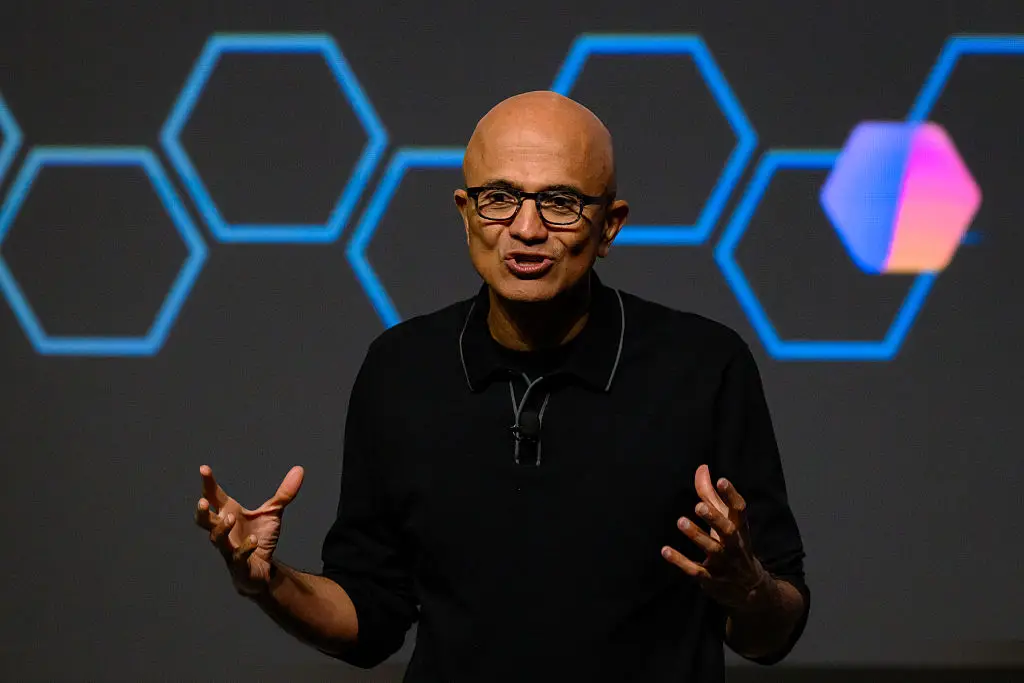
Looking at an AI-driven economy, the Microsoft CEO suggested that this is the first time the human race has a chance to create a "real cognitive loop between people and digital systems."
He says that every company is going to have to build 'human capital' and 'token capital'. Explaining his concepts further, Nadella said: "Human capital comprises the knowledge, judgment, relationships, ingenuity, and pattern recognition of its people, while token capital is the firm’s AI capability it builds and owns."
He reiterated that human capital doesn't become less valuable as token capital increases, but still warned that human direction is needed to stop us running in a computing loop.
Looking for AI systems that improve with each use, Nadella reiterated: "The last thing any of us want is a world where every company across every sector is ceding value to a few models that eat everything they see.
“If all the value is accrued by only a few models, the political economy will simply not tolerate it. There is no societal permission for an AI future that hollows out entire industries."
He also reminded us of the mistakes of the past, continuing: "Think about what happened in the first phase of globalization where entire industrial economies were hollowed out by outsourcing."
Saying that while the GDP numbers looked fine on the surface, there was real-world displacement with consequences still being felt.
Picturing a more optimistic future, he added: "Let us not bring that dynamic into the AI era, with a small number of AI systems capturing all the economic returns, while entire industries find their knowledge commoditized right out from underneath them."
According to Nadella's ethos, companies will be able to create value for themselves and the economy around them, with employees supposedly seeing their expertise amplified.
Even though the Microsoft CEO's message of prioritizing AI ecosystems instead of just AI models is clear, many disagreed with his stance in the replies.
One comment got over a thousand likes as someone postulated: "Nice theory, but let's be real: when AI absorbs human expertise into 'token capital', companies won't amplify workers, they'll replace them. Every workflow you encode is a job you eliminate. This 'learning loop' is just a polite roadmap to mass unemployment, not shared value."
Another grumbled: "So basically just feed the LLMs with people's hard work till they become replaceable and throw em to the curb, no respect for their efforts, commitments or creativity that made it all possible."
Someone else raged: "Dishonest bullsh*t! 'Human capital does not become less valuable' yes it does! You guys already laid off a bunch of people due to AI and it's only going to get worse."
Notably, many dragged Nadella in the replies due to Microsoft's turn to AI and human layoffs, which is something he seemed to skirt around in his article.