How long it would take average US worker to earn combined wealth of everyone at Trump's AI summit


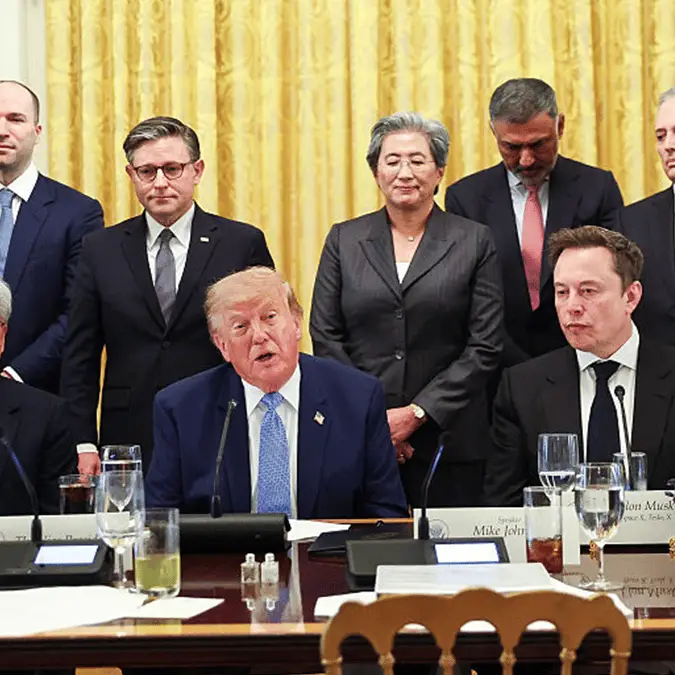
The future of artificial intelligence is being firmly baked into American politics, and in case you had any doubts, President Donald Trump's recent decision to rebrand it as 'super intelligence' should've made it clear.
The 47th President of the United States continues to try and prove he's the most tech-savvy yet, and despite being the oldest person ever to be elected as POTUS, he's shoving us towards the future at breakneck speed.
Since returning to the Oval Office for his second term, Donald Trump has been banging the AI drum loudly.
From signing multi-billion-dollar deals to calling people idiots for not wanting data centers in their back gardens, the Commander-in-Chief has introduced an AI-powered government website and shown his love for tech by repeatedly sharing bizarre AI posts on his Truth Social account.
Advert
As OpenAI has been championed for welcoming the era of artificial general intelligence, Trump himself has demanded we call it super intelligence. Determined to fly the flag for AI (or is it SI?), he's supposedly "building America's Golden Age" with an 'extraordinary gathering' of minds from Anthropic, Google, Meta, Nvidia, OpenAI, and more — marking the biggest meeting of bigwigs from the world of AI that we can remember.
Who attended Trump's AI summit?
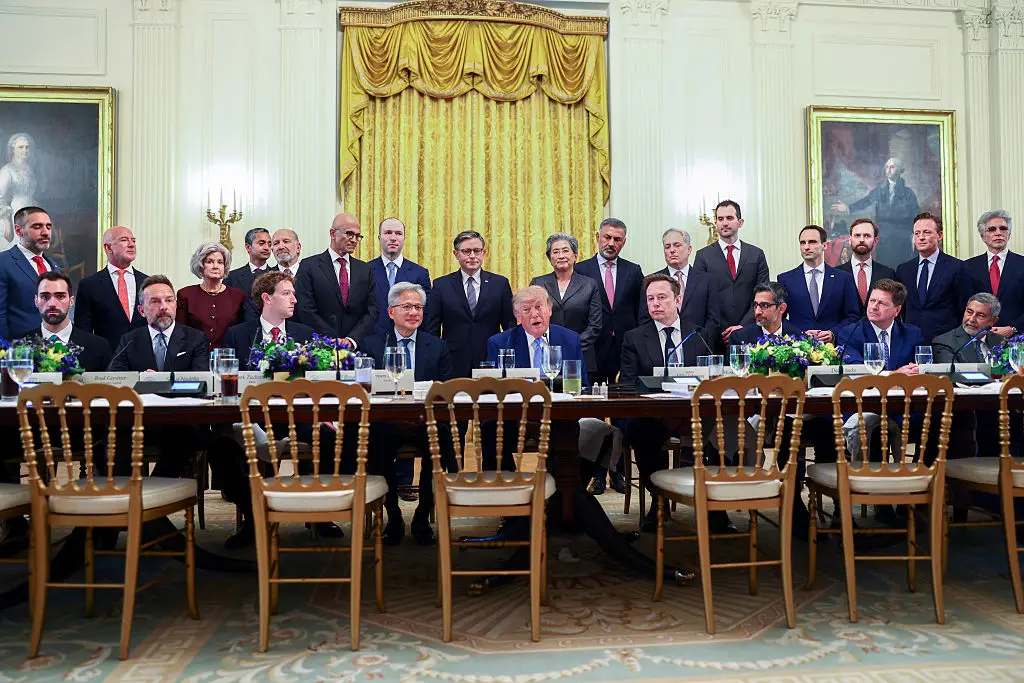
Given the impressive guest list of companies listed above, it's no surprise that the attendees were a who's who of familiar faces from the world of tech.
Posting on Truth Social, President Trump outlined four steps that he wants AI companies to take, including implementing internal controls that ensure models adhere to cybersecurity standards and empowering internal teams to oversee that everything is working as it should be.
The other two include partnering with external operators to independently assess models, and designating an “independent committee of the board of directors" to monitor reports.
Although there were complaints that Trump has dismissed fears about the potential dangers of this ever-evolving tech, others were impressed that the various execs signed an agreement to monitor themselves as Trump cheered: "I’m seeing tremendous self-policing, and they understand that they have to self-police. These models are very complex and, again, I believe they’re going to be used for the good."
As for who was in attendance, the extensive list included:
- Altimeter Capital founder Brad Gerstner
- Meta CEO Mark Zuckerberg
- Nvidia CEO Jensen Huang
- Tesla and SpaceX overlord Elon Musk
- Google CEO Sundar Pichai
- Micron CEO Sanjay Mehrotra
- Palantir CTO Shyam Sankar
- Amazon founder Jeff Bezos
- Microsoft CEO Satya Nadella
- Open AI president Greg Brockman
- AMD CEO Lisa Su
- Craft Ventures founder David Sacks
- NASA’s Jared Isaacman
- Social Capital founder Chamath Palihapitiya
- Anthropic CEO Dario Amodei
- Anthropic co-founder Tom Brown
- Broadcom’s Hock Tan
- Service Now’s Bill McDermott
- Palantir CEO Alex Karp.
Although not everyone's net worth is publicly available, and those in attendance included the likes of White House Chief of Staff Susie Wiles and Commerce Secretary Howard Lutnick, Forbes' latest numbers back up the likes of Zuckerberg being worth $253.3 billion, Huang's net worth being $196.7 billion, and Bezos having a lofty $366.9 billion to his name. That's a lot of money in one room.
How long would it take the average American to earn the combined wealth of everyone at Trump's AI summit?
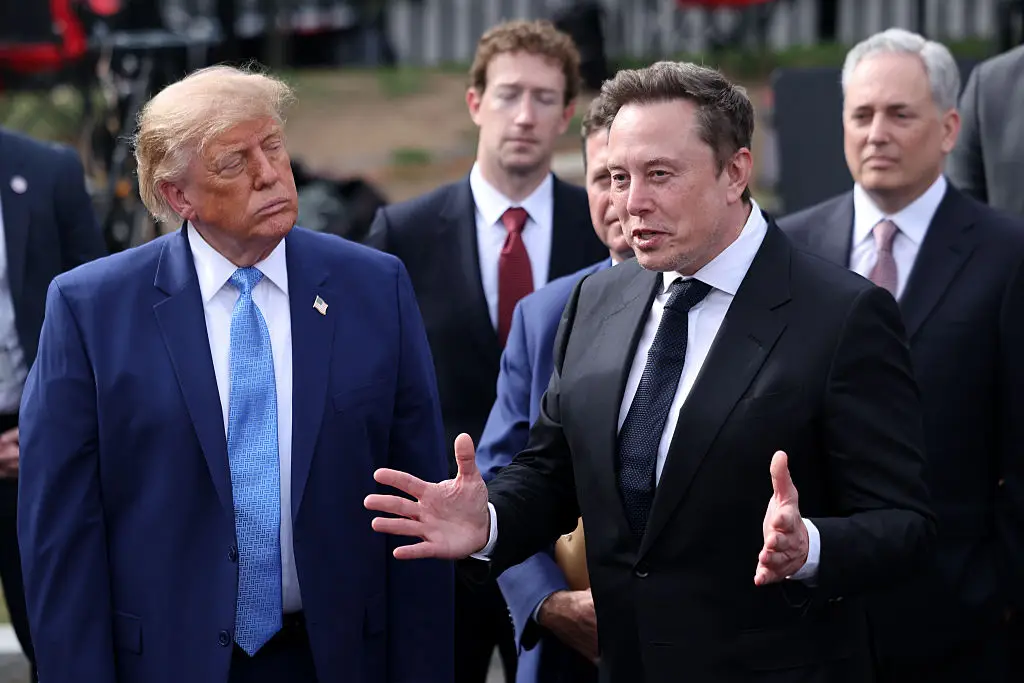
All of these impressive net worths obviously pale in comparison to Elon Musk being worth $924.2 billion, and although he's fallen from his brief stint as a trillionaire, it's still a jaw-dropping sum. If you add up the net worth of all the tech bros and big names in the AI summit, while also adding in Trump's estimated $6.9 billion, it's an astronomical $1.8 trillion.
This is overwhelmingly concentrated on the net worths of Musk, Bezos, Zuckerberg, and Huang, with Musk obviously taking the lion's share of this.
Musk's net worth alone is something many of us struggle to grasp, but in terms of how long it would take us to earn that, you'd better strap in.
If you were earning $10,000 an hour, every hour, 24 hours a day, it would take over 20,500 years to hit $1.8 trillion.
This means that even if you started earning $10,000 an hour when the Ancient Egyptian Pyramids were built, you still wouldn't be 25% of the way toward $1.8 trillion in 2026.
According to the latest occupational data from the U.S. Bureau of Labor Statistics, the average American earns $69,770 a year, meaning it would take the average American 25.8 million years to make even a conservative estimate of the net worth in the room at Trump's summit.
Well, you'd better start saving.