Scientists explore two ‘untouched’ worlds hiding in the ocean and make incredible discovery


Even though it feels like no corners of Earth remain unexplored, two 'untouched worlds' are defying expectations, with the coral atolls of Bikar and Bokak being much more than just tourist-free beauty spots.
We've previously covered places like North Sentinel Island and Snake Island that you can never visit, while others like Peru's Cerro El Cono are simply impossible to reach. When it comes to Bikar and Bokak, they've managed to stand the test of time as two miraculous ecosystems that could be used to save our oceans here on Earth.
As highlighted by a new study in Frontiers in Marine Science, these near-pristine tropical marine environments are out of reach for much of the human race, lying between Hawaii and the Philippines in the central Pacific Ocean.
The two islands are several hundred kilometers from any other inhabited island, which has left them largely unaffected by issues like fishing, coastal development, and pollution that have ravaged other ocean ecosystems. With this, scientists are discovering they could hold the key to helping preserve other areas or hopefully undoing some of the damage already done.
Advert
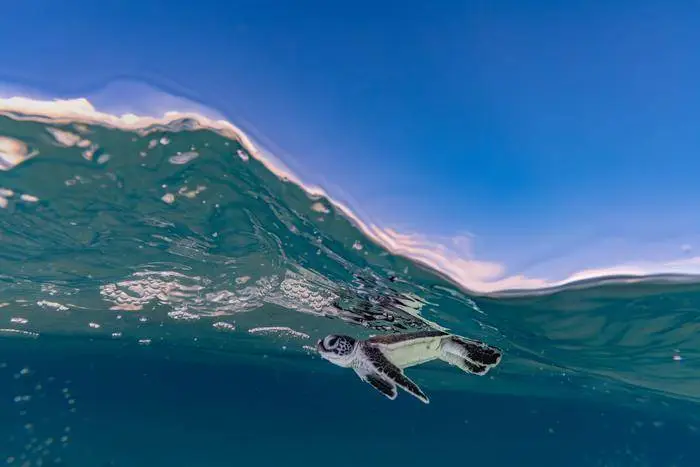
Back in 2023, researchers with the Marshall Islands Marine Resources Authority and National Geographic Pristine Seas journeyed to these untouched worlds and found that while humans haven't made their mark, they're teaming with life.
Discoveries included 15 seabird colonies that were either confirmed or likely breeding, 266 groups of reef fish, 138 groups of deeper-water fish, 79 groups of deep-sea fish, and 15 groups of open-ocean predators that include sharks, jacks, and wahoo.
Amazingly, 14 of these observed groups were recorded in the Marshall Islands for the first time, while two species could be brand-new discoveries.
Lead author Dr. Alan Friedlander has cheered the study, reminding us that it provides "the first comprehensive ecological baseline of the newly created National Marine Sanctuaries of Bikar and Bokak atolls from the sky and land to the deep sea, and highlights some of the most intact ecosystems remaining in the region."
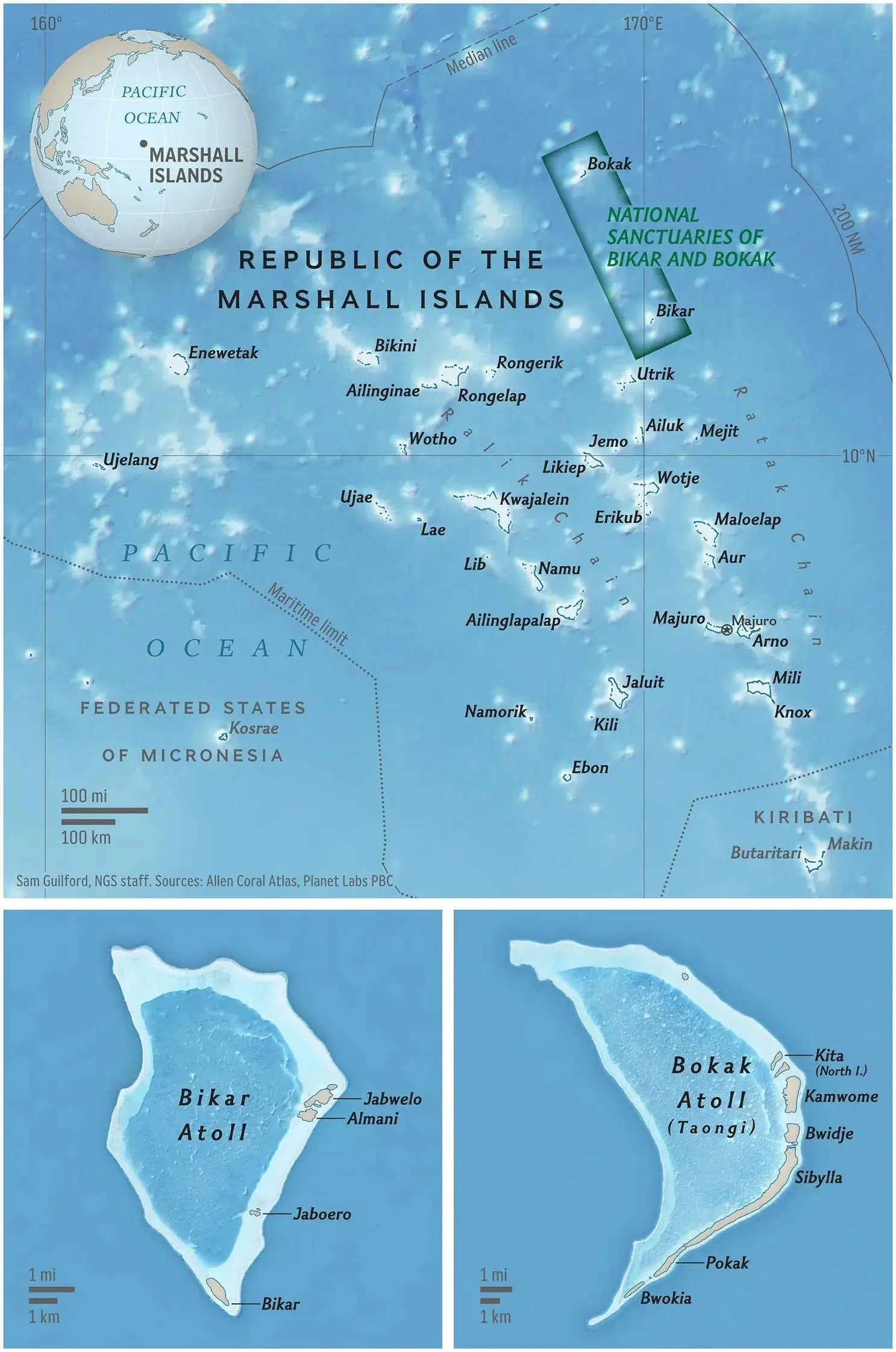
Friedlander says that "Bikar and Bokak are not just treasures for the Marshall Islands but for the entire planet," calling them a 'gift' from the community of Utirik Atoll, which has guarded these fragile ecosystems for decades.
Although Bikar and Bokak are uninhabited, a 2021 census reported a population of just 264 people who call Utirik Atoll home. They use these areas as 'panty' reserves where they visit seasonally to harvest seabirds, turtles, and eggs while under strict customary conservation rules.
Despite Bikar and Bokak being remarkably similar, there are also some big differences. Sea turtle nesting was almost exclusively reserved to Bikar, while Bokak boasted far more reef fish.
Researchers hope that Bikar and Bokak can offer more than just a glimpse into these untouched worlds. Friedlander reiterated: "They are among the best ecological reference systems we have to better understand what we have lost elsewhere and to provide fundamental insights needed for effective conservation and restoration efforts."
The team wants monitoring to focus on more than just shallow reefs, looking at how we can conserve ecosystem integrity and track potential future change that's driven by climate change.
Following the study, an area of 48,000 square kilometres around Bikar and Bokak has been declared the Marshall Islands' first national marine sanctuary.
Friedlander concluded: "The Marshall Island government should be applauded for their foresight in protecting these global biodiversity hotspots, where human activity is distant and habitats teem with life.
"As human activities increasingly threaten biodiversity, areas devoid of intense human impacts serve as vital refugia. Large marine protected areas serve as globally important ecological reference systems for understanding the structure and future trajectories of tropical oceanic ecosystems in the Anthropocene."