
UN warns AI will 'drink' more water than the entire human race needs to survive by 2030


Most people are aware these days of the immense environmental impact that AI use creates, yet a new report from the United States reveals exactly how much the tech consumes — warning in particular that it's water usage could exceed figures required to sustain all of humanity in the next few years.
The report, published by researchers at the United Nations University within the Institute for Water, Environment, and Health, outlines not only the existing burden placed on the world by AI, but how that is likely to continue and ramp up further by 2030 based on current trajectories.
It also highlights the discrepancy in reporting when it comes to carbon emissions and climate impact, indicating that focusing on this in isolation won't solve the issues currently facing the planet, and could actually end up doing more harm than good.
How much water and power does AI currently use?
Water consumption has undoubtedly become the biggest concern for many in relation to AI, and the figures revealed by the UN's report certainly don't do anything to dispel those fears.
In 2025 alone, data centers used roughly 9.3 trillion liters (2.5 billion gallons) of water in total, which exceeds the amount of drinking water required to sustain all 8.1 billion people on the planet for over a year and a half.
Advert
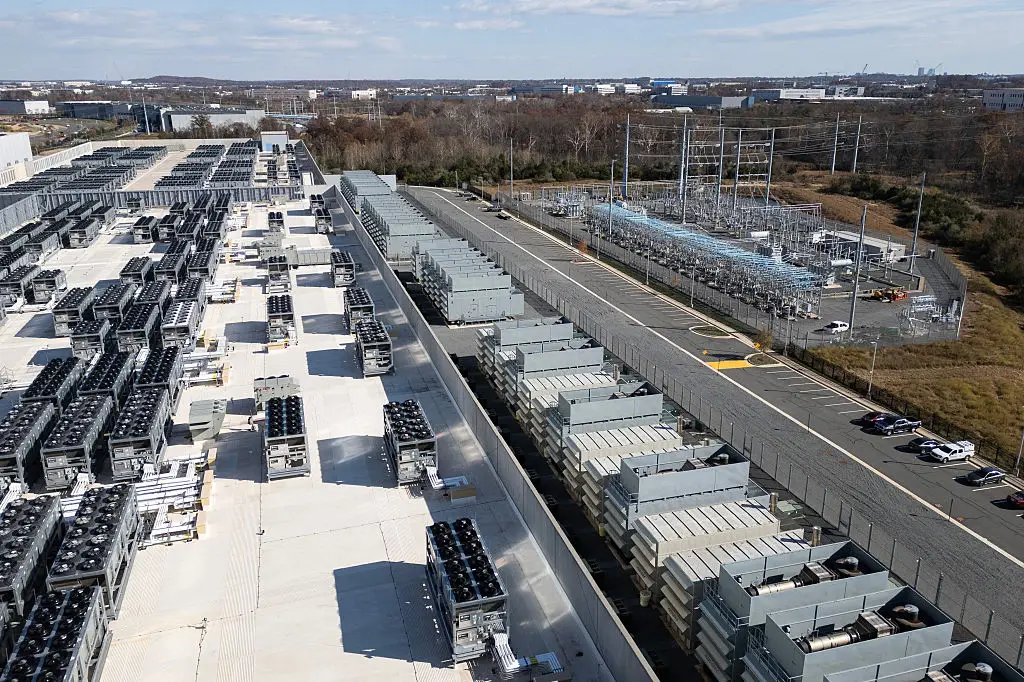
Not all of that is caused by AI, as workloads related to the rapidly evolving tech currently amount to 'only' 20 per cent within existing data centers, but that figure is expected to increase exponentially with demand in the coming years – with some indicating that it will at least double – suggesting that water consumption will grow with that in accordance.
It's not just the amount of water that causes worry amongst scientists either, as the impact of water withdrawal within already vulnerable areas can cause drought, as river systems and aquifers are put under heavy strain.
Electricity demands also illustrate a similar story, with 448 terawatt-hours consumed by data centers last year, equalling the amount required to power the entirety of France for the same period of time.
Even though you can implement different behaviors and habits to reduce your own electrical footprint when using AI tools – reportedly decreasing the demands by up to 30 per cent – that only applies on a micro level and likely has little impact when it comes to wider power draw.
UN predicts dangerous future for the planet thanks to AI
The demands of AI will only grow in the next few years — especially as thousands more data centers are expected to be constructed across the world to keep up with compute expectations.
The report expects data center power consumption totals to exceed 945 terawatt-hours by 2030, which is over double the existing totals, and a large part of that will be a result of the increased proportion of AI use within this infrastructure.

This frightening figure is enough to power the entirety of sub-Saharan Africa – an area home to around 1.3 billion people, or 16 per cent of the globe's population– for more than five years.
Researchers have made clear that consideration is needed to reduce the impact that AI has on the environment, and organizations, governments, and AI companies alike need to address the bigger picture.
"'Low-carbon' is not automatically 'low-water' or 'low-land', and evaluating sustainability through a single metric can hide trade-off and shift burdens onto places already facing water stress or land pressure," the report outlines.
Lead author of the report, UNU-INWEH researcher Dr. Miriam Aczel, indicated that "what surprised us most is how often the choices that look greenest from a carbon perspective end up worse for water or for land."
She continued, asserting that "if we keep judging AI sustainability by carbon alone, we might think that renewables make AI infrastructure clean but that is solving one problem while creating other problems, often in places that didn't ask for it."