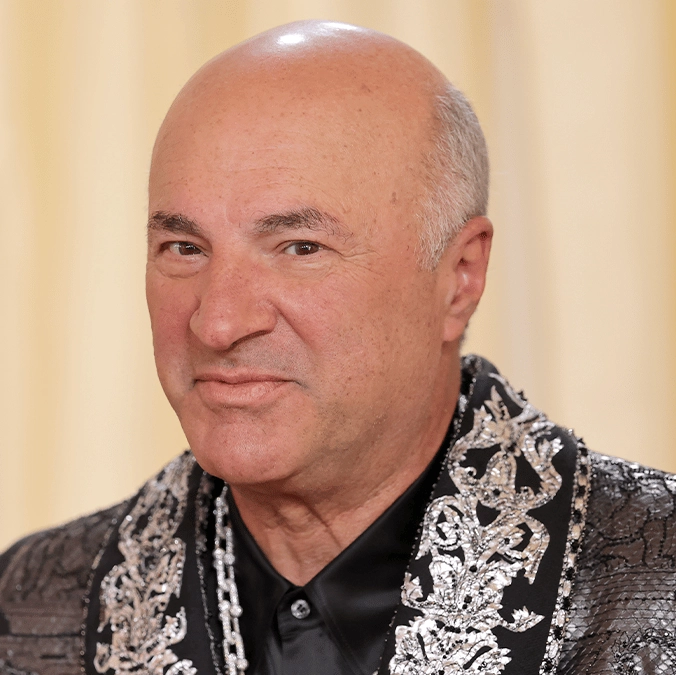
Kevin O'Leary's Utah AI data centre could emit the heat of '23 atomic bombs' every single day


A Utah State University physics report by Dr Rob Davies has put fresh scrutiny on Kevin O'Leary's proposed AI data centre in Utah, after warnings about the amount of heat the site could release into the surrounding environment.
To be clear, there are no weapons or radiation involved here. Instead, the concern is about thermodynamics: what happens when a vast hyperscale data centre and its power supply release waste heat in one place, day after day.
The scale of Project Stratos
The AI project, known as Stratos, is planned for Box Elder County and has been linked to O'Leary Digital, the infrastructure firm associated with the Shark Tank investor. It has also been described as part of a wider Wonder Valley development, with proposals for dozens of data centre buildings across a huge desert site.

Advert
However, Davies' analysis claims the finished site could be the ‘equivalent of about 23 atom bombs worth of energy dumped into this local environment every single day,’ according to what he told The Salt Lake Tribunal.
The warning centres on the sheer scale of the project. Reports have said the data centre could use up to nine gigawatts of power, with Davies estimating a further seven to eight gigawatts could be released as waste heat.
That would bring the overall ‘thermal load’ to around 16 gigawatts, according to the analysis.
The math behind the 16 Gigawatts
Part of the concern is where this is happening. The site sits in Hansel Valley, an area described as already acting like a bowl for trapping air. Critics fear that could make the heat impact even more intense, particularly near the Great Salt Lake, which has already become a major environmental flashpoint.
Davies also explained: “What happens if you deposit that much energy continuously into a topography like this?”
“Right at the north end of the Great Salt Lake, a watershed that’s in collapse. A high desert environment? A valley?”
The figures have alarmed other scientists, too. Ben Abbott, an ecology professor at Brigham Young University who reviewed Davies’ work, warned: “That’s the difference between Utah’s semi-arid climate and the Sahara Desert.”
“This would absolutely change the landscape.”

Turning Utah's desert into the sahara?
Developers have pushed back against some of the concerns. O'Leary Digital CEO Paul Palandjian told Dezeen: “Our design uses closed-loop cooling – the project's potable water draw is a fraction of what’s been claimed publicly, and meaningfully less than the agricultural use already occurring on this same land today.”
He also said the site would be phased over more than a decade.
However, the backlash has already triggered political action. Utah Governor Spencer Cox posted on X (formerly Twitter), as reported by Business Insider, that he had signed an executive order setting a ‘higher bar for data center development in Utah’, with the new framework covering water resources, air quality, utility rates, wildlife and quality of life.