
Why AI data centers require drinking water as UN warns they could drain 1.3 billion people's supply


There are new concerns about what artificial intelligence could be doing to the planet, and for once, it's not about LLMs going rogue and wiping out the human race. In an equally alarming warning, we're told that a rise in demand for data centers and the resources needed to power them could lead to mass death without AI turning against us.
When not worrying about AI taking our jobs in the next five years, we're told to look out for its environmental impact in terms of guzzling water. Having already told you why being polite to ChatGPT and others could be destroying the planet due to the amount of water needed to cool AI servers, we've also covered the alarming stats about data centers drinking 264 billion gallons of water a year. It's no surprise that the United Nations foreshadows a grim future where AI will lead to a shortage of clean drinking water by 2030. But what's the science behind it, and why can't data centers leave clean drinking water for us mere humans when there's a seeming abundance of water on the planet?
After all, 71% of the planet's surface is made up of water, with humans unable to drink most of it and plenty left for AI.
Why do AI data centers require drinking water?

Backing up the UN's claims, data centers require massive amounts of potable drinking-grade water. Hyperscale data centers are said to be swallowing five million gallons of fresh water a day, which is the same as a town of anywhere between 10,000 and 50,000 people would typically consume.
Advert
This explosion in AI infrastructure is putting an increasing strain on the municipal water grid, but just imagine how bad things could get in parts of the world that already struggle to get access to fresh drinking water.
The problem is that AI data centers tend to use evaporative cooling to keep server rooms at the right temperature. Cold water is flushed through cooling systems, where the hot air from chips goes over it. This is evaporated into steam and then pumped out of buildings via giant industrial fans.
Evaporative cooling requires drinking-grade water because it doesn't contain impurities.
The saltwater and graywater problem
Instead of pulling from our massive oceans, saltwater isn't a solution to our cooling problem. As anyone who's spent a day at the beach will know, evaporated seawater leaves behind salt crystals. In a high-temperature environment like a data center, this would quickly turn into a highly corrosive layer of salt crust inside the pipes and clog the system within a matter of days.
Similarly, graywater contains traces of minerals, chemical residues, and plenty of nasty bacteria. When graywater evaporates into steam, impurities lead to 'scale formation' where we're left with a hard mineral gunk that similarly screws with systems.
More than this, data centers can't just continue to use the same drinking water, because over-cycled water has to be pumped out and replaced with mineral-free water that humans could be sipping on.
An alarming evolution of the industry
Whereas the data centers of yesterday could rely on air-conditioning units to cool the servers of the internet, running LLMs requires super-powered AI chips that continuously run at maximum capacity and generate a ridiculous amount of heat. Even the most advanced AC units can't transfer the thermal energy away before the chips melt. Perhaps most worrying is that a single 100-word prompt is responsible for consuming around half a liter of fresh water. As this is roughly the size of a standard water bottle, you might want to think before the next time you turn your colleague into an adorable Studio Ghibli for a laugh.
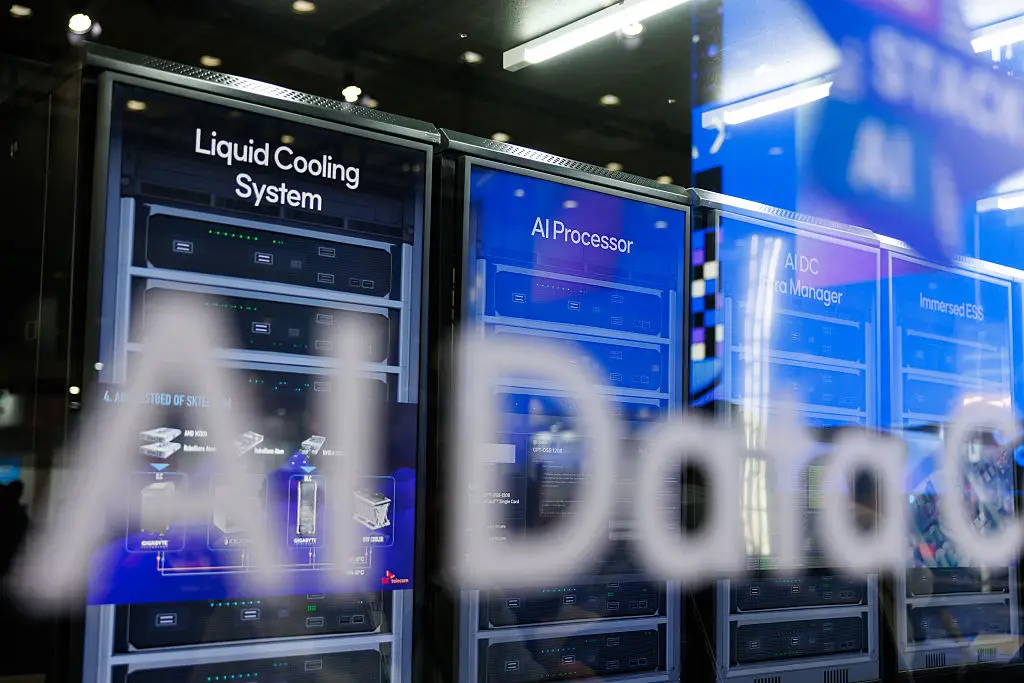
An increased backlash from the general public and organizations like the UN is pushing tech giants to try and come up with better solutions. These include the likes of closed-loop direct liquid cooling that would prevent water from evaporating as steam, immersion cooling where server blocks are submerged into baths of special liquid that doesn't conduct electricity, or seawater sitting where underwater data centers use titanium heat exchangers to absorb the heat into the ocean.
It's clear that something has to change, because if AI is consuming as much drinking water as 1.3 billion people by 2030, the robots really have won.