
Featured Image Credit: Rockstar Games
It's not a good time to be a Sony pony, and while we thought the great console wars had died down, the gaming giants are destined to open up old wounds all over again.
This time, it's not a case of Sony and Microsoft trying to sell more consoles, but instead, it seems to be which one can anger already outraged players more.
While the Green Team has come under fire for announcing yet more layoffs, and Xbox boss Asha Sharma has been unfavorably branded some sort of gaming Grim Reaper, Sony has left gamers shaking their fists in rage over its announcement about the future of physical PlayStation games.
If you thought the backlash to announcing that GTA VI wouldn't come with a disc when it releases in November 2026 was bad enough, Sony quickly said "hold my beer" when it confirmed it would stop producing all discs in January 2028.

Advert
Nearly 350,000 fans have signed a petition asking Sony to reverse its decision, but with one factory already being repurposed, there's no going back now.
With Sony standing by its decision and claiming that only 15% of all its full software sales are physical, gaming preservationists are coming to the realisation that we're going to have to embrace this digital future.
Still, a new report by Dataintelo (via CNBC) suggests that the controversial decision could be about to wipe $7.2 billion off the market. As we're reminded, Sony mocked Microsoft's strict game sharing policy for Xbox and boasted about how easy it was to share a PlayStation title with friends.
Back then, Sony executive Shuhei Yoshida gave a disc to colleague Adam Boyes, but jump forward 13 years, and the Blue Team has become the very thing it ridiculed.
Michael Pachter, managing director of strategic planning at Wedbush Securities, warned the outlet that while Sony will save itself money in terms of not having to create an actual disc, "there can be no question that the consumer pays the tax in terms of less optionality."
Whereas discs can be shared among friends, resold, and traded in, download codes allow for none of this.
Even more worrying are questions about what happens when digital storefronts shut down or a license expires. We've already seen this with the likes of 2013's Deadpool and the Marvel: Ultimate Alliance games when Activision’s licensing agreements with Marvel came to an end.
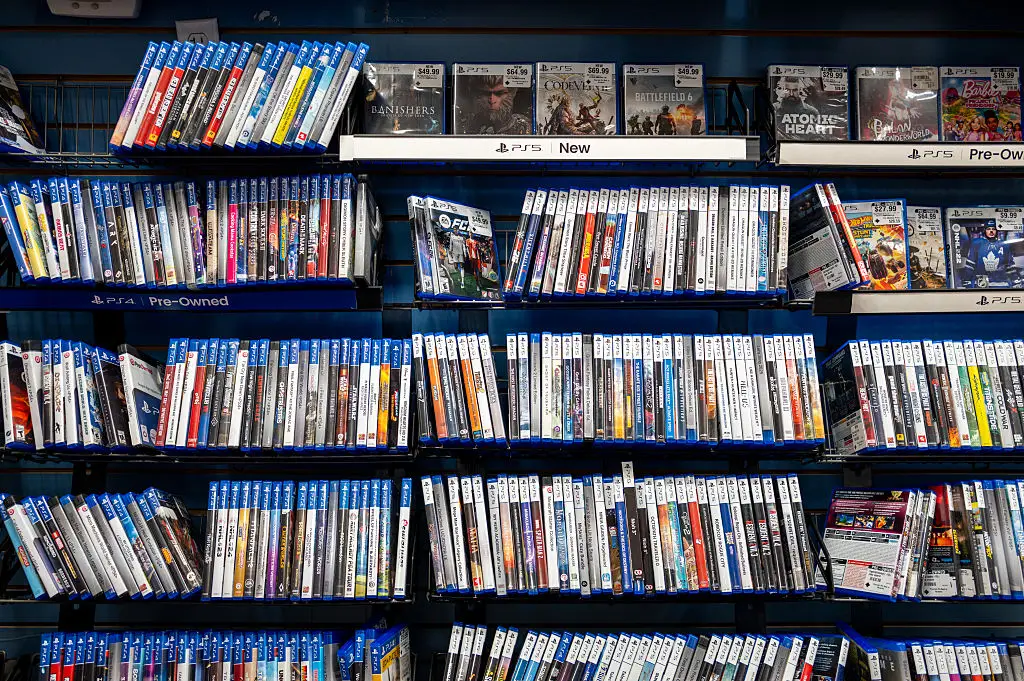
Referring to Sony's tighter control on how and where games are sold, we'll also be over a barrel in terms of when titles are discounted or how long we'll get access to them.
Kazunori Ito, director of equity research at Morningstar, reiterated that "this is a truly ironic turn of events" and foreshadowed that Sony is in danger of undoing the goodwill it won in 2013 when it showcased physical discs as "the simple, consumer-friendly option."
Dataintelo says that the global second-hand game platform market includes pre-owned games, consoles, accessories, and peripherals, estimating that it was worth $7.2 billion in 2025.
That's expected to soar to $13.8 billion by 2034, but not if Sony gets its way.
Looking at the concerning bigger picture, Patcher added: "Realistically, at least 1/3 of games have been sold historically as used, and the games that were sold used also provided currency to the gamer who traded them in as cash to pay for new games. Brick and mortar game retail is doomed."
Not that Sony will likely care too much, Ito sees this as a trend where the second-hand market will "keep shrinking and eventually disappear.”
In the aftermath of Sony removing over 500 movies that customers had previously purchased, there are obvious concerns that it could do the same with video games. Looking at a potentially grim future, Ito concluded: "There is an important difference between players accepting that shift because they see value in it, and having it effectively forced on them by taking away the alternative.
“Most would prefer to make that transition in their own way and at their own pace, rather than having it driven by the end of physical discs."