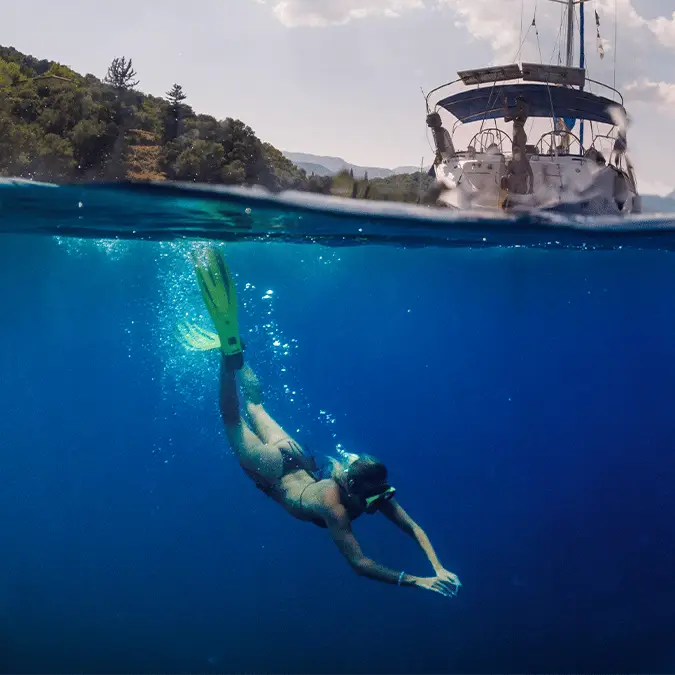
Simulation reveals insane thing that would happen to your body in the deepest part of the ocean


A simulation has revealed the insane things that would happen to your body in the deepest part of the ocean, and it's terrifying.
We all have our fears, whether it's heights, confined spaces, cave exploring or the unsettling vastness of open water.
Simulations have become a fascinating and quite horrifying way of bringing those worst-case scenarios to life, from visualising what happens to the human body after death, to waking up as the last person on Earth.
And if the deep ocean isn't already on your list of things that keep you up at night, it probably will be after this.
Advert
YouTube creator Cleo Abram tackled the deeply unsettling question of what actually happens to the human body as you descend further and further beneath the surface.
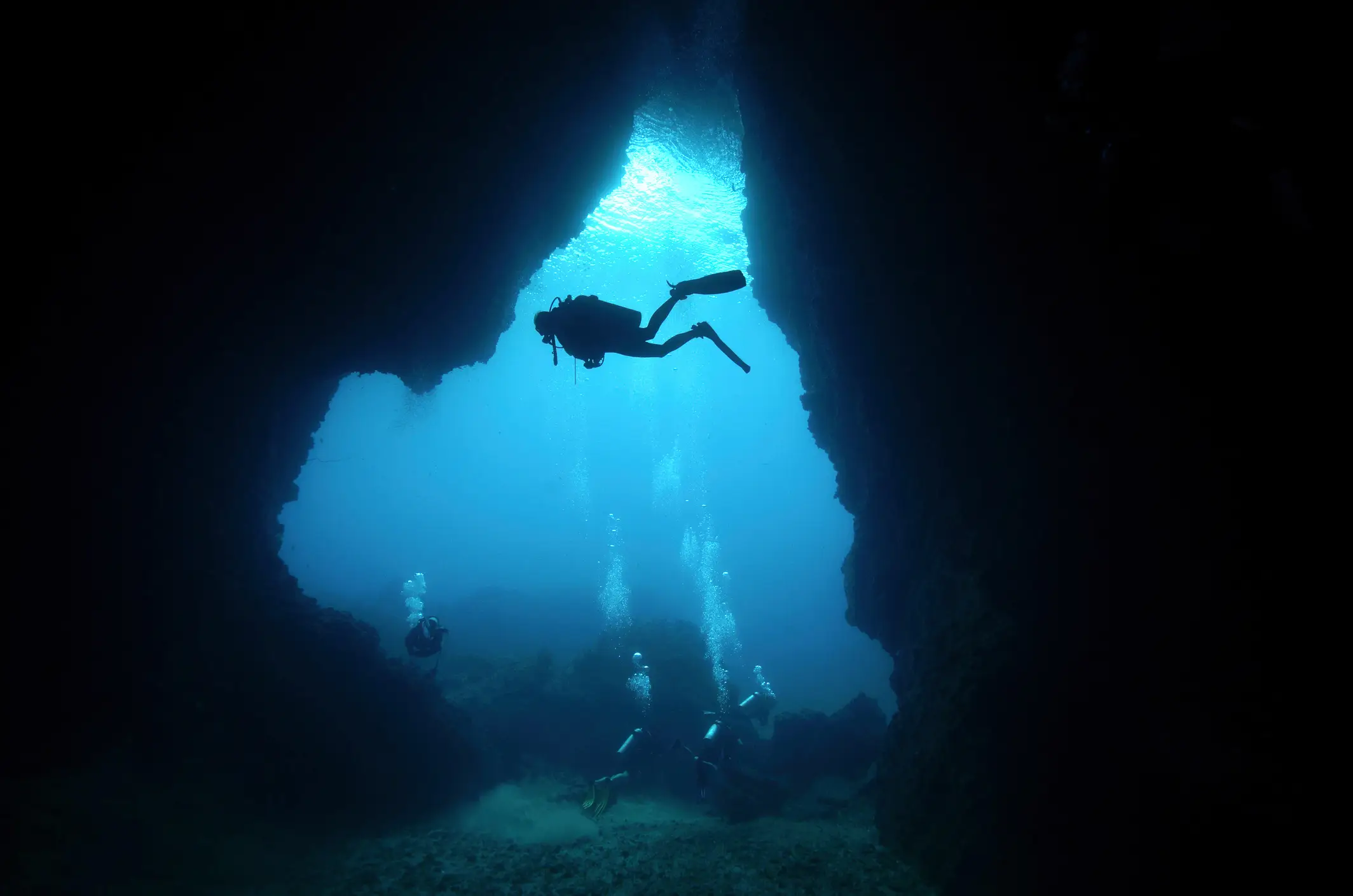
"Let's say you grab a tank full of regular air and you start diving down," Abram illustrates in the Short. "You quickly pass the depth [that] a typical open water scuba diver can go."
Going below 40 m (131 ft), the pressure causes the nitrogen in your air supply to turn 'narcotic,' impairing your thinking and coordination. At the same time, oxygen in your air tank becomes 'toxic.'
"So to go deeper, divers breathe a mixture that replaces some of both with helium, which doesn't react with our bodies but makes it easier to breathe," Abram explained.
The deepest free dive ever recorded was achieved by Austrian diver Herbert Nitsch in 2007, who reached an astonishing 214 metres (702 ft) on a single breath. Nitsch rightly claimed his title as the 'Deepest Man on Earth.'
But let's say you didn't stop there and carried on until 332m (1089ft) which is just above the height of the Eiffel Tower.
"Extreme divers can get down here in only 15 minutes, but returning can take over 13 hours," Abram said.
This is because divers need to ensure that the remaining nitrogen in their blood doesn't 'bubble inside them as they ascend.'
As terrifying as it is, if divers ascend too quickly and nitrogen doesn't have time to be safely exhaled, the gas forms bubbles in the body. This is called decompression sickness and it can be devastating, causing joint pain, paralysis, and in serious cases, death.
Viewers in the comments seemed pretty frightened at the thought of deep diving.
"I’m panicking just by thinking of that freediver," one user wrote in the comments.
"I think this is your scariest video yet. The idea of my blood bubbling for some reason terrifies me," another added.
"We know more about space than we do about our own oceans," someone else pointed out.
There's something to add to your fear list!