
uniladtech homepage
  • News
    • Tech News
    • AI
  • Gadgets
    • Apple
    • iPhone
  • Gaming
    • Playstation
    • Xbox
  • Science
    • News
    • Space
  • Streaming
    • Netflix
  • Vehicles
    • Car News
  • Social Media
    • WhatsApp
    • YouTube
  • Advertise
  • Terms
  • Privacy & Cookies
  • LADbible Group
  • LADbible
  • UNILAD
  • SPORTbible
  • GAMINGbible
  • Tyla
  • FOODbible
  • License Our Content
  • About Us & Contact
  • Jobs
  • Latest
  • Archive
  • Topics A-Z
  • Authors
Facebook
Instagram
X
TikTok
Snapchat
WhatsApp
Submit Your Content
Scientists make new prediction for when the universe will end and it's trillions of years earlier than expected

Home>Science>Space
Published 10:39 8 May 2026 GMT+1

Scientists make new prediction for when the universe will end and it's trillions of years earlier than expected

Could this be something we have to worry about?

Harry Boulton

Harry Boulton

google discoverFollow us on Google Discover
Featured Image Credit: chuchart duangdaw / Getty
Science
Space

Advert

Advert

Advert

The end of the universe as we know it has just been rescheduled, as scientists update a previous prediction to indicate that it's actually set to be trillions of years earlier than they thought.

There are far more pressing issues facing the world right now than the inevitable natural death of our universe – including the threat of nuclear war and the collapse of the climate – but the annihilation of everything has just been pushed forward.

Referencing the point at which our universe will suffer what's referred to as a 'heat death', where the continuous expansion of everything will be flipped on its head, causing planets, stars, and entire solar systems to suddenly collapse inwards into a single point.

This will involve the creation of terrifying black holes that simulations can only begin to recreate right now, yet while it was previously thought to be far in the distant future, it's now actually a lot closer than expected.

Advert

This new prediction comes from scientists at the Donostia International Physics Center in a pre-print paper, who indicate that the universe will reach its conclusion roughly 33.3 billion years after the Big Bang took place.
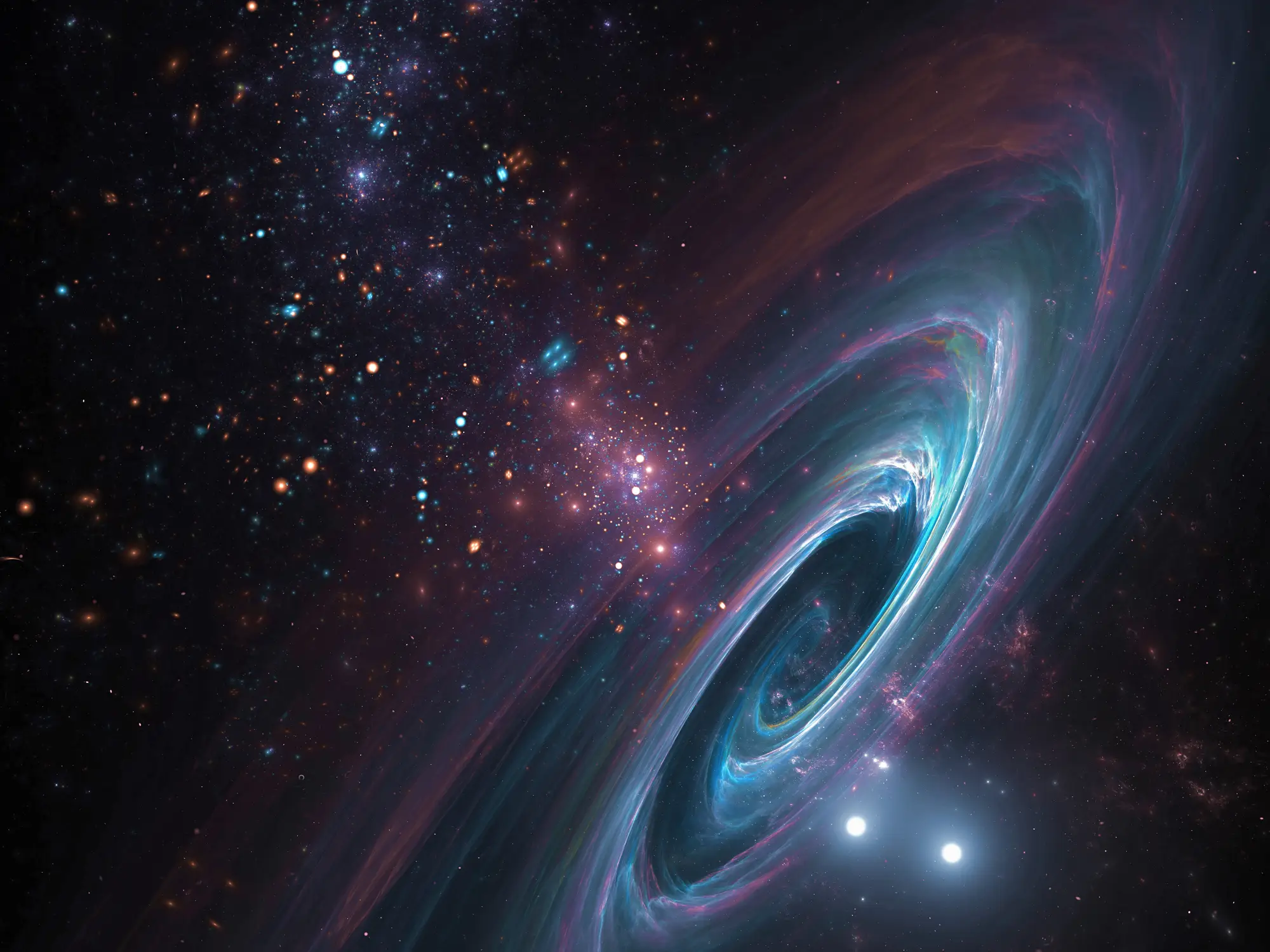
The universe will collapse upon itself in a 'big crunch' sooner than expected thanks to new predictions (Getty Stock)

This is estimated to be around 13.8 billion years into the past, giving the universe now 'just' 20 billion years before its death — thankfully nothing any of us living right now have to worry about at all.

That doesn't mean that Earth's death will come at the same time, however, as our planet will become inhospitable far sooner and is set to eventually be consumed by the Sun.

One thing to take into consideration is that this prediction remains subject to further rigorous testing, especially relating to factors relating to dark energy which remains one of the biggest question marks in the space and science world right now.
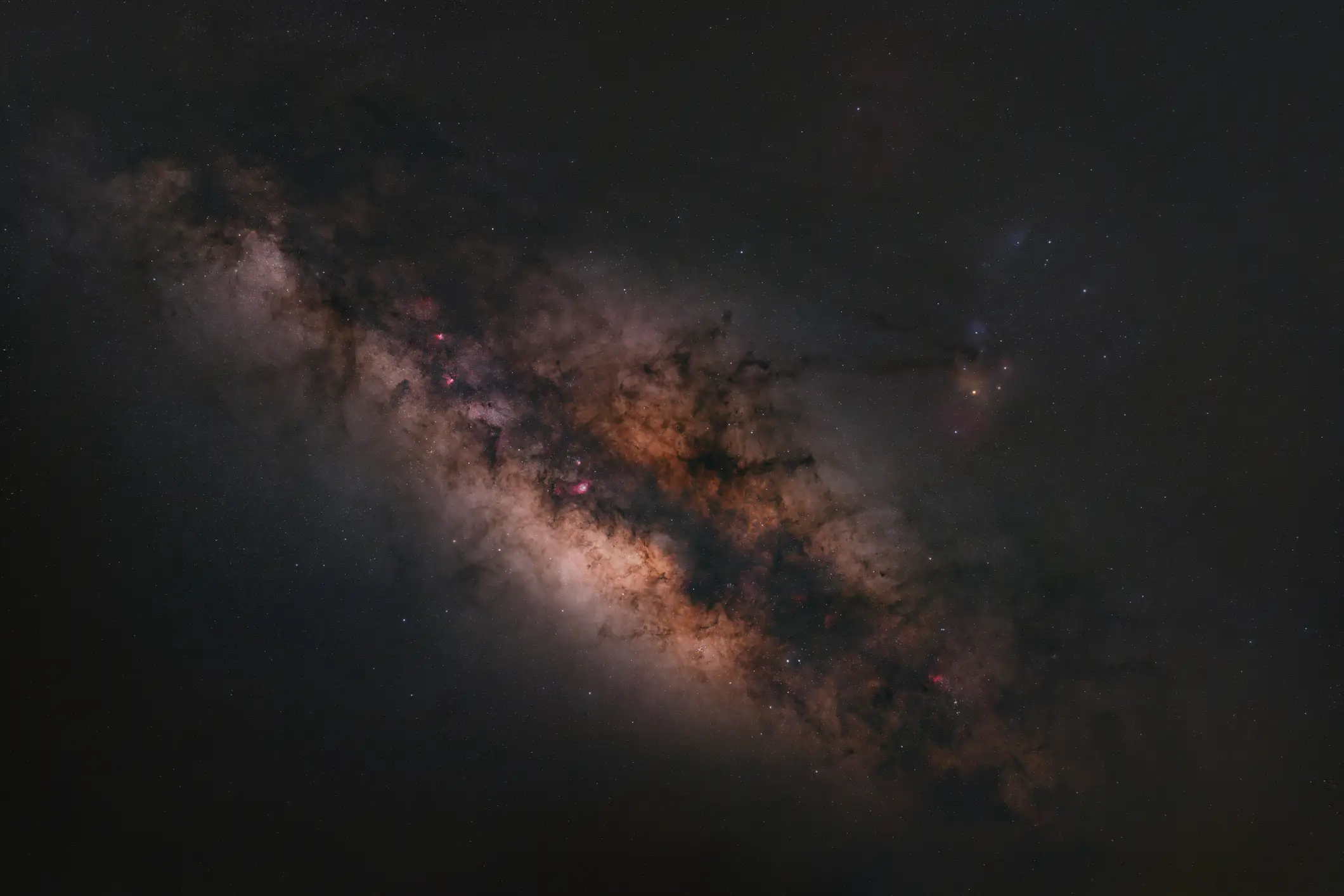
This timeline of the universe's end – which includes our solar system – could be adjusted when new dark energy research is concluded (Getty Stock)

"Fortunately, a number of projects measuring different aspects of the dark energy are forthcoming in the near future," the study concludes, adding that "we look forward to a more precise determination of the universe's lifespan."

What this could mean then is that future calculations could adjust this prediction, perhaps pushing it forward even closer to our current time period — although unless anything dramatic changes it's still likely to not affect us, or any humans in future generations for that matter.

Another event that the study proposes is the collision of the Milky Way – our galaxy – with the nearby Andromeda galaxy, which is predicted to occur between 4 and 10 billion years into the future.

"It is interesting to re-evaluate the time of their collision (or no collision) before the big crunch," the researchers hypothesize.

Choose your content:

27 mins ago
17 hours ago
18 hours ago
  • UCG / Contributor / Getty
    27 mins ago

    Amazon offers same-day Ozempic deliveries as skinny jab craze continues

    You can now get your dose of Ozempic with a simple swipe and a tap

    Science
  • Olena Malik / Getty
    17 hours ago

    Study unveils alarming link between weight loss drugs and hair loss in new research

    Studies have observed a concerning new side effect

    Science
  • Getty Stock
    18 hours ago

    Woman reveals bizarre genital side effect after coming off SSRI drug prescribed to millions every year

    She claims she woke up one day with her life completely changed

    Science
  • - / Contributor / Getty
    18 hours ago

    Health expert warns of 'pandemic panic' as cruise ship hantavirus outbreak claims three lives

    Be careful what you read when it comes to the MV Hondius outbreak

    Science
  • Scientists reveal when terrifying 'Big Crunch' could bring entire universe to the end
  • Worrying study suggests 'the end of the universe' could be approaching 'much sooner' than scientists thought
  • Scientists issue chilling new prediction about when humanity could face its horrifying end
  • 'Mystery' of universe solved as scientists make shocking discovery '10 times' bigger than our galaxy