
NASA scientists go to Scotland after discovering signs of alien life in 1.2-billion-year-old rocks


Is there really life on Mars? While the British TV series called Life on Mars might've incorrectly fooled you into thinking it was a sci-fi series about scouring the cosmos for little green dudes, a group of NASA scientists are actually looking for them in the most unlikely of places.
There's still much debate about life beyond our little third rock from the Sun, with some claiming we found proof of life on Mars some 50 years ago...then accidentally killed it.
NASA administrator Jared Isaacman is adamant there's life up there, while various reveals have shown off the likes of jellyfish UFOs and potential Martian guns. Most of us will need more than that until we're convinced aliens are really waiting for us up in space, which is why NASA is apparently looking for more concrete proof here on Earth.
Why are NASA scientists studying rocks in Scotland?
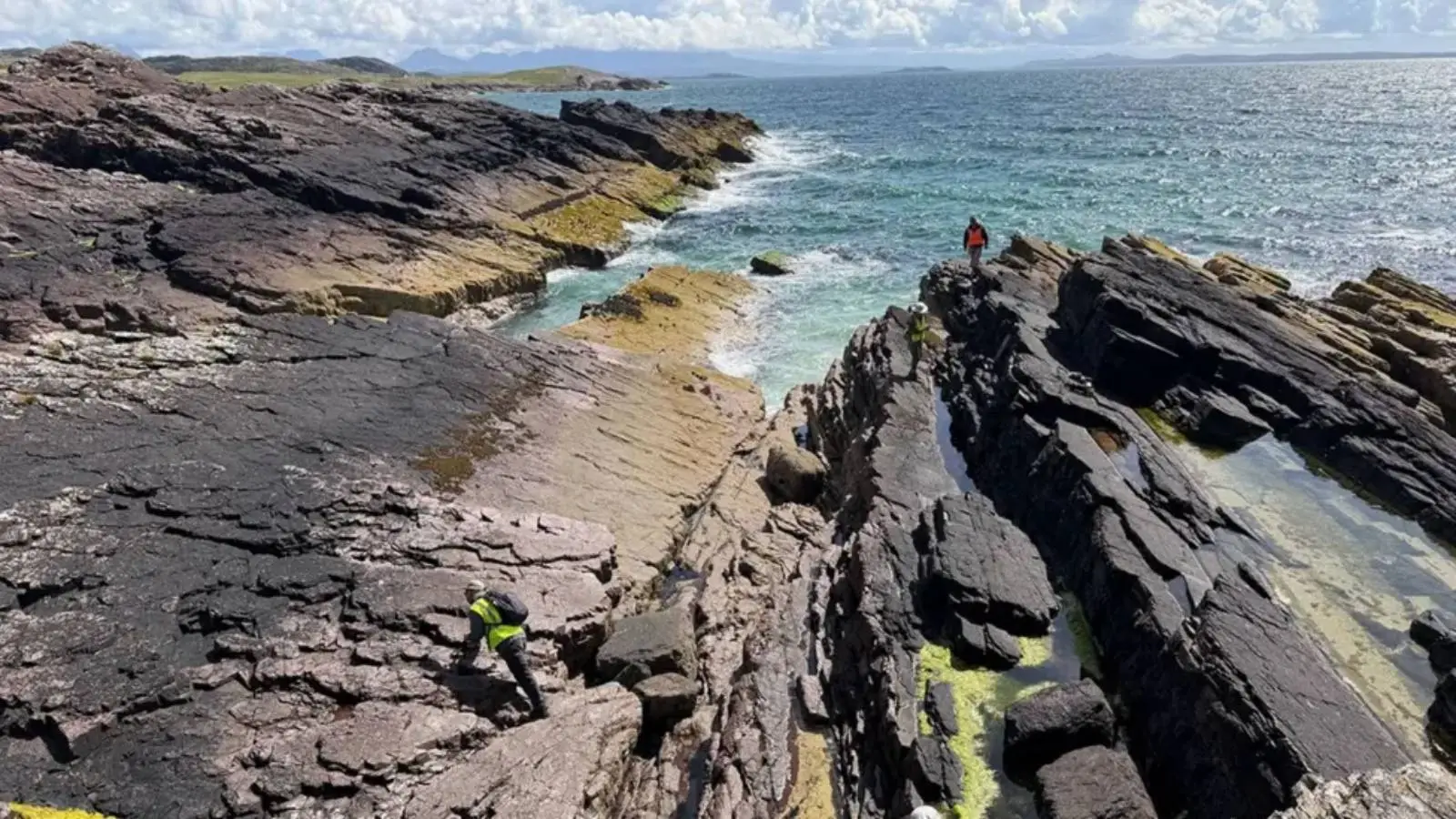
According to the BBC, NASA scientists are studying rocks from the Scottish Highlands, specifically focusing on a geological feature called the Stoer Formation. This comes in the aftermath of NASA claiming its Perseverance rover found possible biosignatures made by ancient microbes on Martian rocks.
Advert
The team suggests that rocks formed in this area of the north-west Highlands are comparable to ancient Martian lakes and rivers, but importantly, it gives us a fascinating snapshot of what life was like 1.2 billion years ago.
The Goddard Instrument Field Team led the research expedition to the small crofting community of Clachtoll. NASA reminds us: "Though Mars is dry today, the Martian landscape, like our own planet's, is shaped by an ancient history of flowing water."
Comparing the Scottish Highlands to Mars' now-arid surface, it continued: "Both worlds have layered areas of mudstones and siltstones rich in clay minerals.
"Learning how signs of ancient life show up in Earth rocks like these Scottish cliffs can help us understand the story of habitability and the potential for biosignatures to be preserved and detected on Mars."
Was Mars once similar to Earth?
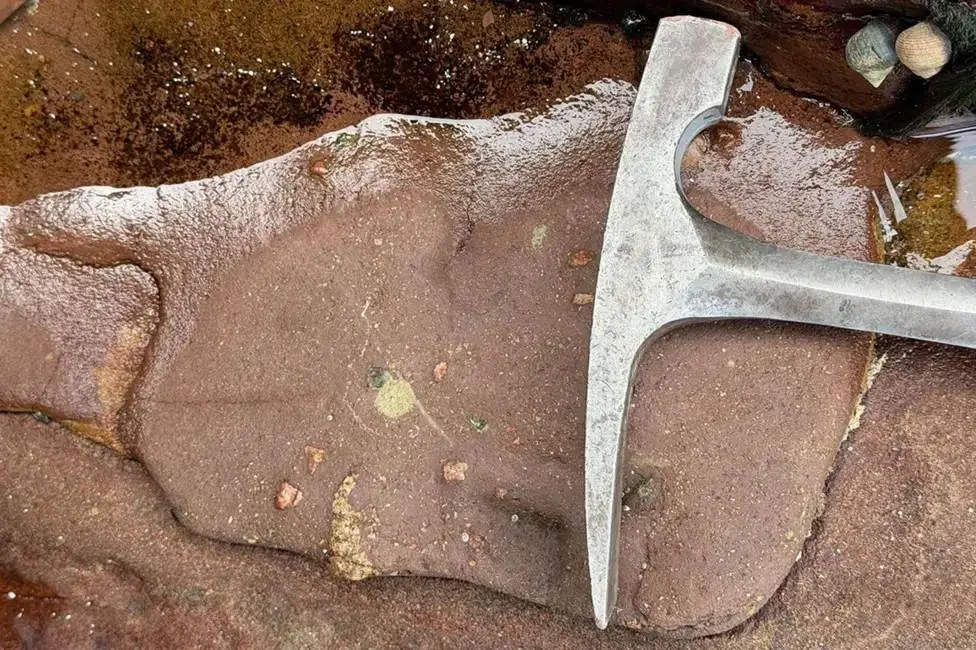
Rocks in this area are thought to be similar to those found on Mars, while tech earmarked for an upcoming search for life on the Red Planet has been tested by a team at the University of St Andrews at Lower Diabaig, in Torridon.
Scotland's ancient geology has previously been praised for helping us understand life on Mars, and in honor of this, NASA's Curiosity rover famously surveyed an area of the planet named after Torridon.
Several areas and geological features on Mars have been named after Scottish locales including Siccar Point, Muck, Wick, Sandwick, and Holyrood.
Torridon was picked due to the Torridonian Supergroup, which is a geological formation that's thought to contain some of the oldest evidence of life on rock in the entire UK.
Billions of years ago, Mars included rivers and lakes, with a hypothesis about a vast northern ocean covering a massive part of the planet.
The climate was much warmer and wetter, while early Mars also had a molten metal core that generated a protective magnetic field similar to our own.
Things diverged due to Mars being about half the diameter of Earth and only 11% the mass. This means it cooled quicker, and around 3.7 billion years ago, its core solidified.
Unable to protect itself from solar winds, Mars' atmosphere and surface water were stripped away, leaving us with the cold and dry desert we see today.
As the Clachtoll rocks at the Stoer Formation are considered identical to those on Mars, it's hoped that better understanding our own rocks from home will help us unravel the mystery of grey-green spots found inside the rocks of Mars’ Jezero Crater.