uniladtech homepage
  • News
    • Tech News
    • AI
  • Gadgets
    • Apple
    • iPhone
  • Gaming
    • Playstation
    • Xbox
  • Science
    • News
    • Space
  • Streaming
    • Netflix
  • Vehicles
    • Car News
  • Social Media
    • WhatsApp
    • YouTube
  • Advertise
  • Terms
  • Privacy & Cookies
  • LADbible Group
  • LADbible
  • UNILAD
  • SPORTbible
  • GAMINGbible
  • Tyla
  • FOODbible
  • License Our Content
  • About Us & Contact
  • Jobs
  • Latest
  • Archive
  • Topics A-Z
  • Authors
Facebook
Instagram
X
TikTok
Snapchat
WhatsApp
Submit Your Content
NASA satellite asleep for nearly a year just woke up to reveal secrets from deep space

Home>Science>Space
Published 16:12 13 Jul 2026 GMT+1

NASA satellite asleep for nearly a year just woke up to reveal secrets from deep space

The probe was first launched in 2006.

Stefania Sarrubba

Stefania Sarrubba

google discoverFollow us on Google Discover
Featured Image Credit: NASA
Nasa
Space
Science

Advert

Advert

Advert

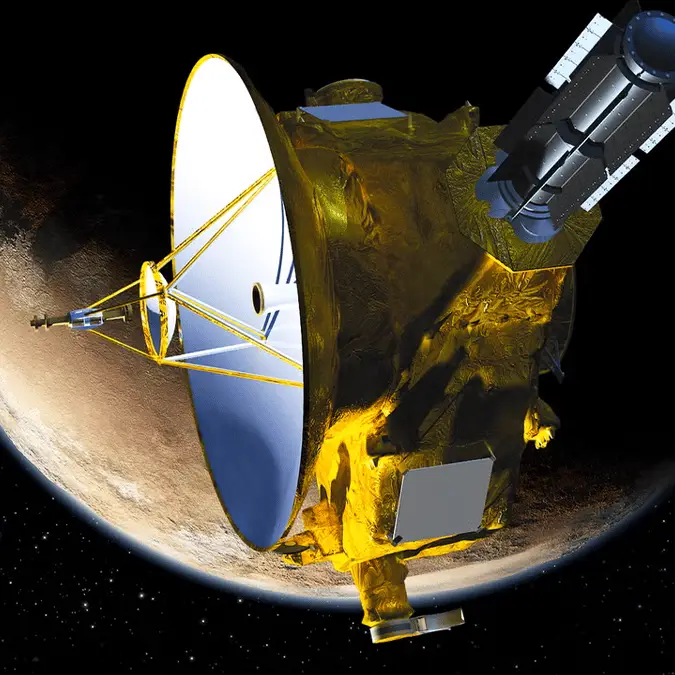
NASA’s New Horizons spacecraft has just woken up from its hibernation, with scientists about to find out what data the satellite has collected during its outer space slumber.

The spacecraft, which is worth $780.6 million, was the first to explore Pluto up close and is currently travelling our solar system about six billion miles from Earth.

The data recorded by the probe could help researchers understand more about how the universe formed and what’s inside the Kuiper Belt, a circumstellar disc extending from the orbit of Neptune and composed of small bodies residual from the formation of the solar system.

New Horizons typically hibernates during long cruise periods, during which it continues to collect and store data. The satellite’s hibernation period lasted for 321 days, and ended on 23 June.

Advert

NASA confirmed the satellite woke up in good health after regularly reporting its status to Earth.
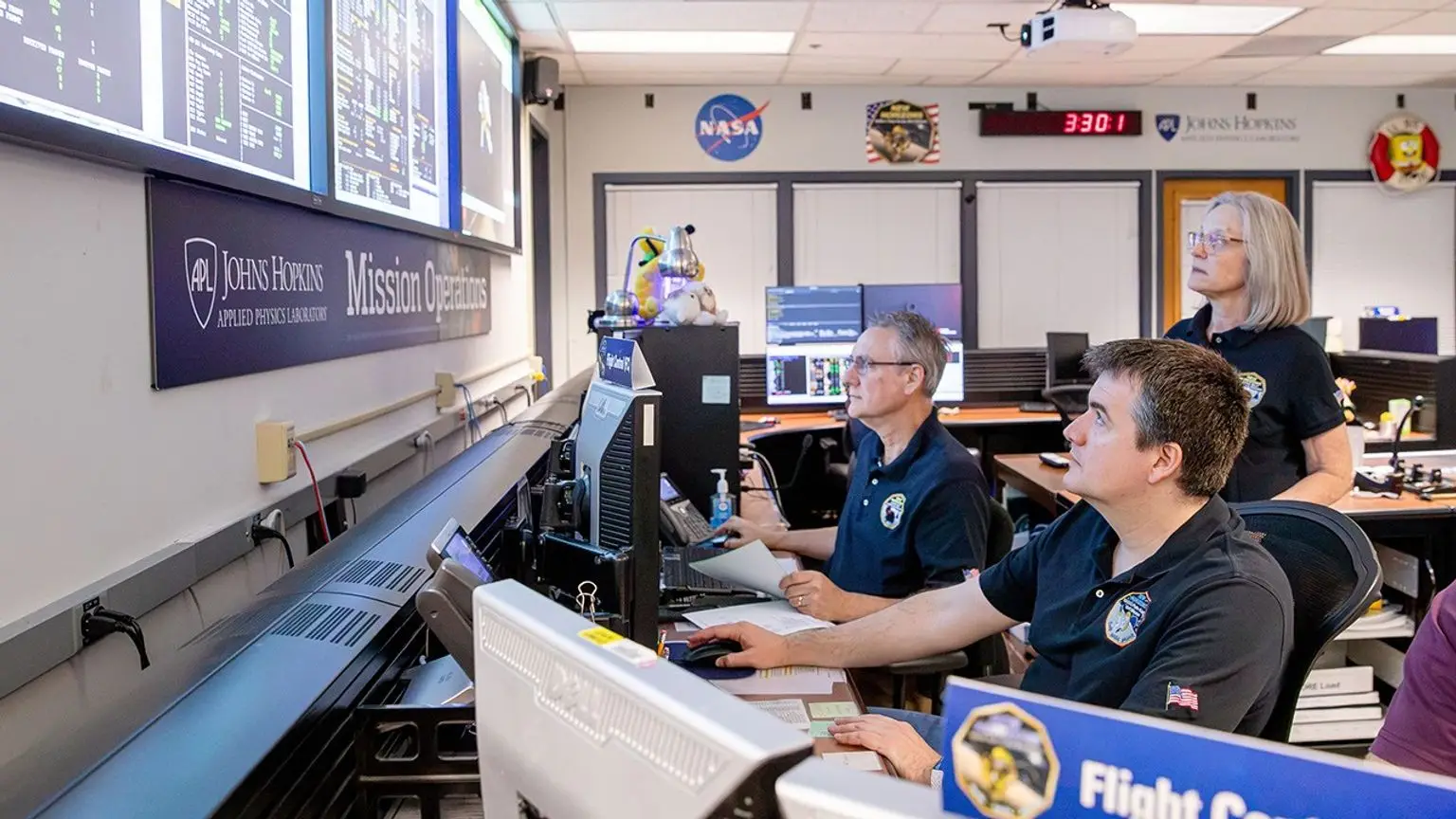
Flight controllers streaming from NASA's New Horizons spacecraft to the mission operations center (NASA)

“Every status report through this hibernation period was ‘green,’ meaning all was well aboard New Horizons each and every week,” Alice Bowman, the New Horizons mission operations manager at Maryland’s Johns Hopkins Applied Physics Laboratory, said in a statement.

In the coming days, the team will downlink data about the spacecraft’s health and safety.

Then, it will retrieve data from New Horizon’s three science instruments: the Venetia Burney Student Dust Counter that detects space dust, the Pluto particle-detecting, Pluto Energetic Particle Spectrometer Science Investigation, and the solar wind-measuring, Solar Wind at Pluto.

In under a month, the scientific instruments will continue their operations.

“In about three weeks, the spacecraft’s onboard Alice ultraviolet spectrograph will look at the hydrogen gas distribution in the outer heliosphere, while the Solar Wind at Pluto, the Pluto Energetic Particle Spectrometer Science Investigation and the Venetia Burney Student Dust Counter instruments continue their measurements, and the ground team conducts a series of spacecraft and instrument checkouts,” said NASA.
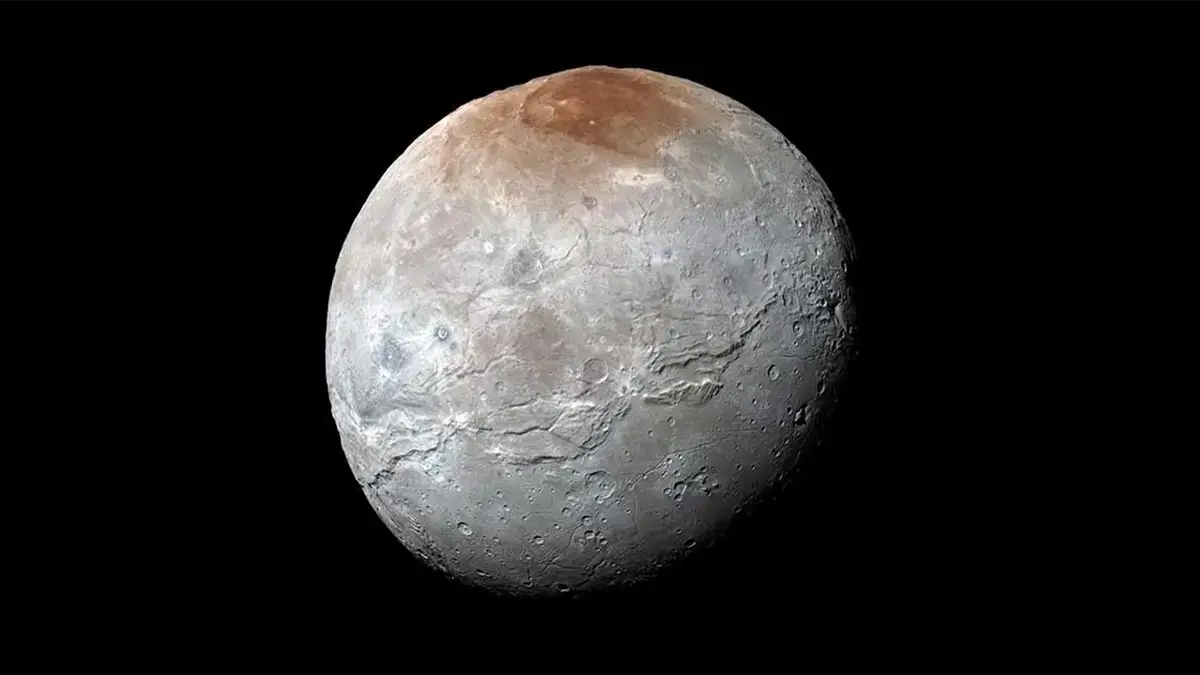
NASA's New Horizons view of Charon just before closest approach in 2015 (NASA/Johns Hopkins University Applied Physics Laboratory/Southwest Research Institute)

New Horizons first launched from Earth in January 2006, recording the fastest launch in history.

Expected to last through the end of the decade the satellite was originally designed and launched to study Pluto, a task it completed in July 2015. Its second goal was to reach the Kuiper Belt object Arrokoth, the most distant object ever explored up close, which it did in 2019.

On its time in orbit, New Horizons also flown by Jupiter and observed its moons and studied the heliosphere.

Choose your content:

5 hours ago
6 hours ago
2 days ago
  • Joe Raedle/Getty Images
    5 hours ago

    Scientists fired by Trump launch their own independent site to save 15 years of vital data

    The scientists were previously part of the a vital climate organization

    Science
  • Galina Zhigalova via Getty
    6 hours ago

    Woman with 'Ozempic stomach mass' is cured after doctor prescribed Diet Coke

    She was given an unexpected cure

    Science
  • fotograzia / Getty
    6 hours ago

    The US just approved a massive space mirror to provide 'sunlight on demand' to millions

    The project entails 50,000 spacecrafts by 2035, but astronomers and environmentalists are pushing back

    Science
  • @‌bryan_johnson / X
    2 days ago

    Bryan Johnson reveals girlfriend diagnosed with 'gnarly disease' that usually takes women years to confirm

    Kate was diagnosed in just over a month

    Science
  • 1,300lb NASA satellite will crash into Earth today as space agency reveal risk it will hit humans
  • NASA will pay you to spend a year on the Moon and Mars without ever leaving Earth
  • The US just approved a massive space mirror to provide 'sunlight on demand' to millions
  • NASA responds after Russia accidentally blew up its only way to send astronauts to space