
The US just approved a massive space mirror to provide 'sunlight on demand' to millions


The Federal Communications Commission (FCC) has given the green light to a project that would help bring sunlight to nighttime regions, attracting harsh criticism from astronomers and environmentalists.
The project in question is set to test the ability to reflect sunlight into nighttime regions, with the FCC authorising the launch of a satellite earlier this month.
Named Eärendil-1, the satellite developed by Reflect Orbital will deploy a thin-film reflector 18 metres on a side in low Earth orbit, reflecting sunlight to the ground.
Expected to launch later in the year, the 142-kilogram spacecraft will be shot up into an orbit 600 to 650 kilometres in altitude, where it will deploy the reflector.
Advert
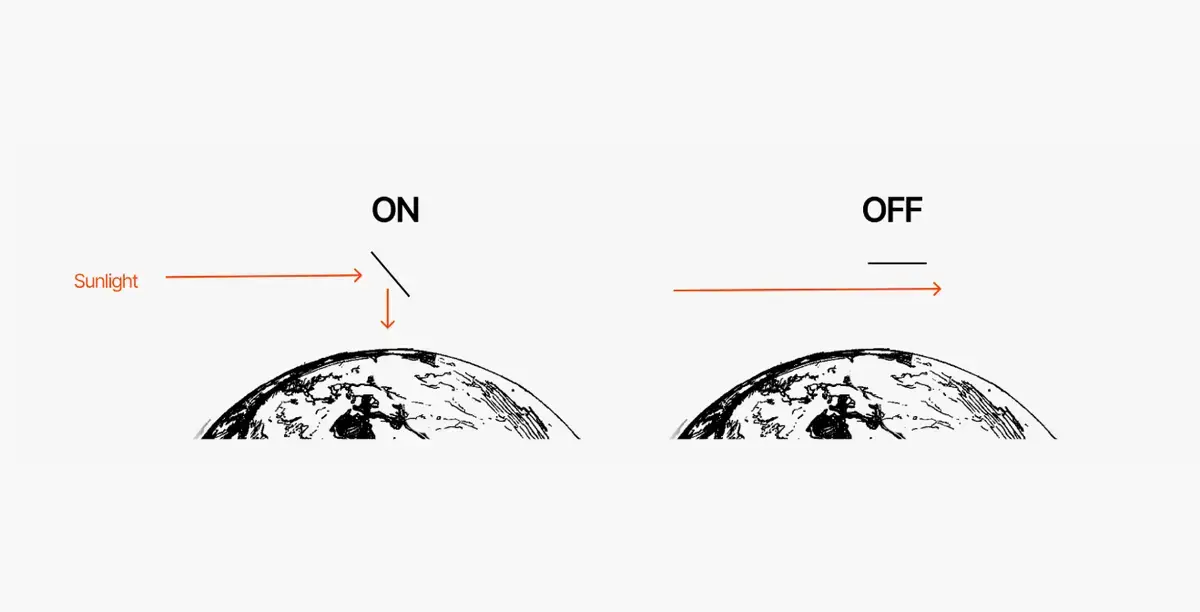
Reflect Orbital and FCC plan to use the spacecraft to test its ability to direct reflected sunlight to specific areas of the Earth for minutes at a time. This technology would allow to extend daylight for activities ranging from construction sites to search-and-rescue efforts, as well as increasing energy production if reflected onto solar farms.
“We’re grateful to the FCC for recognizing the importance of testing novel technologies in space,” Ben Nowack, chief executive of Reflect Orbital, said in a statement (via Space News). “This license is the first step toward rigorously testing our technology’s efficacy and the safeguards we have developed.”
As much as this sounds like a good idea on paper, astronomers and environmentalists have warned against the possible devastating effects of having thousands of spacecrafts — the FFC plans to have 50,000 by 2035 — altering the day-night cycles.
Submitted nearly a year ago, Reflect Orbital’s application to the FFC generated significant backlash, as did SpaceX’s application to operate up to 1 million orbital data centre satellites.
As Reflect Orbital plan to operate thousands of spacecrafts into orbit for the project, environmentalists believe that these could disrupt the diurnal cycles of plants and animals. Astronomers also worry that spacecrafts could interfere with their operations and even be dangerous to instruments mounted on telescopes or to people looking through telescope lenses.
Last month at the June 4 National Academies meeting, distinguished research professor at the University of California, Davis, and chief scientist of the Vera C. Rubin Observatory Tony Tyson branded the Reflect Orbital plans ‘even crazier’ than the broadband satellite constellations that have been concerned astronomers for years.

Tyson said that that the thin-film reflectors would not be able to precisely direct sunlight, risking scattering it instead over a wider area. “Imagine the sky full of moons,” he said.
On a similar worrying note, the European Southern Observatory (ESO), which operates several major telescopes in Chile, said the constellation of 50,000 satellites proposed by Reflect Orbital would increase the background sky brightness at its facilities by a factor of three to four, limiting the ability of its telescopes to detect faint objects.
“The ball is now in the FCC’s court, and we wait to see the determinations they make on both filings,” said Betty Kioko, ESO institutional affairs officer, in the statement. “For optical astronomy, this is an existential threat, and we hope that the regulators will share that view.”
For its part, the FCC concluded that that any impacts of Eärendil-1 on astronomy or the environment fell outside its jurisdiction and that they vowed to work with NASA and the National Science Foundation to protect optical astronomy and to working with the broader astronomical community on its concerns.
“We find that concerns about Eärendil-1’s impacts on optical astronomy fall outside our review and authorisation of the space station and are not a basis for denial of or additional conditions on Reflect Orbital’s operations,” the FCC stated.
They also maintained that the project would be ‘in the public interest’ as it ‘promotes American innovation and the new services and economic growth that come from that innovation’.
The FCC’s authorisation for the satellite on 9 July came a day after environmental and scientific groups petitioned for the agency to perform a detailed environmental review, known as a programmatic environmental assessment, for applications of orbital data centre constellations.