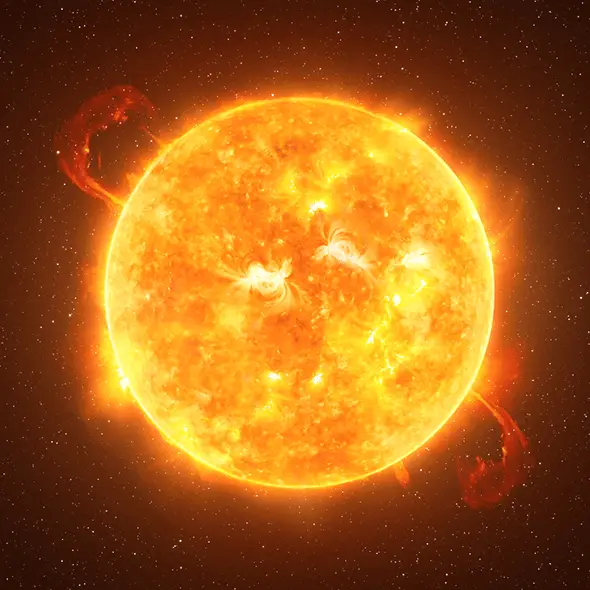
NASA animation shows the sun vs a giant black hole and it’s terrifying


Well, there's nothing like watching a video of a huge black hole to put things truly into perspective.
If you needed a bit of humbling today, look no further, NASA is here to help.
The space agency released an animation that shows just how tiny we are on Earth - Especially in the context of supermassive black holes across the galaxies.
Advert
It might not sound too daunting, but just watching the clip is a sharp reminder of how insanely big the universe is.
The video starts with a view of our sun, which for most of us, is the most important interplanetary being outside of Earth.
The animation then zooms out, making it clear that the sun is a tiny, almost inconsequential part of the universe - Despite being of such great importance from where we're standing.
First the animation takes us past what is romantically called 1601+3113, which looks ginormous but is actually a dwarf galaxy.
Don't be fooled, it's still a whole lot bigger than us - it has a black hole containing the mass of 100,000 suns, but incredibly compressed.
And this is just one of 10 black holes visualized in the animation.
As NASA so eloquently says: "All monster black holes are not equal".
In proving that point, as the video continues to zoom out it shows us just how many are lurking.
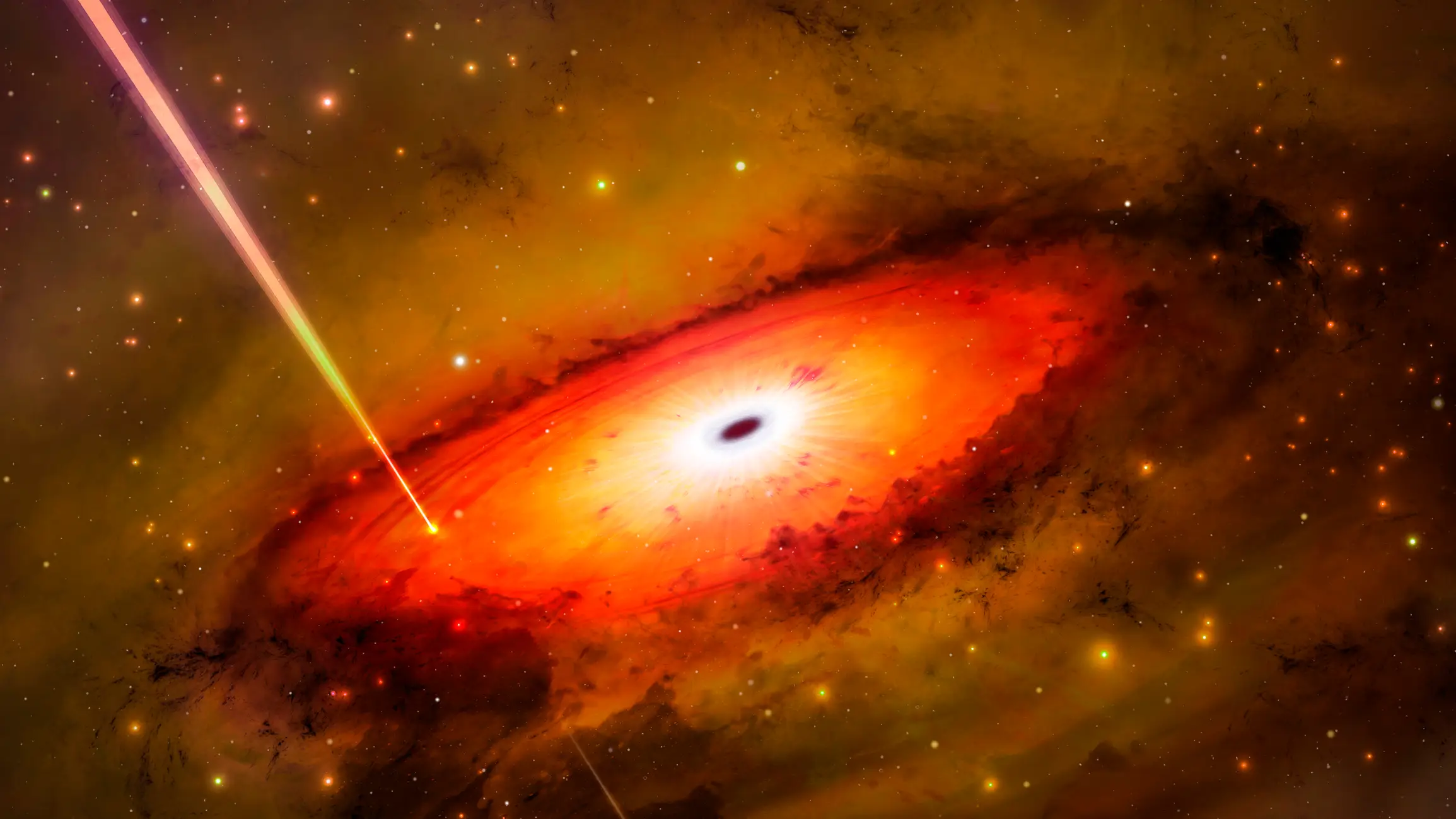
The black holes range from a whopping 100,000 to more than 60 billion times the mass of the sun.
In the clip, they're visualized to scale according to the size of their shadows.
These are described as "a circular zone about twice the size of their event horizons".
One theorist as NASA, Jeremy Schnittman, says scientists have found over 100 supermassive black holes, and confirmed their size with the help of the Hubble Space Telescope.
He said: “How do they get so big? When galaxies collide, their central black holes eventually may merge together too.”
For the grand finale of the video, two of the biggest supermassive black holes of the lot, M87 and TON 618, make an appearance.
According to NASA, M87 has an almost unfathomable mass of 5.4 billion suns.
Apparently its shadow is so large that a beam of light traveling at 670 million mph (1 billion kph) – would take about two and a half days to cross it.
Pretty terrifying to think about, and it doesn't stop there.
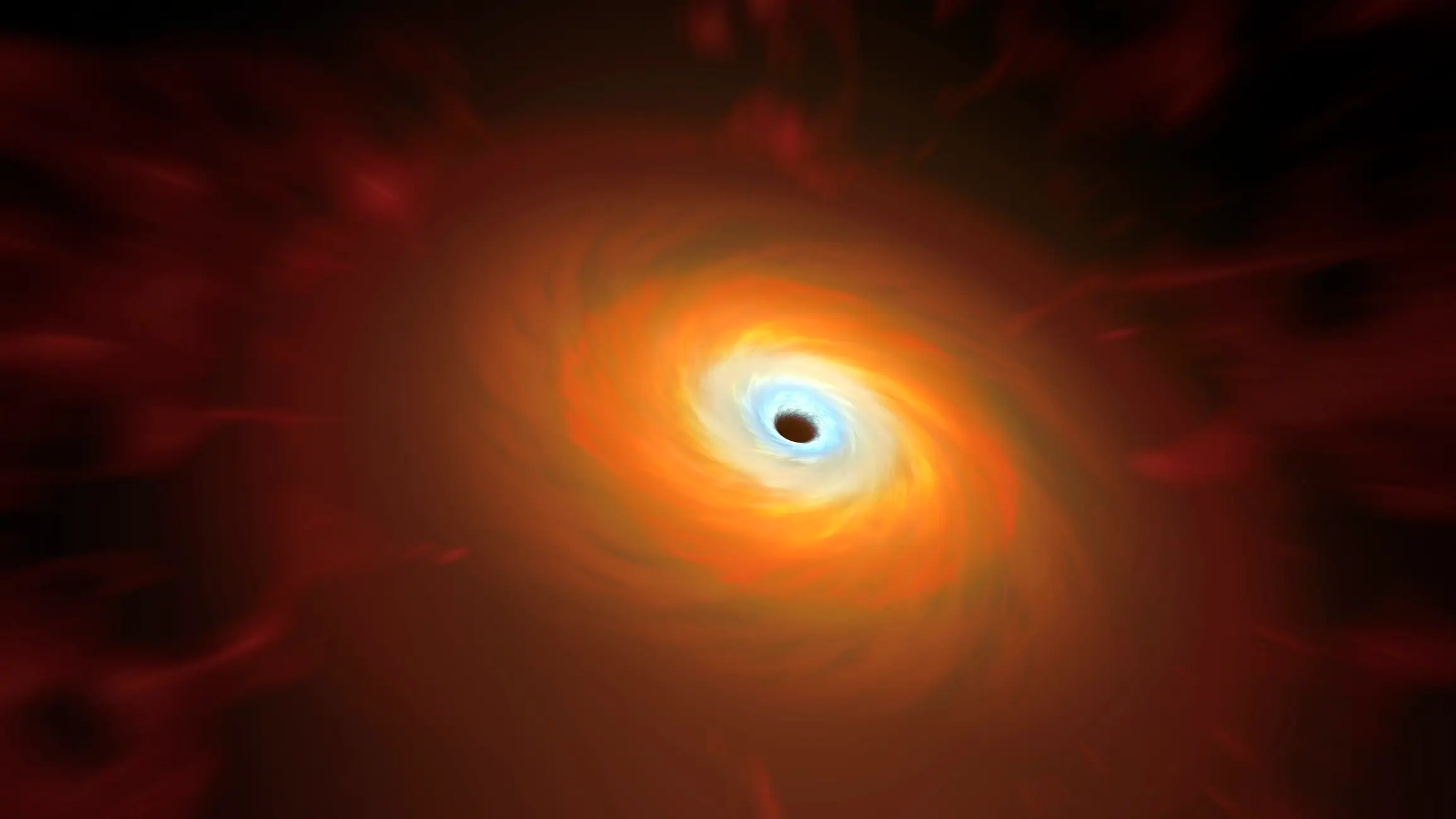
TON 618? It makes almost everything in the video look minuscule, as it contains over 60 billion solar masses and would take a beam of light weeks to travel across.
It even holds the Guinness World Record for the most massive observed black hole.
Although it sounds pretty terrifying (and is) to think about, TON 618 is around 10.8 billion light-years away from us, so it's unlikely to be swallowing up Earth any time soon.