uniladtech homepage
  • News
    • Tech News
    • AI
  • Gadgets
    • Apple
    • iPhone
  • Gaming
    • Playstation
    • Xbox
  • Science
    • News
    • Space
  • Streaming
    • Netflix
  • Vehicles
    • Car News
  • Social Media
    • WhatsApp
    • YouTube
  • Advertise
  • Terms
  • Privacy & Cookies
  • LADbible Group
  • LADbible
  • UNILAD
  • SPORTbible
  • GAMINGbible
  • Tyla
  • FOODbible
  • License Our Content
  • About Us & Contact
  • Jobs
  • Latest
  • Archive
  • Topics A-Z
  • Authors
Facebook
Instagram
X
TikTok
Snapchat
WhatsApp
Submit Your Content
NASA astronaut shares rare photo from space that 'cannot be taken anymore'
Home>Science>Space
Published 17:00 1 Aug 2024 GMT+1

NASA astronaut shares rare photo from space that 'cannot be taken anymore'

The rare image from space is no longer possible to capture after a change happened with the International Space Station

Rikki Loftus

Rikki Loftus

google discoverFollow us on Google Discover
Featured Image Credit: Instagram/@astro_pettit/SCIEPRO/Getty
Space
Nasa
Science
Earth
Photography

Advert

Advert

Advert

A NASA astronaut has shared a rare photo snapped from space that “cannot be taken anymore”.

Astronaut Donald Pettit shared an image he had taken from the International Space Station, explaining why it’s no longer possible to get a similar shot.

Taking to Instagram to share the photo he’d captured of stars from aboard the ISS.
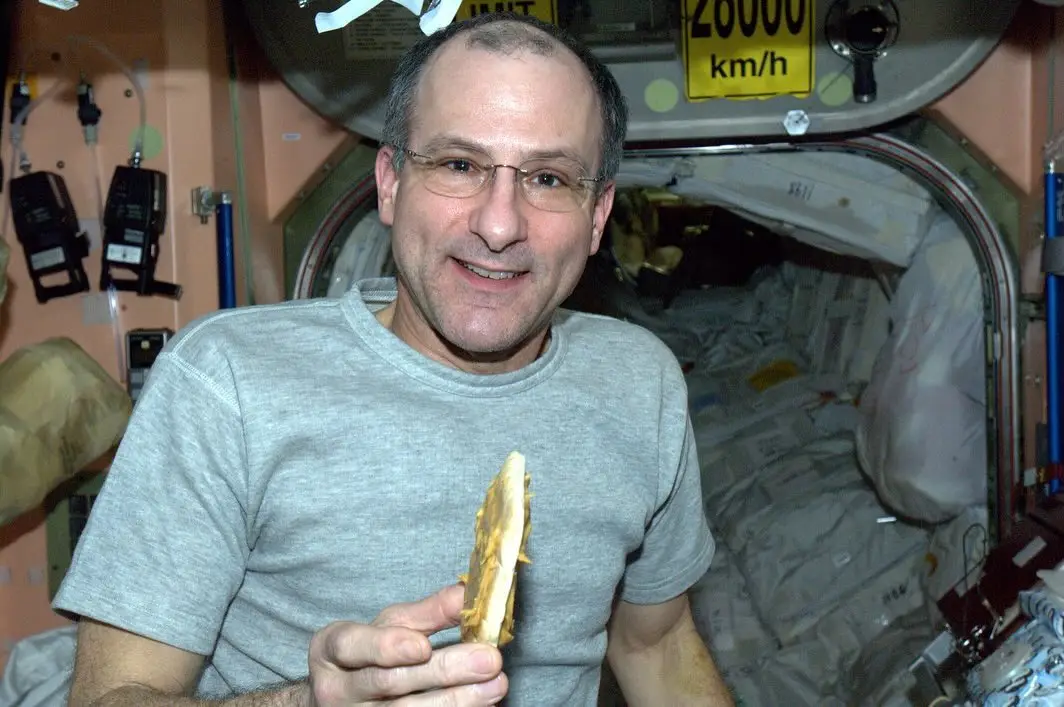
Astronaut Donald Pettit captured the rare image (Instagram/@astro_pettit)

Advert

In the caption, Pettit revealed that things had changed on the station, meaning photos like that one were no longer possible.

Pettit said: “Star field image of the Southern Cross from @iss during Expedition 6 in 2003 showing the atmosphere on edge illuminated by green airglow from atomic oxygen.

“At this time Space Station’s orbital attitude was a solar inertial attitude (XPOP) that allowed the solar panels to point towards the sun without any tracking (solar tracking was not added to ISS until much later).
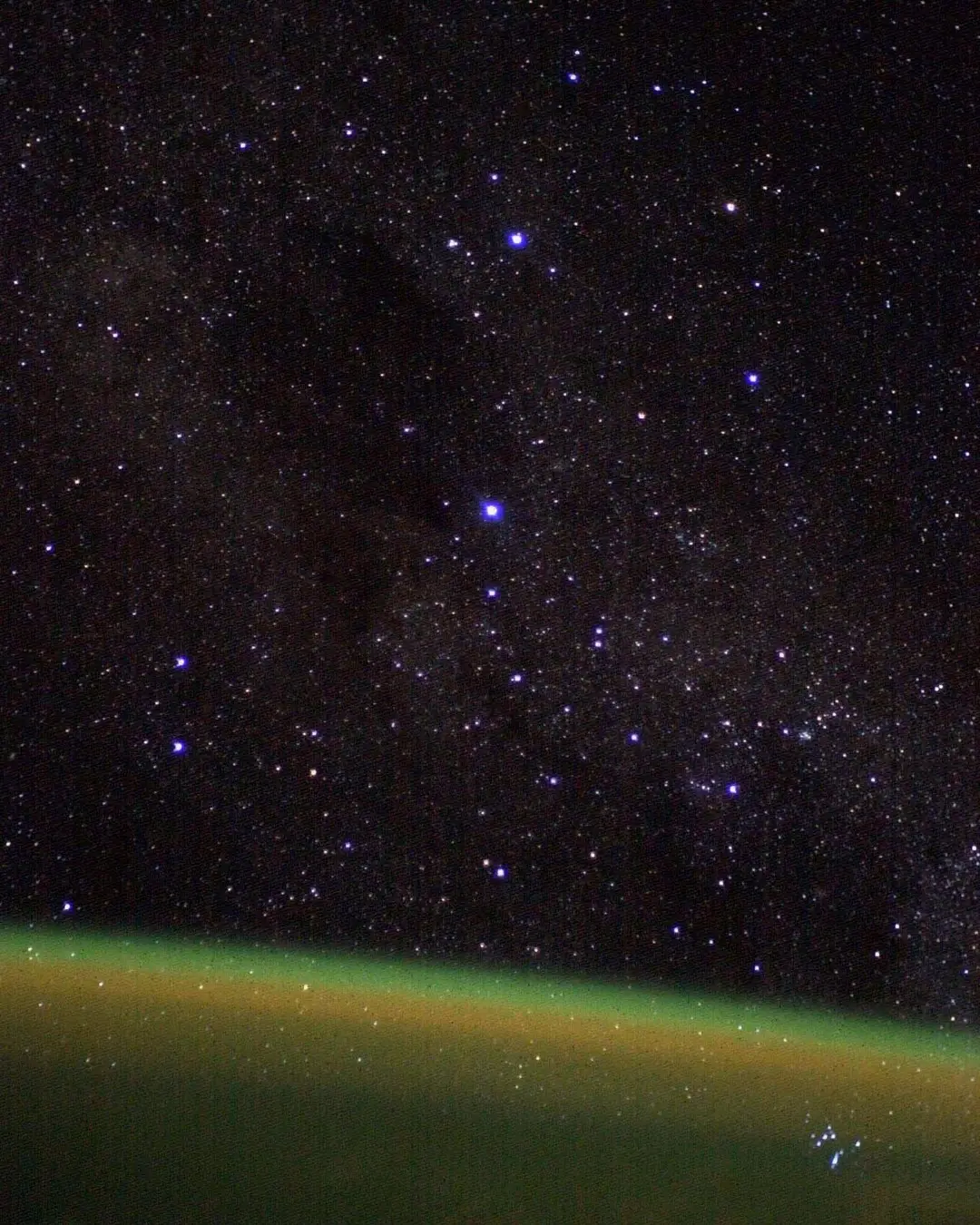
This photo can no longer be taken from the International Space Station (Instagram/@astro_pettit)

“Essentially, the station itself was the tracking mechanism thus for a camera mounted to Space Station, a time exposure yielded stars as pinpoints.

“Since about 2006, ISS has flown an Earth pointing attitude where one side remains pointed nadir towards Earth (LVLH) and time exposures yield stars that are arcing trails. This attitude limits sharp star images to less than a half second.

“For my upcoming flight, I am bringing a wind up tracking device that will compensate for the current space station motions and once again allow long time exposures with pin point stars.
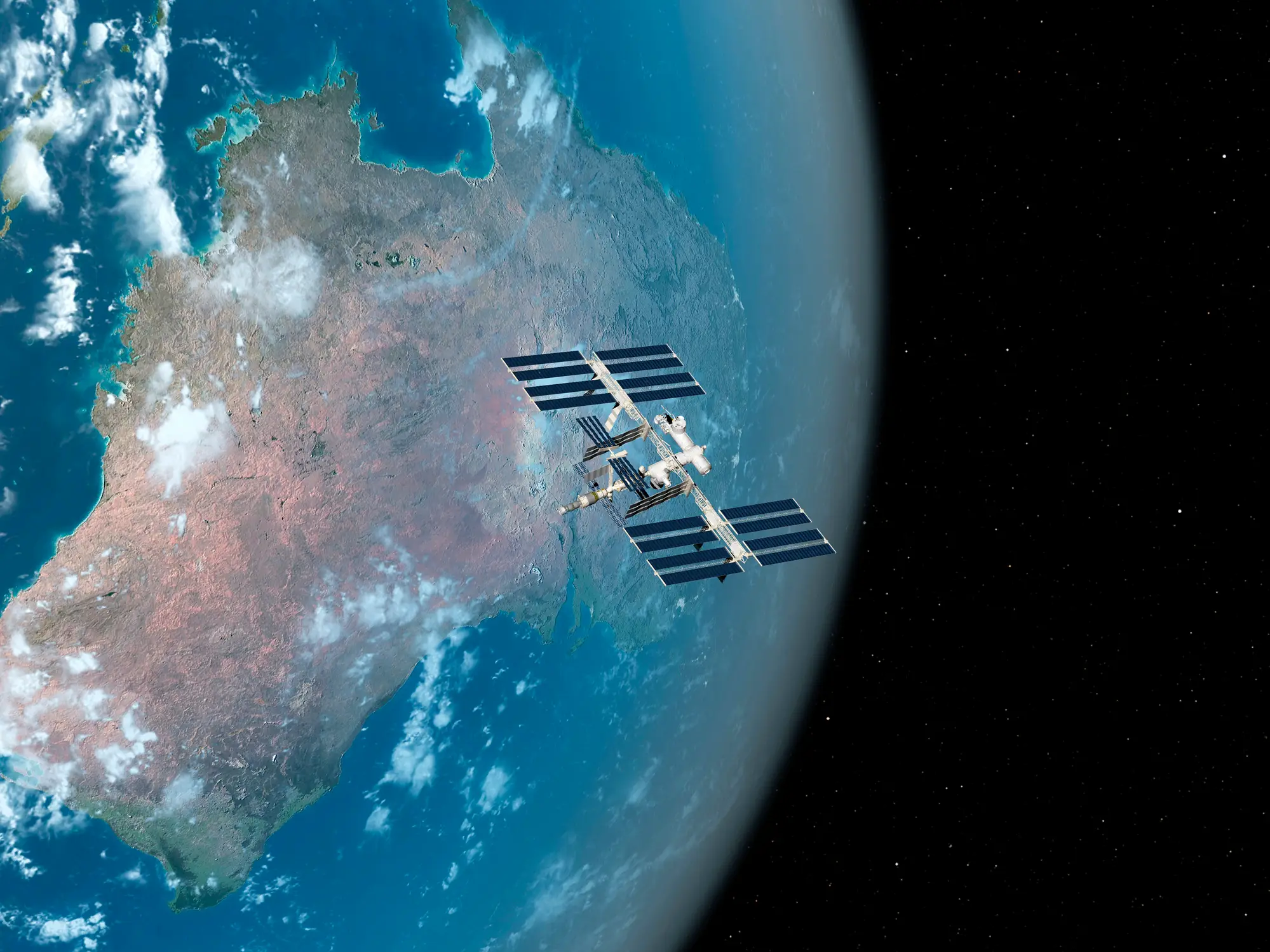
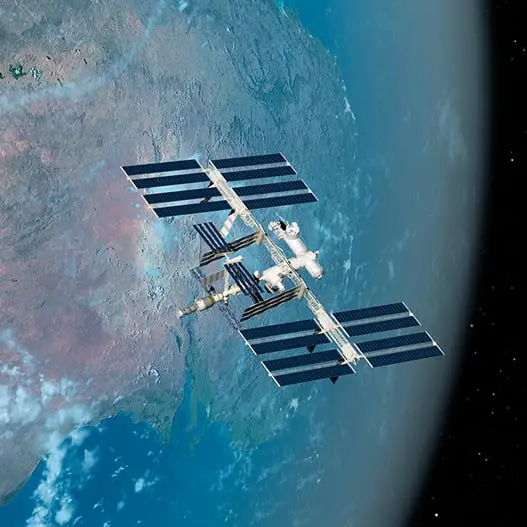
The images were snapped aboard the International Space Station (SCIEPRO/Getty)

“With our current generation of digital cameras, I hope to continue these astrophotography star field images.”

In other words, the ISS adjusted its angle, meaning that one side would be pointing at Earth.

Using a 30-second exposure to snap stars, now taking the same pic would cause the stars to appear as arcing trails.

Posting another image which shows these trails, Pettit wrote: “One of my star trails from @iss, blurring golden city lights with the arcing stars of deep space.
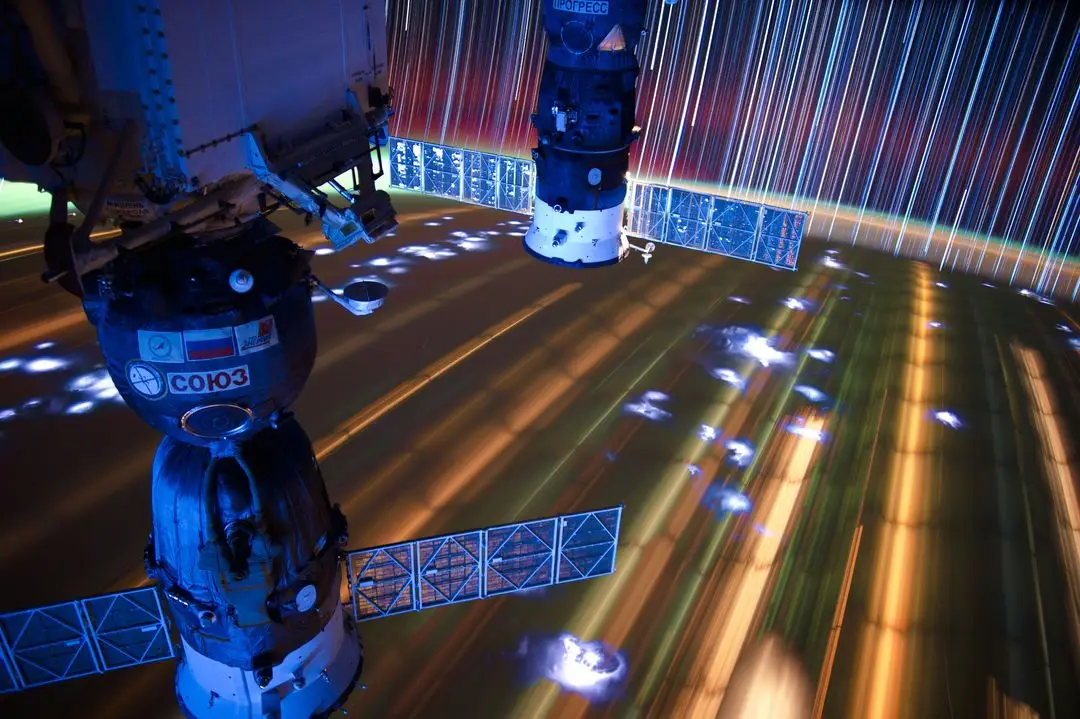
The stars now appear as arcing trails (Instagram/@astro_pettit)

“Composites like this are made from many images, creating a time history of earthly and cosmic phenomena that maps our universe as a function of time. The blue marks of lighting strikes personify this, reflecting storm intensity. Science revealed through art.”

Now, the astronaut has plans to take a tracking device to compensate for the motion of the ISS in an upcoming trip.

This will hopefully mean that once again, he’ll be able to capture more star field images from above our atmosphere.

Choose your content:

4 hours ago
6 hours ago
7 hours ago
9 hours ago
  • YouTube/@TheInfographicsShow
    4 hours ago

    Fascinating simulation reveals everything that happens to your body when you take steroids

    There is a type of steroid that is considered dangerous to the human body

    Science
  • Kevin Carter / Contributor via Getty
    6 hours ago

    NASA detects unusual activity brewing in ocean waters off the east coast

    Satellite images picked up strange coloured plumes

    Science
  • Francois LOCHON/Gamma-Rapho via Getty Images
    7 hours ago

    Hantavirus fears hit one of world's most remote islands with population of just 35

    A passenger from the MV Hondius cruise ship visited the remote island

    Science
  • Varlay / Getty
    9 hours ago

    Scientists are developing daily weight loss pill that means you're seven-times more likely to keep weight off

    It serves as an alternative to popular injections like Ozempic and Wegovy

    Science
  • NASA astronaut shares astonishing iPhone video of the Moon from Artemis 'comparable to the human eye'
  • NASA simulation reveals horrifying way Earth could be 'ejected' from the solar system
  • 1,300lb NASA satellite will crash into Earth today as space agency reveal risk it will hit humans
  • NASA issues major update on 'not natural' space object aiming at Earth that could be 'dire for humanity'