• News
    • Tech News
    • AI
  • Gadgets
    • Apple
    • iPhone
  • Gaming
    • Playstation
    • Xbox
  • Science
    • News
    • Space
  • Streaming
    • Netflix
  • Vehicles
    • Car News
  • Social Media
    • WhatsApp
    • YouTube
  • Advertise
  • Terms
  • Privacy & Cookies
  • LADbible Group
  • LADbible
  • UNILAD
  • SPORTbible
  • GAMINGbible
  • Tyla
  • FOODbible
  • License Our Content
  • About Us & Contact
  • Jobs
  • Latest
  • Topics A-Z
  • Authors
Facebook
Instagram
X
TikTok
Snapchat
WhatsApp
Submit Your Content
NASA sent one identical twin to space for an entire year whilst the other remained on Earth for comparison in ‘one of a kind study’

Home> Science> Space

Published 09:39 26 Jul 2024 GMT+1

NASA sent one identical twin to space for an entire year whilst the other remained on Earth for comparison in ‘one of a kind study’

Researchers compared the two men to see the effects of space on the human body

Rebecca Oakes

Rebecca Oakes

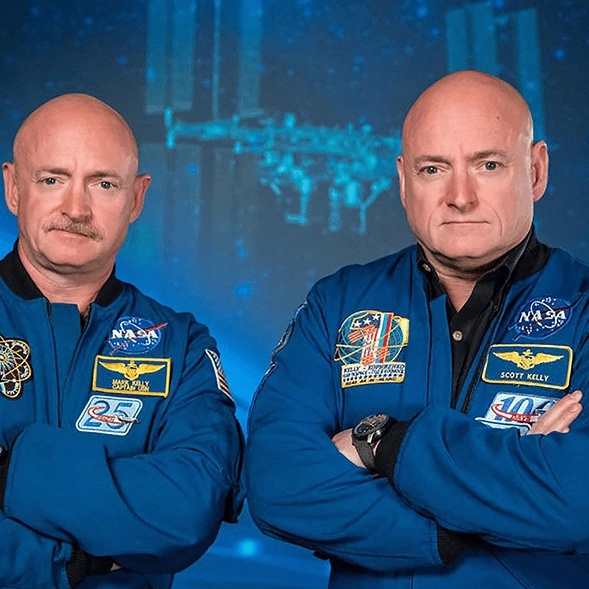
A one-of-a-kind study conducted by NASA, which saw one identical twin sent to space for a year while the other remained on Earth, has revealed the effects of space on the human body.

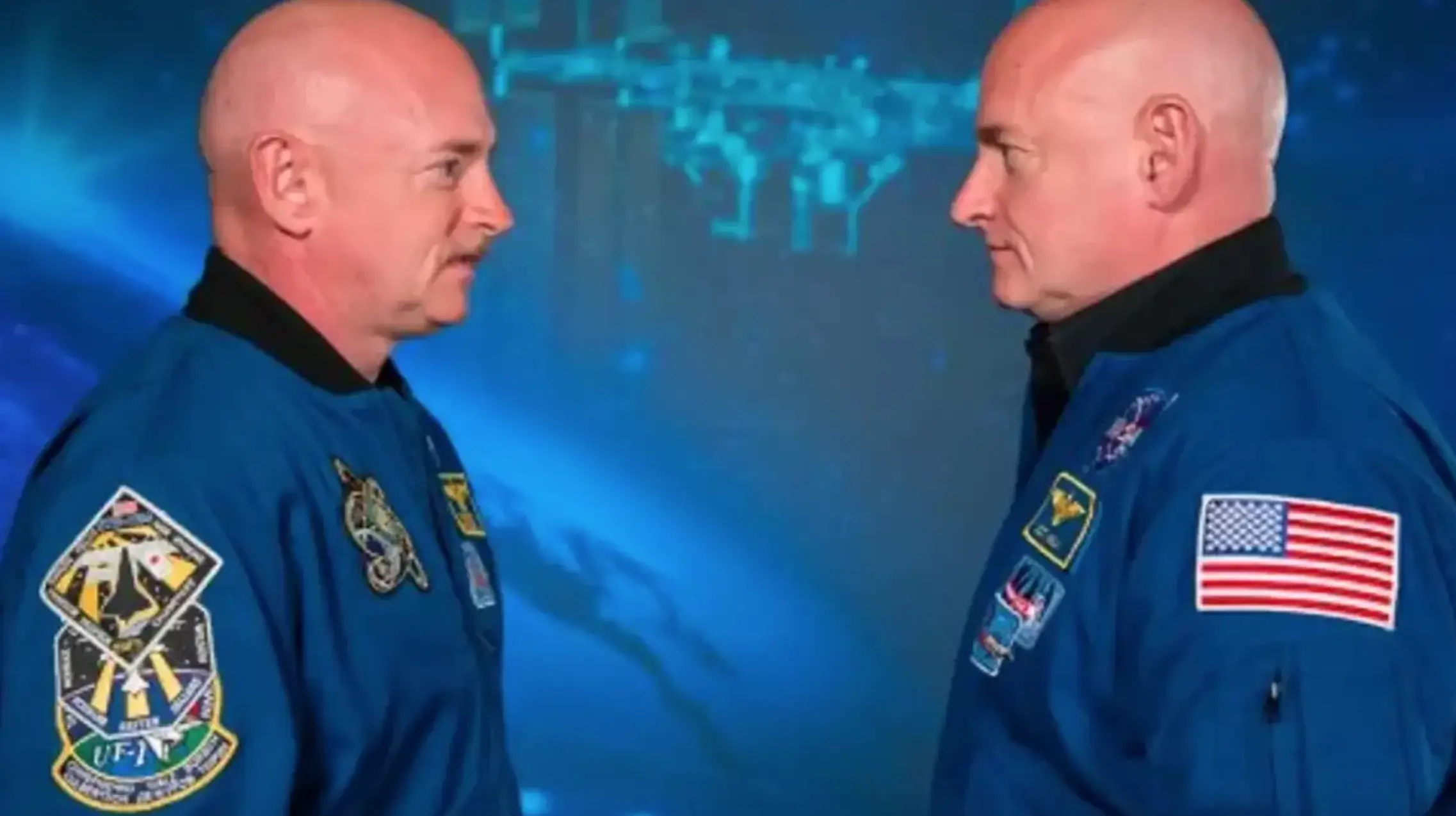
Scott and Mark Kelly are identical twins from the US. They're also both astronauts.

In March 2015, Scott was blasted off into space while Mark, who'd retired. stayed put on Earth.

Scott set off for the International Space Station on March 27, 2015 and didn't return until March 1 the following year.

Advert

Once back on Earth, researchers at NASA compared different aspects of the twins' health, including everything from cognitive function to gut bacteria, to see what effects space has on the human body.
In 2015, NASA sent one identical twin to space for a year while the other remained on Earth to test the effects of space on the human body (NASA)

One interesting discovery from the study was that Scott’s telomeres - the caps at the end of chromosomes - got longer than Mark’s while he was in space.

They did, however, return to their normal length once he was back on Earth.

According to a report of the study, this was 'exactly the opposite' of what the researchers thought would happen, as shorter telomeres are usually linked to ageing.

They also discovered that the two brothers had different gut bacteria throughout the study, although this is likely due to their differing diets and environments.

And, researchers found that more 200,000 RNA molecules that differed between Scott and Mark.

However, 91 percent of changes to Scott's RNA reversed when he returned to Earth.
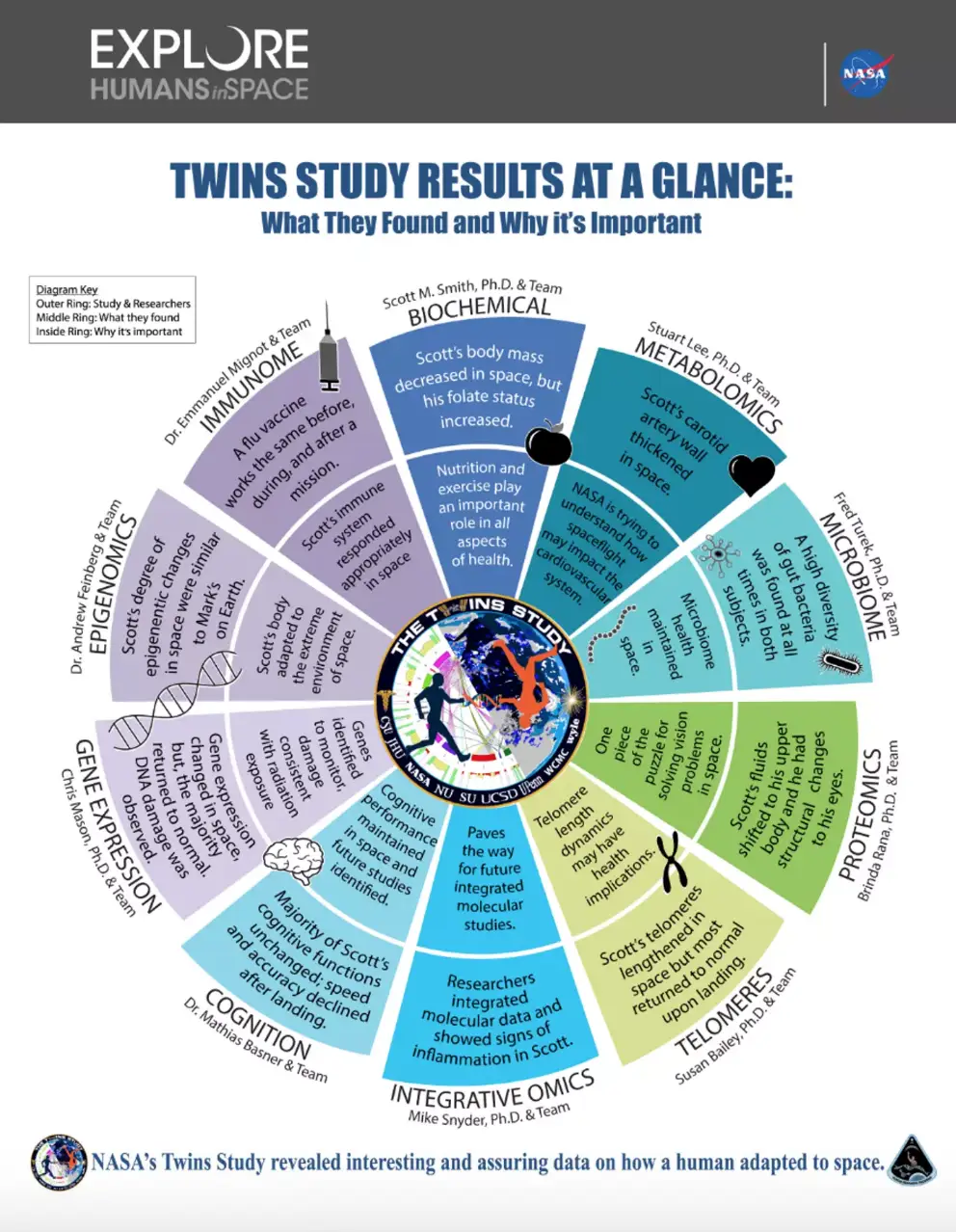
While there were some differences, a lack of change to Scott's cognition suggests astronauts can spend long periods of time in space while maintaining cognitive performance (NASA)

When it comes to cognition, Scott's performance was largely unchanged during his time at the International Space Station.

While that may not seem so interesting, NASA have said it was a useful discovery as it suggests astronauts 'can maintain high levels of cognitive performance for longer durations in space.'

Speaking to space.com about the experiment, Scott said: "The bottom line is, from all these studies — and, granted, this is an experiment with one data point… would be that there's nothing that we saw that would prevent us from going to Mars.

"Certainly, there's some stuff that they're going to continue to look at - gene expression, telomeres, other issues astronauts have with their vision, but no showstoppers that jumped out at anyone."

Interestingly, since retiring from his spacefaring duties, Mark Kelly has gotten involved in politics. He has been a US State Senator since 2020 and is currently dubbed as a favorite to be Kamala Harris' running mate in the upcoming Presidential election.

Featured Image Credit: ROBERT MARKOWITZ/Contributor/Getty Images
Space
Science
Nasa

Advert

Advert

Advert

Choose your content:

9 hours ago
14 hours ago
a day ago
  • Jessie Casson / Getty
    9 hours ago

    Bombshell study reveals sixteen diseases found to increase risk of dementia

    This could lead to increased prevention

    Science
  • VICTOR HABBICK VISIONS / SCIENCE PHOTO LIBRARY / Getty Images
    9 hours ago

    Experts share truly terrifying reason astronauts can’t be allowed to have 'space babies'

    At least there won't be any crying kids on the ISS

    Science
  • TikTok/@ridesnslides
    14 hours ago

    NASA engineer called out 'Euthanasia Coaster' designed to kill everyone who rides it

    It's not supposed to be as morbid as it sounds

    Science
  • NASA
    a day ago

    Conspiracy theory resurfaces over what NASA discovered on the Moon 57 years ago as Artemis II faces fresh delay

    The delays have people talking

    Science
  • Sunita Williams reveals why she'll never return to space after 286 days 'trapped' above Earth
  • Identical twin study shows shocking results after one twin smoked while the other didn't
  • Experts share truly terrifying reason astronauts can’t be allowed to have 'space babies'
  • NASA reveals what will really happen when the world ends