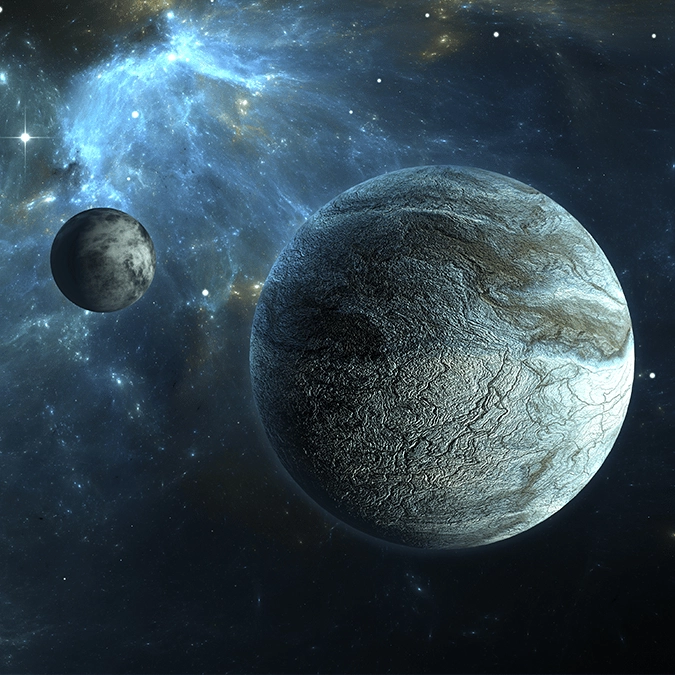
How long it would take to travel to mysterious planet where alien life could be hiding 124 light-years away


Following shocking news of a planet that could in fact contain signs of life, many have began to speculate how long it would take to travel there from Earth, and the numbers might leave you stunned.
Humans' physical exploration of space is in a far greater state of infancy that our knowledge of the wider solar system, as with the use of powerful apparatus like the James Webb Telescope we're able to see much further than we could ever possibly reach.
Astronauts tragically haven't stepped foot on the moon in over half a century due to a number of depressing factors, and both NASA and a number of private companies like SpaceX continue to ramp up their efforts to explore Mars, with one of the major challenges being the time it takes to get there in the first place.
However, it's impossible to stop your mind racing when the discovery of a new planet with the potential of life comes to light, as is the case with 'K2-18 b', which scientists have revealed is larger than Earth and within a habitable zone.
Advert
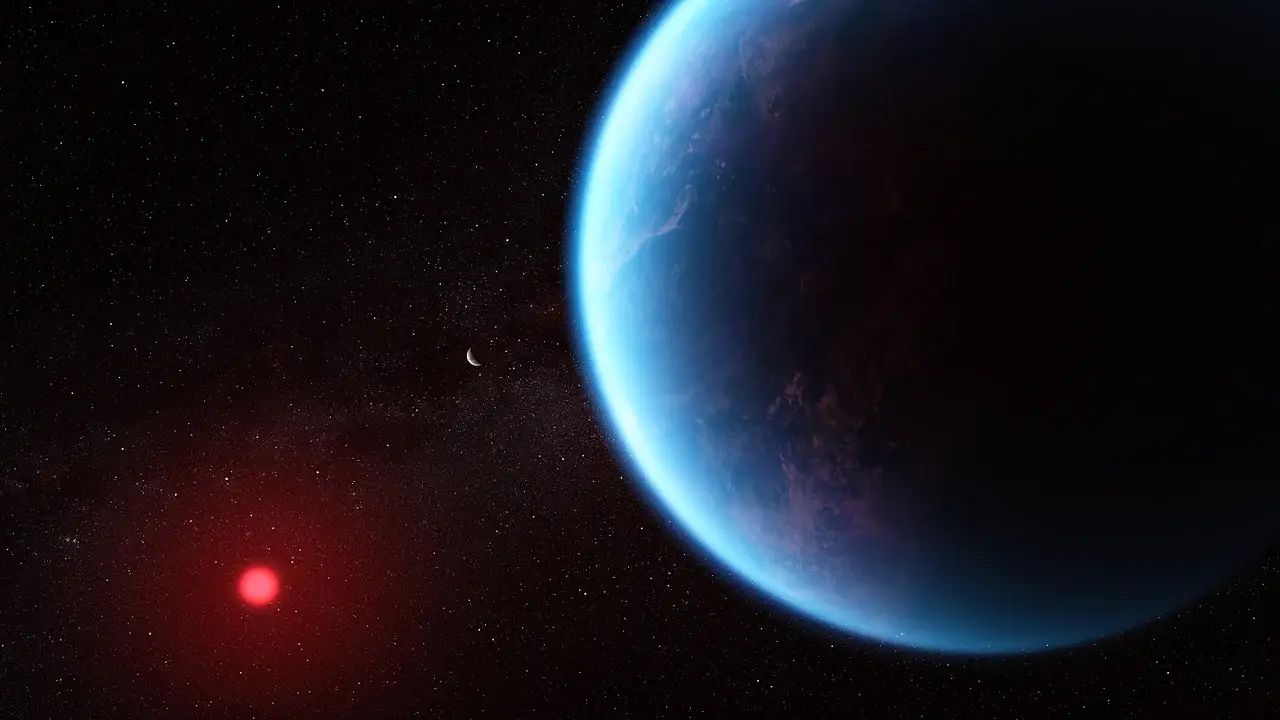
The University of Cambridge-led study on the fascinating planet reveals that its discover is "an important step forward in the search for signatures of life on exoplanets," but warns that further research is essential to establishing the veracity of these claims.
Fundamentally there's no better way to study and back up the research than heading there in person and seeing it for ourselves, but that might just be a bit harder than initially thought, as reported by the Metro.
K2-18 b is currently around 124 light-years away from Earth, which roughly translates to 729,000,000,000,000 miles. If you weren't aware, a light-year is measured by the distance travelling at the speed of light - 671 million miles per hour - would take you across an entire year, so you can now picture why it's impossible for humans to get anywhere near this seemingly habitable planet.
Comparatively, if traveling at 60 mph in a car as if you were on your way to work on the highway it would take you over 1 billion years to reach K2-18 b, and spacecrafts from NASA don't offer a much better alternative.

NASA's Space Shuttle reaches around 17,000 mph at top speed, which would take around 4,895,246 years, and even taking the Parker Solar Probe - which is NASA's fastest craft and can't take humans on board - would leave you with a travel time of 210,822 years at a speed of 394,736 mph.
To reach K2-18b in six months, which is currently indicated as an unsustainable travel time to reach Mars, you'd have to be traveling at 166,438,356,164 mph, which is around 248 times faster than the speed of light.
Hopefully we'll be able to continue to study the seemingly habitable planet with tools like the James Webb Telescope to gain a better picture of its life-bearing properties, but it might simply remain a mystery for the years to come, leaving us with continued questions regarding the potential of alien life all of those trillions of miles away.