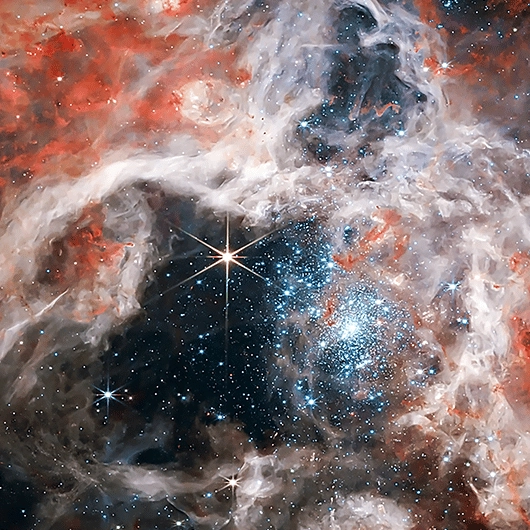
James Webb Telescope confirms shocking truth about our universe that scientists can't explain


Recent discoveries have unveiled that the universe is indeed expanding at an unexpected rate, confirming long-hypothesized theories that scientists are still struggling to explain.
Space is a rather confusing space, and considering how much we still can't explain about it's vast stretches it's only natural that some discoveries end up leaving scientists befuddled.
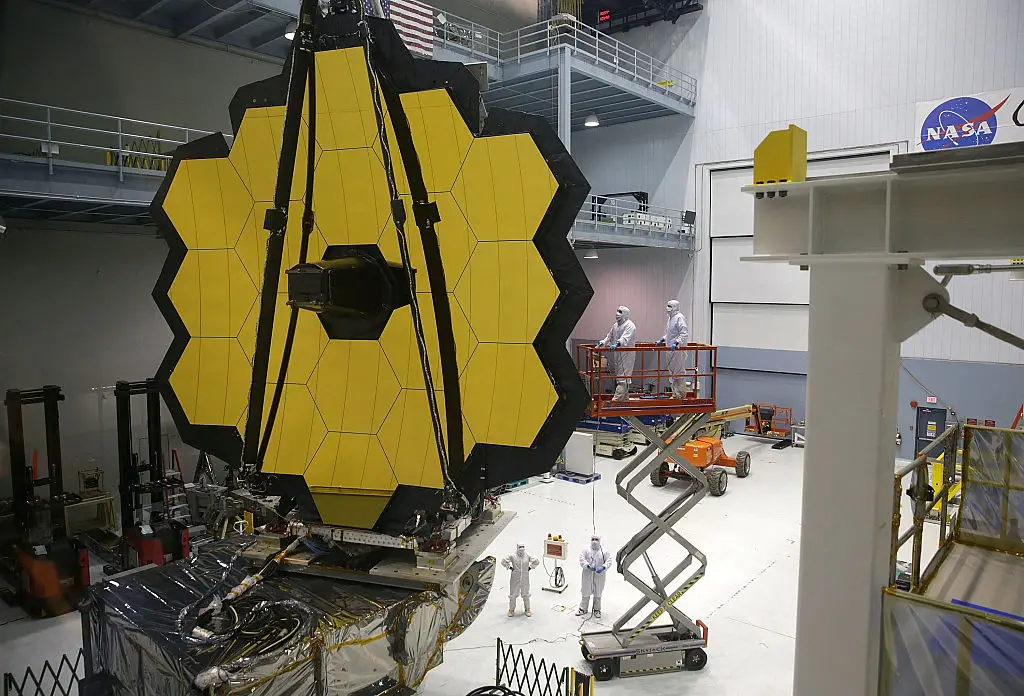
Oftentimes apparatus like NASA's James Webb Telescope will be at the heart of these discoveries, as it has previously been used to unveil asteroids that could give every person on Earth over $1 billion each.
Advert
It's latest subject, however, is that of the universe itself, and what it has uncovered has left scientists more confused than they were before.
Over a decade ago NASA's Hubble Space Telescope interpreted that the universe was expanding at a greater rate than expected, and while scientists have wrestled with this theory ever since it was introduced, further information provided by the James Webb Telescope has confirmed suspicions - albeit with no clear explanation provided still.
The lead author of the study in question, Adam Riess of John Hopkins University, explains:
"This is the largest sample of Webb Telescope data - its first two years in space - and it confirms the puzzling finding from the Hubble Space Telescope that we have been wrestling with for a decade - the universe is now expanding faster than our best theories can explain.
"Yes it appears there is something missing in our understanding of the universe. Our understanding of the universe contains a lot of ignorance about two elements - dark matter and dark energy - and these make up 96% of the universe, so this is no small matter."
As reported by Reuters, dark matter is an invisible form that is understood to exist due to it's gravitational effects on standard matter like planets and stars, whereas dark energy is hypothesized to be spread throughout space counteracting gravity and driving an 'unexplained' expansion.
The reason why it's so hard to quantify the greater expansion speed is because these two 'materials' aren't understood much beyond mere concepts, largely down to their 'invisible' nature.
Riess outlines that "there are many hypotheses that involve dark matter, dark energy, dark radiation - for example, neutrinos (a type of ghostly subatomic particle) - or gravity itself having some exotic properties as possible explanations."
Things remains largely hypothesized at the current time though, and it'll take far more research to further understand why the universe continues to expand and what it is about these dark materials that drive it.
What remains noteworthy now is that the original theory has been confirmed by the James Webb Telescope, and that will allow talented astronomers to continue working on the secrets of the universe.