How the Moon could be divided up amongst the world's nations as White House issues ominous message


We're reminded of Gru trying to steal the Moon in 2010's Despicable Me, but in 2026, there are genuine fears that the United States of America is going to try and claim Earth's natural satellite for itself.
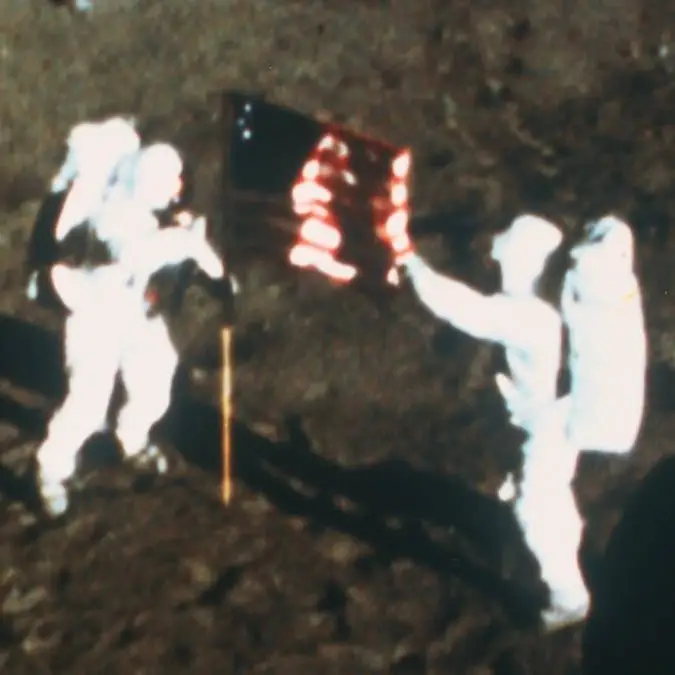
There are currently five American flags standing on the Moon (Apollo 11's was reportedly knocked over), and 12 of its astronauts have taken one small step on its surface as the only country to successfully land humans.
Still, with other countries like Russia, China, and India having made it their with various rovers, the USA's claim to fame doesn't mean it 'owns' the Moon.
Even though China already has grand plans to put its own astronauts on the surface of the Moon, the main space buzz is surrounding the upcoming 'high-risk' Artemis II flight as the first crewed mission to the Moon since 1972. Beyond that, Artemis III is set to enter the history books as a crew of astronauts looks destined to plant another flag soon.
Who owns the Moon?
Moon missions are expected to increase as Elon Musk parks his Mars plans, but there are questions about ownership after the White House posted an ominous message that suggested it was going to declare the Moon as property of the USA. In reality, no single country owns the Moon or can lay claim to it thanks to the Outer Space Treaty. Signed in 1967, it currently boasts 118 countries that include all major spacefaring nations and another 20.
Advert
The basic idea is that no one can try to claim the Moon for itself, and while it all sounds pretty peaceful, it was pushed through during the tensions of the Cold War to try and prevent nuclear weapons from being placed in orbit or on celestial bodies.
Drawing heavily from 1961's Antarctic Treaty, the Outer Space Treaty also declares that space is free for use and exploration as long as it's for "the province of all mankind."
There are questions about the treaty's applications in the 21st Century, especially with unclear wordings surrounding lunar and asteroid mining, leading to debates about how materials could be extracted and potential commercial use or exploitation.
In 2015, U.S. companies lobbied the government and triggered the U.S. Commercial Space Launch Competitiveness Act of 2015, which legalized space mining. The USA has also created the Artemis Accords as a series of bilateral agreements that attempt to clarify several issues with the Outer Space Treaty. This includes the use of space resources, which has led to plenty of backlash from other countries.
Could the USA try and claim the Moon for itself?
While it's true that the USA doesn't own the Moon, there are fears that our wars on Earth will soon move into space or are already migrating there. The Moon Treaty was proposed in 1979 as a separate one that declared all lunar profits be shared globally, but as it wasn't ratified by any of the countries that have taken part in self-launched human spaceflight, it means pretty much nothing in 2026.
The USA could also remove itself from the Outer Space Treaty, although that would likely trigger a world war of its own.
As possession in nine-tenths of the law, it's technically true that if any country builds a lunar base, other countries will keep their distance via a 'safety zone'. In theory, that country would own the land the base is on and the immediate radius.
Looking even further ahead, the lack of a specific 'Space Police' means international disputes over areas like the resource-rich South Pole of the Moon would have to be handled in international courts – similar to how maritime disputes are settled.
It's also likely that bilateral agreements will be drawn as countries stick to their 'side' of the fence, while the UN Office for Outer Space Affairs (UNOOSA) will be granted new powers. As for those deeds your family might've gotten you acres of the Moon, they're just a bit of fun that have no legal standing in international law.