
The White House issues ominous message to the public on America's next Moon mission


The White House issues an ominous message to the public on America's next Moon mission.
With the highly anticipated Artemis II launch approaching, NASA is preparing to send humans back to the Moon for the first time in over 50 years. The mission has faced multiple delays, shifting from February to March, with the new launch date seeming almost like an April Fools' joke.
If all goes to plan, NASA astronauts Reid Wiseman, Victor Glover, and Christina Koch, and Canadian Space Agency's Jeremy Hansen will journey on a 10-day trip around the Moon and back. While Artemis II won't actually land on the lunar surface, it will take the crew farther into deep space than any human has travelled before.
Advert
Now, the White House has delivered what appears to be an ominous statement about the US's upcoming lunar mission, highlighting NASA administrator Jared Isaacman's earlier social media post.
Taking to X, the NASA admin posted: "To return Americans to the Moon, NASA is shifting to an iterative, execution-focused approach – just as we did during Apollo.
"We are standardizing rocket architecture, embedding NASA expertise across industry, and increasing launch cadence to support sustained lunar operations. We are sending a demand signal for crewed missions beyond Artemis V, with at least two providers capable of bringing astronauts to the surface every 6 months.
"The goal is not just to reach the Moon, but to stay."
He concluded: "America will never give up the Moon again."
In response, the White House highlighted the line: "The goal is not just to reach the Moon, but to stay."
At the same time, companies like Elon Musk's SpaceX develop their own missions to the Moon and Mars.
Last year, the CEO said the company plans to launch its Starship rocket to Mars by the end of 2026, carrying Tesla’s Optimus humanoid robots. More recently, the tech mogul has its eyes set on colonising the Moon after sharing a recent simulation.
Meanwhile, Artemis IV is scheduled for 2028 and is described as 'humanity's return to the lunar surface'.
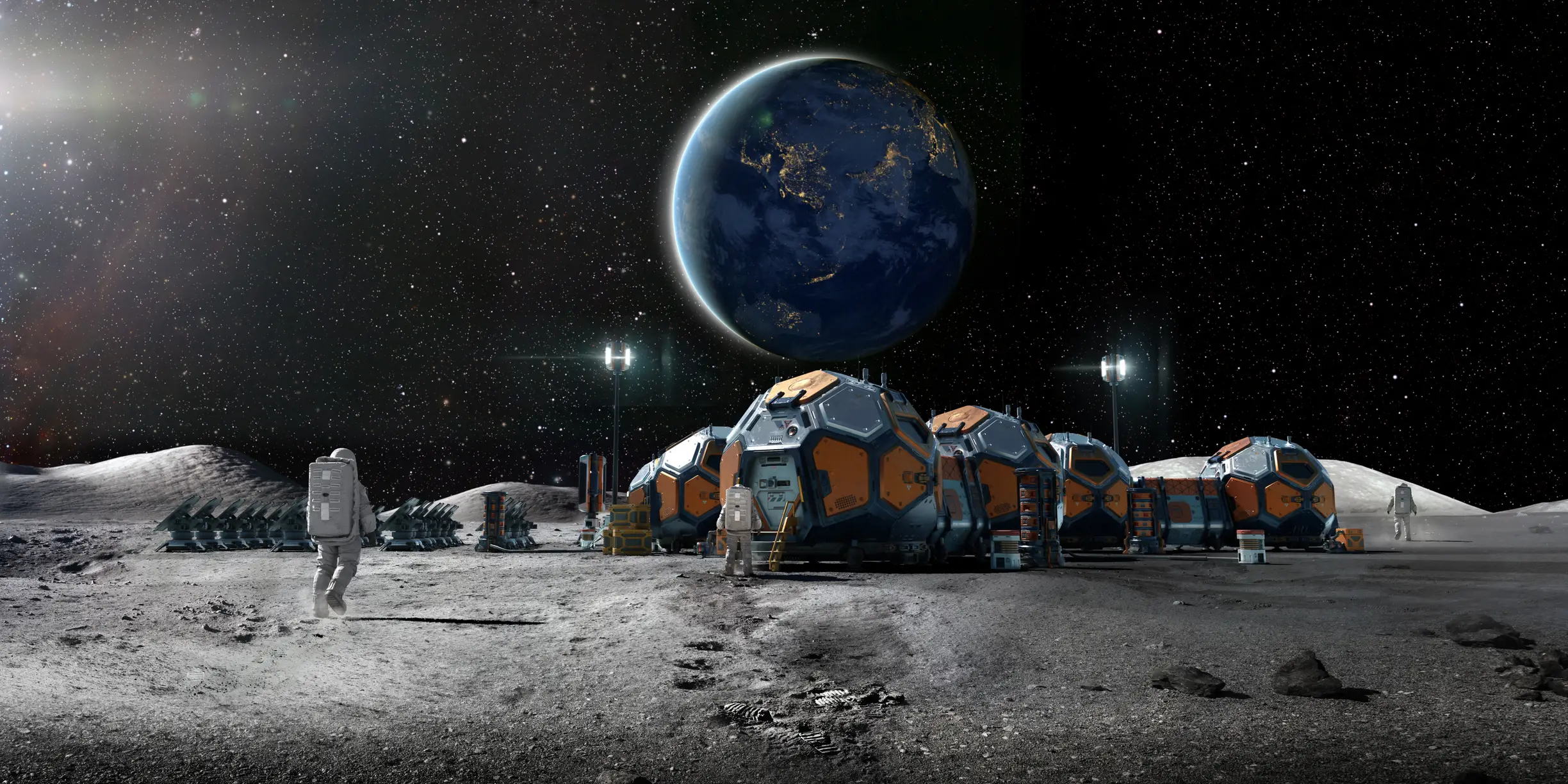
In a series of phases, the space agency will deliver rovers and scientific instruments to test mobility, power systems, communications, navigation, and other surface operations.
NASA also promises to deploy semi-permanent infrastructure and regularly supply lines to support routine astronaut activities on the Moon.
In the final phase, NASA will reportedly install heavier infrastructure required for long-term human habitation on the Moon.
“The moon base will not appear overnight,” Isaacman said during a presentation at the NASA Ignition event in Washington, D.C (via
). “We will invest approximately $20 billion over the next seven years and build it through dozens of missions, working together with commercial and international partners toward a deliberate and achievable plan.”