
Jeff Bezos' Blue Origin could hold the secret to putting humans on the Moon for life with new discovery


With the recent success of NASA's Artemis 2 mission many are wondering what the future holds for life in outer space, and Jeff Bezos' company Blue Origin might just have unlocked the secret that enables this.
It's been over half a century since a human last set foot on the Moon, yet despite this many of the world's biggest space agencies across both public and private industries are gearing towards establishing a permanent presence beyond Earth's atmosphere.
Elon Musk, for example, has repeatedly expressed his desire to colonize Mars – including the establishment of a mayor well before humans have even begun to explore the big red planet – while many others have turned their eyes towards the Moon.
Advert
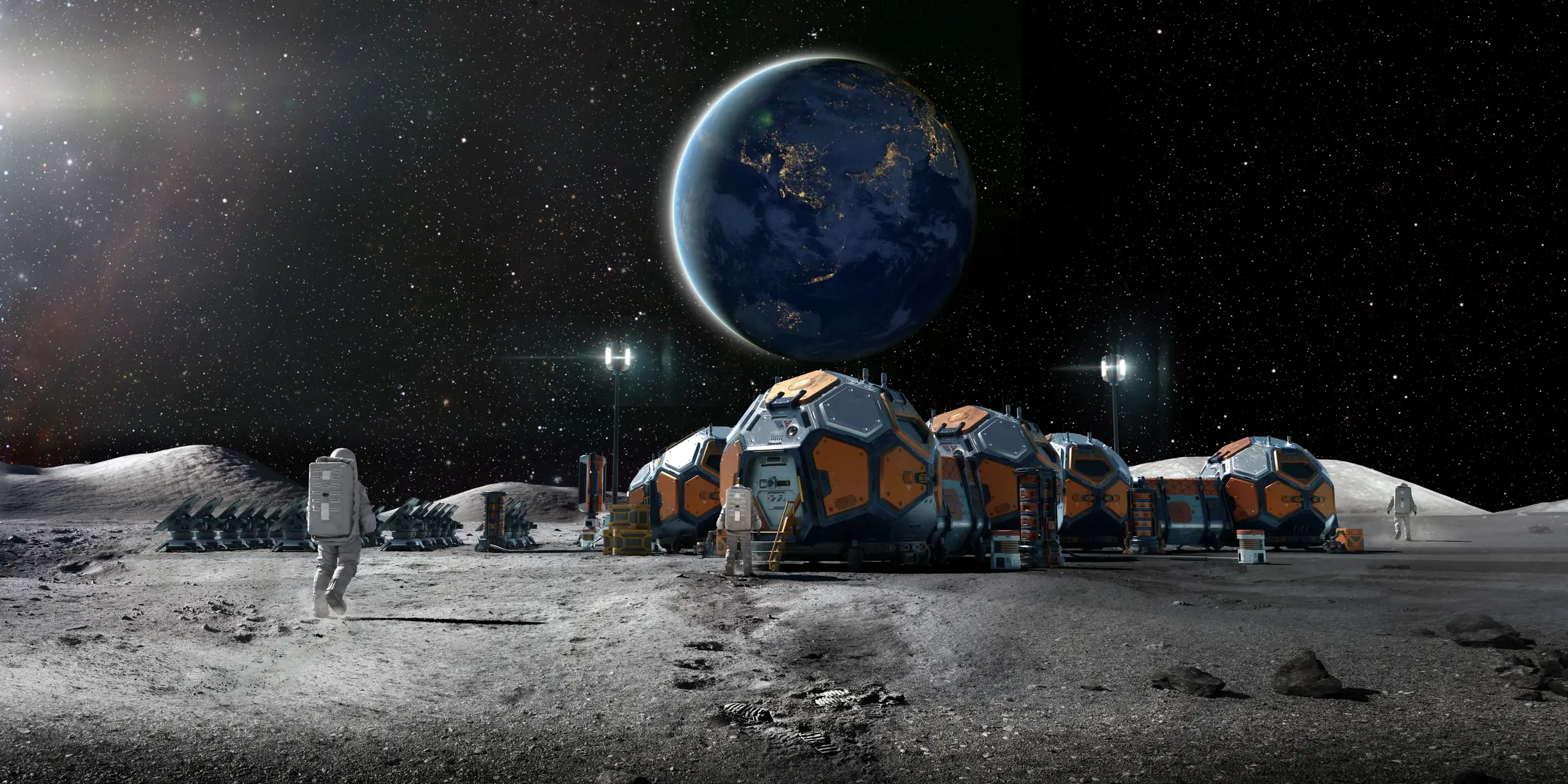
This could all accelerate following the potential success of NASA's Artemis 4 mission, as private companies would likely look to build mining camps and bases on Earth's nearest satellite, but Jeff Bezos might just have created the tool that would make this process a whole lot easier.
Arguably the biggest barrier to long-term human presence beyond Earth is the lack of oxygen, as without a natural means of production you'd always be running the risk of it depleting.
Blue Origin – Bezos' private space company – has recently created a reactor that would create breathable oxygen from Moon dust, effectively allowing for a near-endless supply while on the nearby space rock.
As reported by the Telegraph, the reactor in question – named 'Air Pioneer' – employs an electrical current to isolate the oxygen already found within lunar soil from metals such as iron and titanium, and this could quite literally prove to be a life saver and remove a major hurdle for anyone looking to live on the Moon.
"Lunar permanence will require using resources on the Moon rather than hauling them from Earth," Blue Origin explained in a statement. "Our in-situ resource utilization system extracts oxygen from lunar regolith to create breathable air for astronauts and propellant for refuelling landers and fuel cell."
It adds that "the materials for a Moon base are produced right where they're needed, and at a much lower cost that being brought from Earth."
This could prove to be the defining discovery in the establishment of a future lunar base, although there remain still some challenges that humans will need to overcome in order to live on the Moon in the long-term.
For example, research recently revealed that it's considerably more difficult for humans to become pregnant while in space due to the low gravity conditions causing sperm to become 'confused', and this could understandably prove detrimental for the continuation of human life if access to Earth becomes impossible.