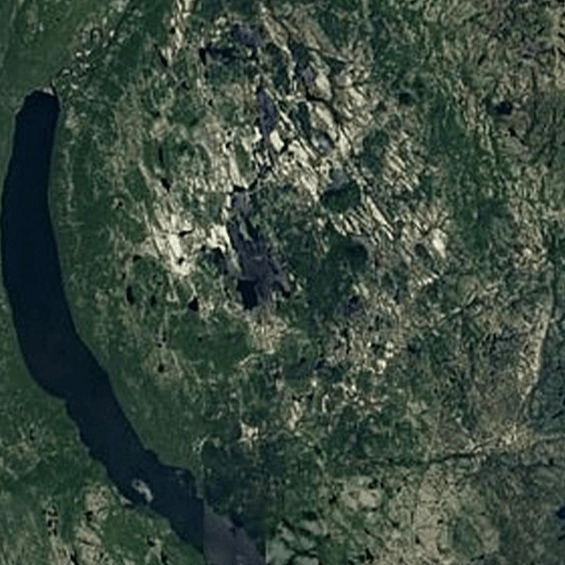
Man shocked after discovering the truth about ‘suspicious pit’ on Google Maps


A Canadian man was looking for a nice spot to go camping in the Côte-Nord region of Quebec when he came across a ‘suspicious pit.’
He was left in shock when he learned what it could be.
Jôel Lapointe was looking at locations on Google Maps when he came across the large curved hole.
He immediately thought the hole - which is approximately 15 kilometres in diameter - seemed odd due to its long curved shape.
Advert
An unusual ring of mountains surrounding the nearby Marsal Lake also struck him as strange.
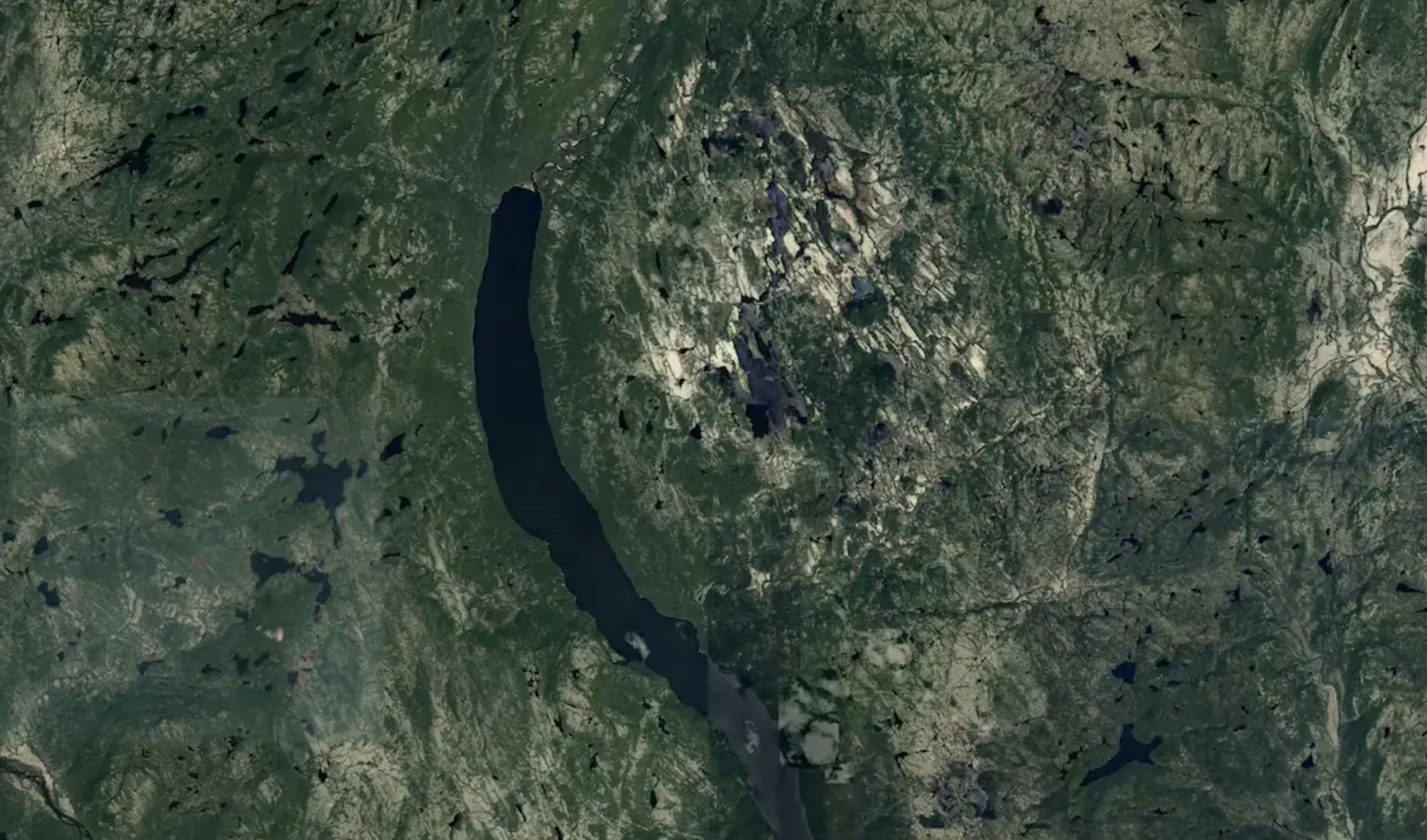
So, Lapointe contacted a number of experts including French geophysicist Pierre Rochette, who revealed that an ancient meteor crash may have caused the pit’s formation.
Rochette told the CBC: “Looking at the topography, it’s very suggestive of impact.”
The geophysicist also analysed material samples from the pit and found the presence of zircon - a mineral known for its durability that preserves microscopic damages caused by great impacts.
When an object, such as a meteorite or asteroid, hits the surface of a solid astronomical body like Earth at a high speed, it vaporises, creating shockwaves that melt and recrystallise the surrounding rock.
No matter how hard the surface is, this forms an impact crater.
If the pit really is a meteor crash site, the discovery would be huge.
The last meteor crash on Earth happened in 2013 in Chelyabinsk, Russia, exploding into the atmosphere over the city and crashing into in the frozen Lake Chebarkul, with one of its fragments forming a 20-foot wide hole.
However, experts will conduct further tests before confirming whether an ancient space rock made the impact crater.
Tara Hayden, a postdoctoral associate at Western University, spoke to the CBC about why the discovery of new impact craters is so important.
“It could tell us about when it was delivered to Earth,” she said. “That’s the wonderful thing about impact craters. We get to have this link between Earth and the outside universe.”
According to Gordon Osinksi, an Earth Sciences professor at Western University, Lapointe’s discovery is a ‘strong contender’ for a meteor crash site.
He explained: 'It's quite easy with Google Earth these days to go on and find structures that a circular or semi-circular in origin. Nine times out of 10 they're not [craters.]"
But, he believes the Quebec site could be the exception to this and calls the evidence collected so far 'promising.' He plans to travel to the mysterious pit to further examine it next year.