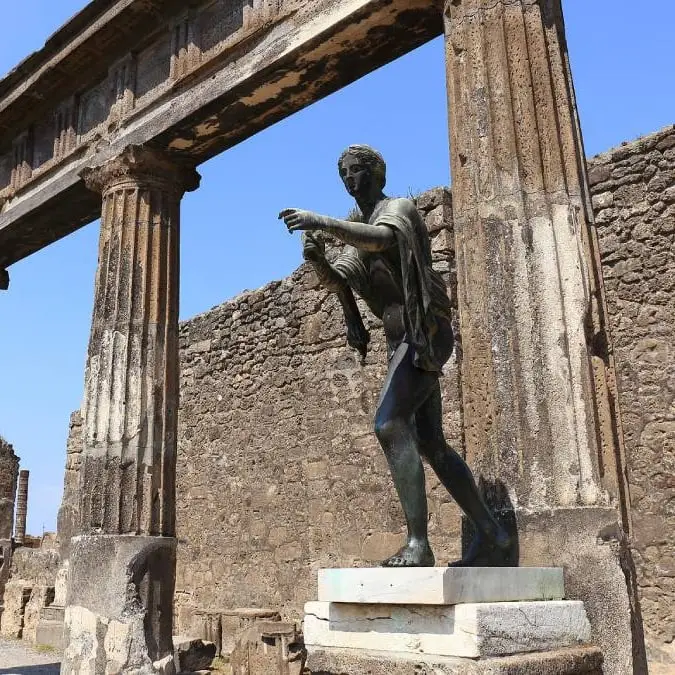
Archaeologists uncover discovery amongst ruins of Pompeii that reveals 'secret' that built Roman Empire


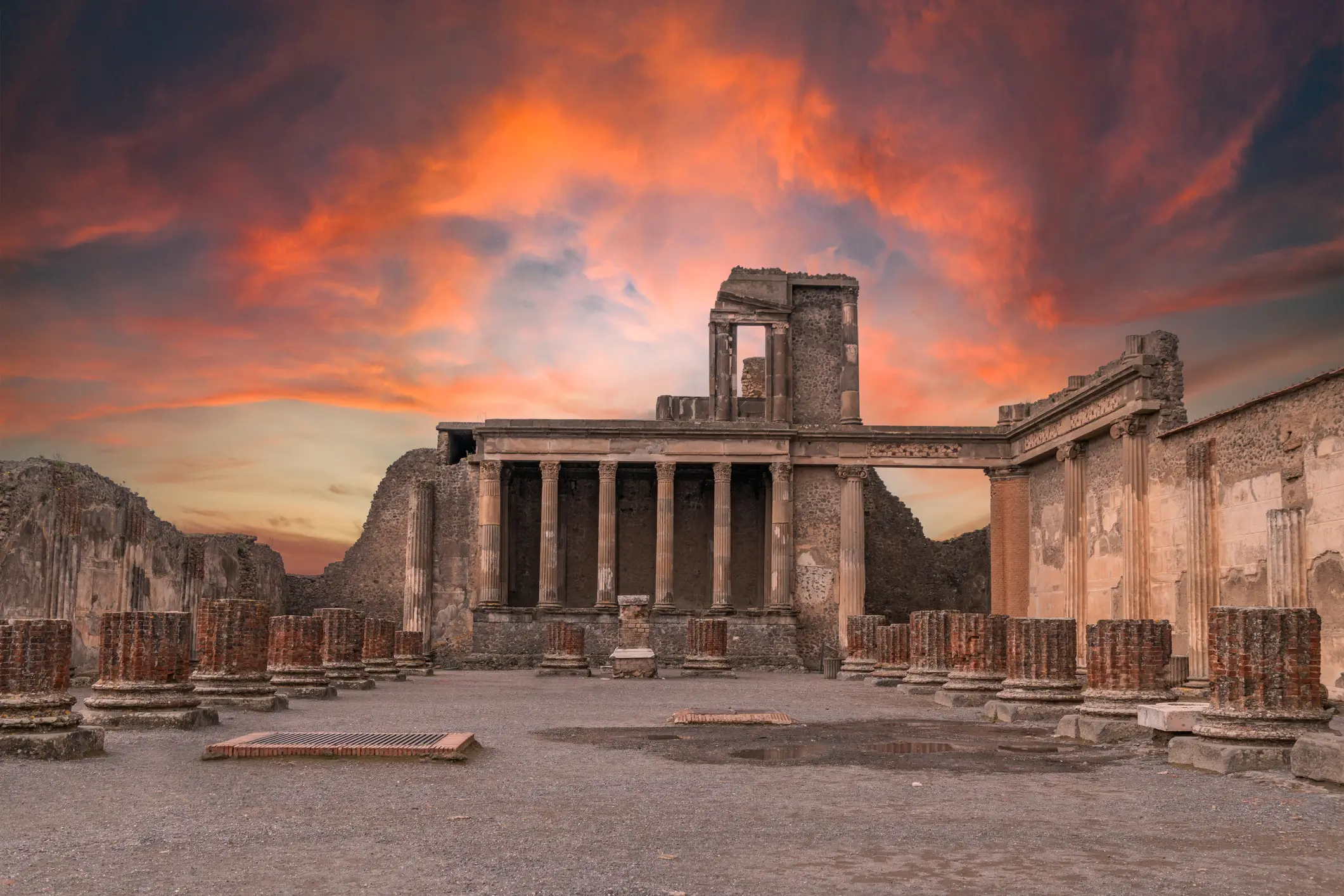
Among the ruins of Pompeii, archaeologists have discovered how the Romans built their empire.
For centuries, scientists have puzzled over the techniques and materials used by ancient Romans that enabled monuments like the Pantheon and the Colosseum to remain standing for over 2,000 years.
Now, a team of researchers has found a building site frozen in time by the 79 AD eruption of Mount Vesuvius in Italy. What they found exposes the secrets behind the long-lasting concrete that transformed Roman architecture.
Advert
The Pompeii site showed that Romans used 'hot mixing,' combining quicklime (preheated, dry limestone) with water and volcanic rock and ash. This created a chemical reaction that naturally heated the entire mixture.
Meanwhile, findings published in Nature Communications confirm that the ancient construction site contained several rooms storing building materials and fragments of common ceramics, set aside for reusing in ongoing wall restoration work.
"Modern concretes generally lack intrinsic self-healing capability, which is increasingly important as we seek longer-lasting, lower-maintenance infrastructure," said Admir Masic, a MIT professor of civil and leader of the study. "So while the ancient process itself is not a direct replacement for modern standards, the principles revealed can inform the design of next-generation durable, low-carbon concretes."
Concrete became an essential building material that enabled the Romans to construct structures, including stadiums like the Colosseum, domed temples like the Pantheon, public baths - and not to mention, aqueducts and bridges that are unlike anything built in human history.
"Studying it truly felt as if I had travelled back in time and was standing beside the workers as they mixed and placed their concrete," Masic added.
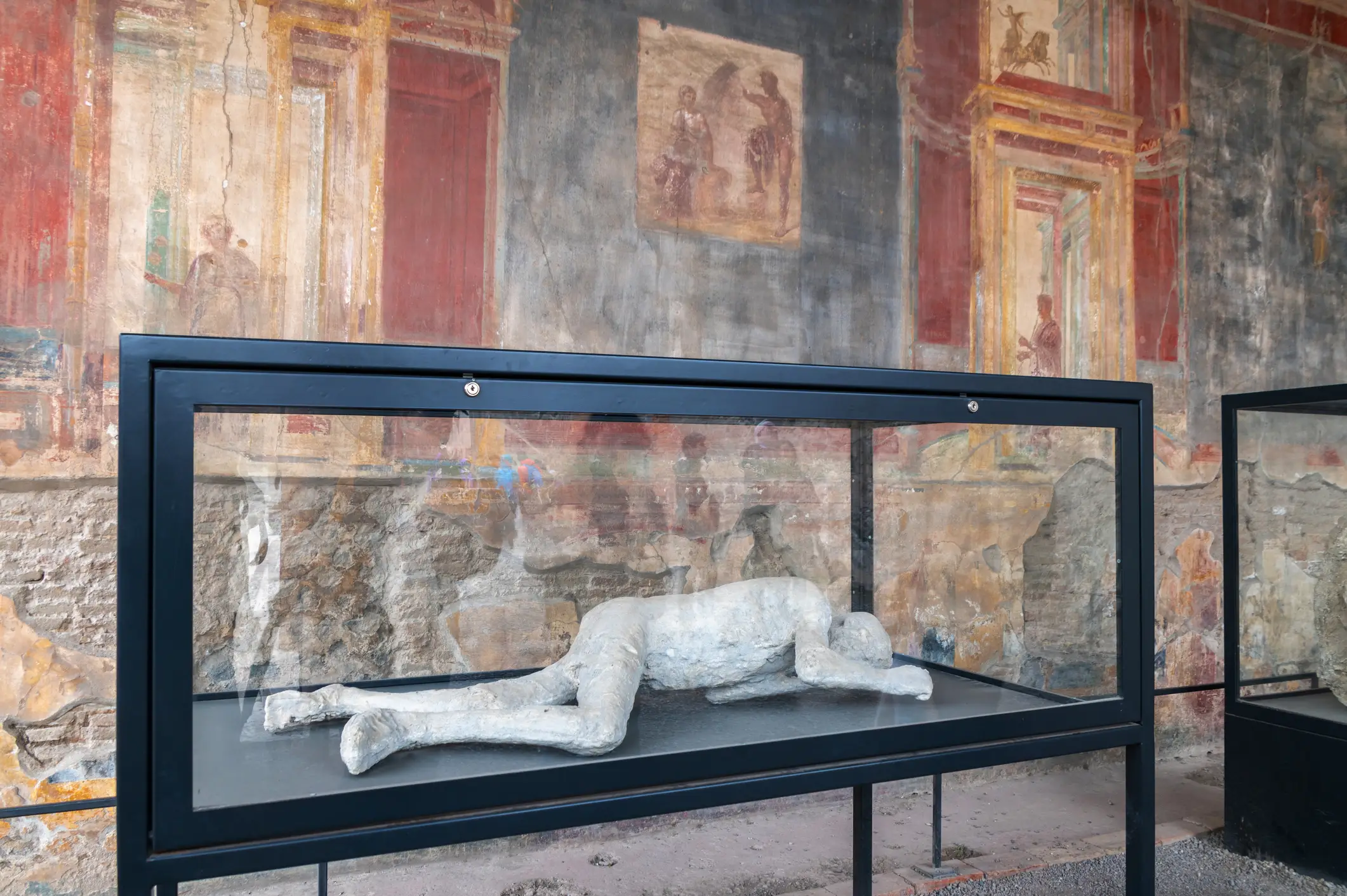
Pompeii was buried under ash when Mount Vesuvius erupted in 79 AD, killing everyone in the vicinity and entombing the entire area. The town remained lost until its rediscovery in the 1700s, when researchers found dozens of bodies preserved by the soot and ash that blanketed streets, buildings, and people.
While the victims' soft tissue had decomposed over millennia, their body outlines remained intact. This meant archaeologists recovered these shapes by filling the cavities with plaster, even preserving their DNA.
Meanwhile, the construction site was impressively organised, with building materials sorted and stored by type.
Researchers believe the atrium served as storage for pre-blended dry lime and pozzolanic sand used in mortar production, while room 28 stored tiles and stone materials. Workers then likely added water to these dry ingredients at the fountain pool located in room 2.
The strict organisation allowed the workers to access materials quickly and keep a steady workflow.
Laboratory testing revealed that certain mortar samples had nearly identical compositions, indicating they originated from the same pre-blended batches. Other samples increased calcium concentrations, seemingly due to the addition of extra lime to improve the mixture's workability for final finishes.
2,000 years later, Roman concrete is still doing its job, proving that the ancient world wasn't as primitive as we sometimes assume.