Scientists offer stark prediction for how global warming will redefine life by 2100


While we are just over a quarter of the way through this century, it can be hard to imagine what life will be like by the year 2100 if climate change is not tackled.
Scientists are now warning that global warming could spark extreme weather events, with the experts saying that ‘ecosystems will be substantially different’ seven decades from now.
This comes after a team of researchers published a paper in the Australian Journal of Botany, where they detailed how these ecosystems might look by 2100.
In the paper, it read: “What might ecosystems look like following substantial global change? We considered change by 2100 as potentially including the following: 4°C of global warming and >800 ppm CO2, with associated changes in extreme weather events; cessation of livestock grazing owing to meat and milk being replaced by cell-culture products; and capacity to selectively suppress particular species by using gene technologies.
Advert
“Future scenarios for four different Australian ecosystems were considered in relation to these drivers. Scenarios were formulated as state-and-transition (ST) diagrams.”
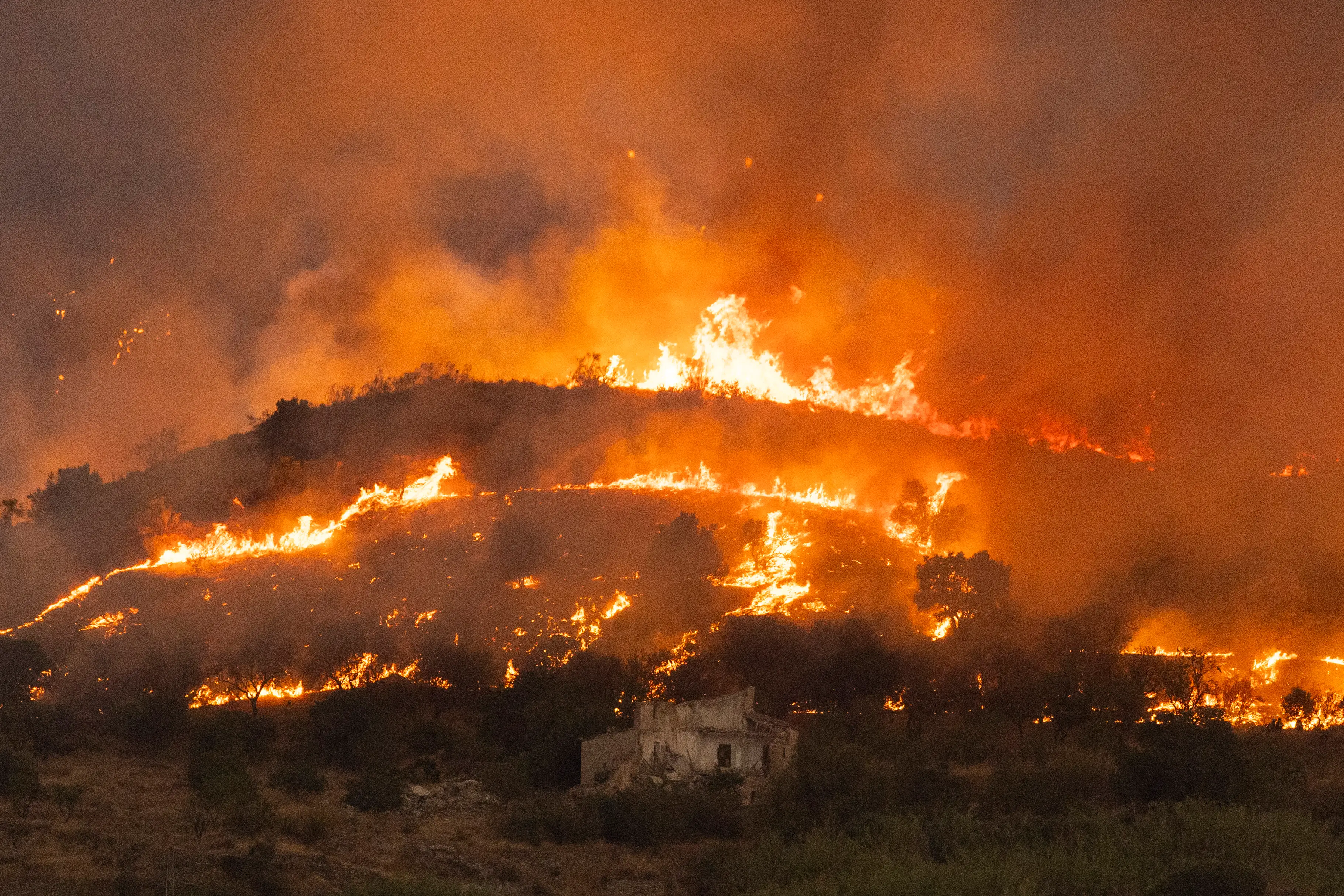
Some of the common themes which emerged from the research included the likes of ‘increased extreme fire weather’ which has the potential to shorten the intervals between hot fires.
This will then have a knock-on effect on the structure of vegetation and species persistence.
The paper continued: “Warming by 4°C will displace many plant species from their present-day temperature envelopes. There is a major difficulty in forecasting the consequences, because solid evidence is rarely available about what controls species range boundaries. Is it physiological tolerance, or competition, or susceptibility to pathogens, or something else?
“We need urgently to decide how much to try to support species in their present locations, versus how much to assist them to move polewards or uphill.
“Certain species can strongly shape ecosystem structure by influencing fire or successional regimes. Gene technology for suppressing selected invasive species would have potential for improved ecosystem management.”
If the future sees a decline in livestock grazing, then this will ‘interact strongly with future fire regimes and will also make lands available where future ecosystems can be deliberately constructed’.
Despite focussing on Australia, scientists have warned that these themes could impact communities around the world unless something is done to drastically halt the effects of climate change.