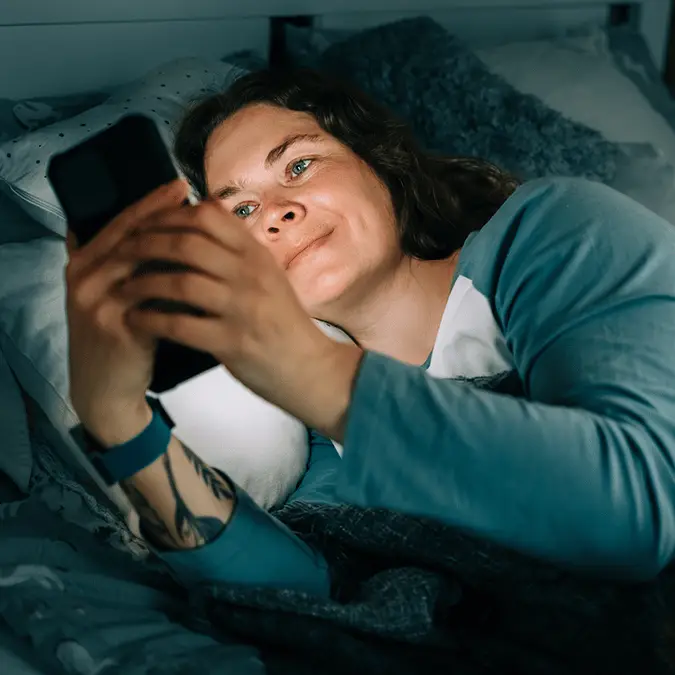
Scientists pinpoint the daily screen time limit before 'digital dementia' kicks in


Everyone is probably aware that spending too much time looking at a screen isn't the best for your health, but a new warning from officials at the US Department of Health and Human Services has outlined how children especially could be at risk of 'digital dementia'.
It specifically outlines advice to completely limit exposure to screens before a child's first birthday, only increasing that use gradually with age and not letting it get beyond dangerous levels.
Global screen time statistics have shown quite how much the average person spends on their phone, tablet, or PC every single day, yet the risks are understandably far greater in younger individuals and reducing the use of screens is imperative according to scientists.
Some new studies have even linked excessive screen time – linked to chronic sensory stimulation – to a risk of cognitive, emotional, and behavioral disorders in young adults, mimicking the signs that you'd typically associate with the early stages of dementia.
How much screen time should children be getting?
As reported by CNN, the advisory from the Department of Health and Human Services indicates that children should be getting no more than around two hours of screen time a day, not counting school-related media.
Advert
This number drops even further to less than one hour daily for toddlers and preschoolers, and while that two-hour limit is in place, experts have urged parents to monitor and control the amount of exposure and try to limit it wherever possible.

It arrives as a wider directive and 'call to action' for parents surrounding screen time, urging them to encourage breaks, create boundaries, and implement a wider plan that helps their children avoid the dangers.
The department has suggested that children should complete other extracurricular activities before engaging in screen use, and that schools in general should implement phone limitation policies alongside encouraging children to work from books or on paper.
"While screen use can have some benefits," explained Health Secretary Robert F. Kennedy, "the evidence of a range of risks to children's overall mental and physical health is mounting."
What are the negative impacts of excessive screen time?
Studies have shown that excessive screen time from an early age can trigger a negative cognitive impact, putting the health of children at risk if they're exposed to screens too much.
These symptoms and side effects can include impaired concentration, orientation, acquisition of recent memories, recall of past memories, social functioning, and self-care, according to a shocking study published in the Journal of Integrative Neuroscience.

Scientists have also suggested that "excessive screen time is known to alter gray matter and white volumes in the brain, increase the risk of mental disorders, and impair acquisition of memories and learning which are known risk factors for dementia."
It is especially dangerous during the critical periods of development, with researchers suggesting that this "will lead to mild cognitive impairments in early to middle adulthood resulting in substantially increased rates of early onset dementia in later adulthood."