Featured Image Credit: d3sign / Getty
Most people severely underestimate quite how disgusting your phones are on a daily basis, yet groundbreaking new research from a team of scientists might have discovered a method to keep your iPhone effectively virus free without you needing to do a single thing.
There's a good chance that you take your phone with you everywhere, which then causes you to touch it with your fingers and even put it up close to your face if you're taking a phone call.
What you might be shocked to discover though is quite how many germs are constantly living on your phone's surface, and it can be rather alarming when you really think about it.
Taking your phone into the bathroom when you go to the toilet is already bad for your health due to the increased risk of developing hemorrhoids, but it also allows your phone to pick up an incredible amount of germs simply by being within the proximity.
Advert
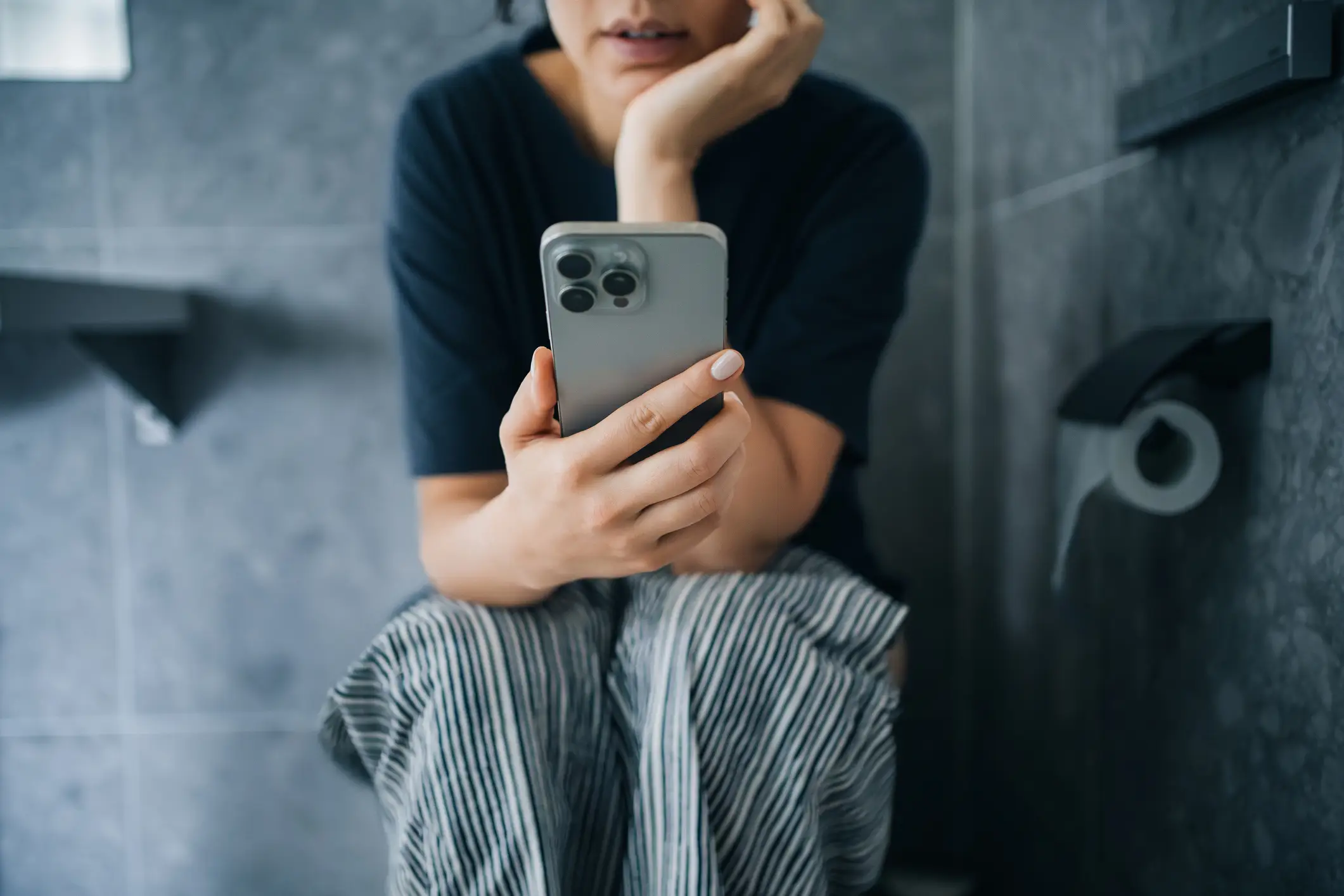
As shared by Leapfrog Remedies, studies have shown that your phone is on average around ten times dirtier than a toilet seat, and there's a good chance that you wouldn't feel comfortable touching that and then eating every single day.
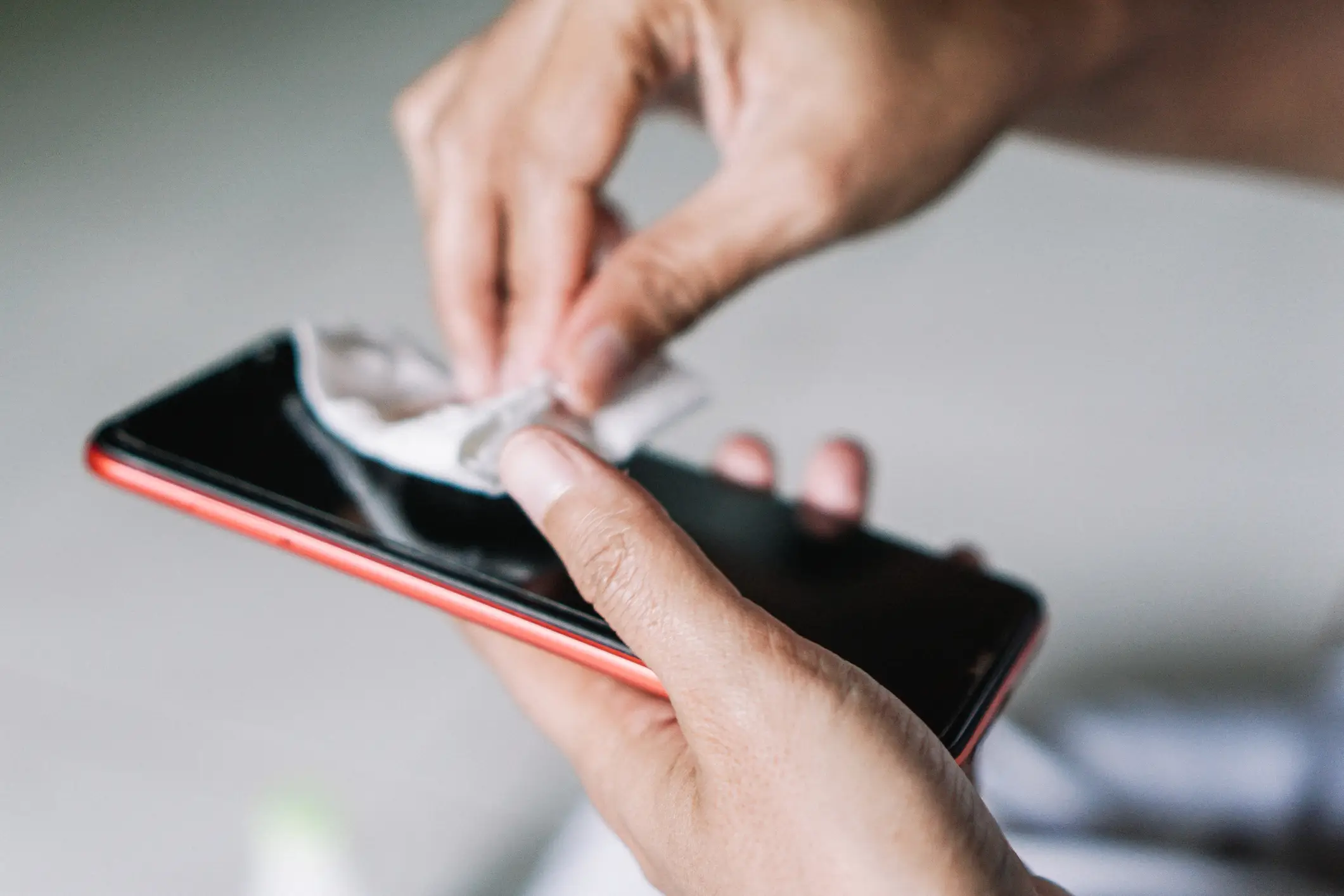
While wiping your iPhone down with an alcohol wipe does help to a certain degree, it still won't get rid of every germ, leading scientists to search for a more effective method of keeping your gadgets free of viruses.
Published in the journal Advanced Science, a team of researchers from The Royal Melbourne Institute of Technology (RMIT University) have designed what they call 'scalable mechano-virucidal nanstructured acrylic surfaces for enhanced viral inactivation' — but to the rest of us it's effectively plastic that kills germs.
"In this study, flexible nanostructured acrylic films with nanopillar arrays are fabricated using anodized aluminum oxide (AAO) molds and ultraviolet nanoimprint lithography (UV-NIL), providing a scalable mechano-virucidal platform, capable of physically rupturing viral particles," the study outlines, describing the process that would see viruses and bacteria torn apart by mechanical force.
This appears to be a far more consistent means of fighting against viruses than chemical applications, as the ultra-fine nanopillars effectively pull part the outer shell of any virus that finds its way onto the surface.
Tests have shown quite how effective it is in practice too, as the human parainfluenza virus 3 (hPIV-3) – which you might be aware causes illnesses such as pneumonia and bronchiolitis – was reduced on the surface by around 94 per cent within just a single hour.
What's more, this material can be produced in large quantities for a relatively cheap cost, providing an effective and affordable solution that could significantly reduce the risk of germs and subsequent illnesses directly related to smartphones.