
Physicists just built the world's first 'nuclear clock' that will change how we measure time


Time never changes but the way we measure it very well could, as physicists have just built the world's first 'nuclear clock' which keeps seconds accurate by using fluctuations within the atom's nucleus, as opposed to its electrons.
This might not necessarily seem like a significant change, but it not only makes the measurement of precise time more accurate and reliable over a far longer period of time, but it also provides a solution that's more portable compared to what we have now.
The discovery itself has taken scientists more than two decades to achieve, as reported by Scientific American, with the findings published in the journal Nature, yet that rather extreme length of time that was predicted to initially take no more than a few weeks could be revolutionary for time itself going forward.
How do nuclear clocks work?
Clocks as a standard measure time through oscillation, with laser light triggering a shift in electron state, yet these new nuclear variants boost protons and neutrons inside of the nucleus of thorium-229 — a rare, radioactive isotope that's famous for it's low-energy state.
Advert
Because of this, it only requires a small amount of ultraviolet laser light to shift the energy state of the protons and neutrons meaning that it provides a more consistent method for timekeeping.
From there, scientists were able to discover the exact frequency required for the laser to shift energy states, which was done by observing how much light was absorbed by the atoms themselves.
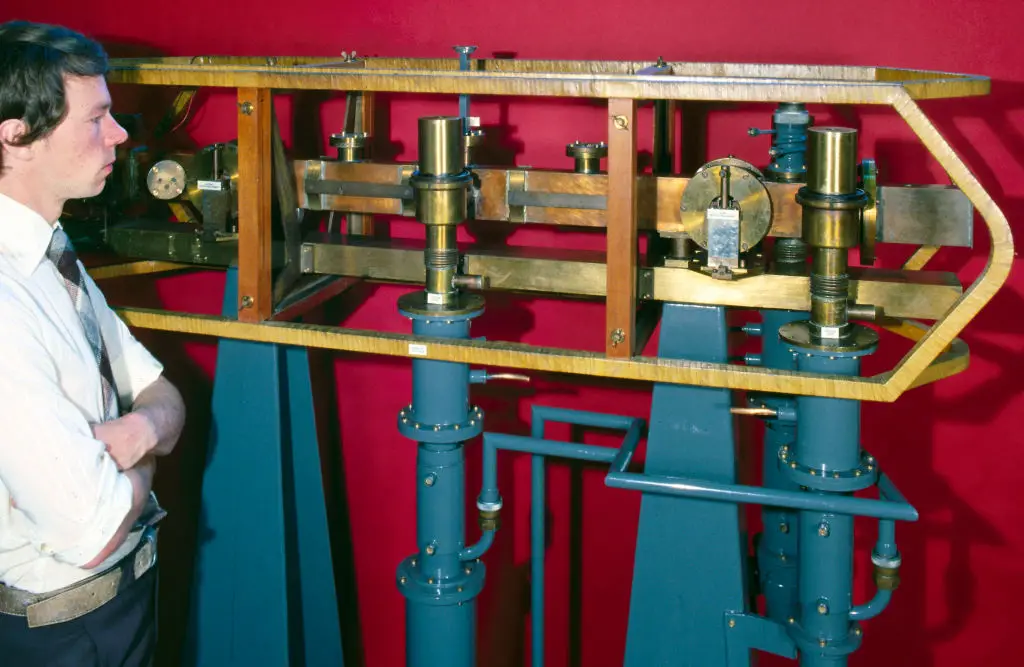
The resulting drift in time across the course of a day represents the gaining or loss of one second every three million years — yet while this might sound impressive, there's still plenty of work to be done compared to its atomic counterparts which currently achieve far more consistent results of up to one second of gain or loss every 40 billion years in some instances.
Will nuclear clocks replace atomic clocks in the future?
The expectation is that, with improvements made to the process, it's only inevitable that this new form of timekeeping will emerge as the preferential method going forward due to its potential.
There remains a lot left for scientists and physicists to explore, however, with discussions surrounding the isolation of thorium-229 ongoing, as opposed to embedding the isotope within a crystal.
Additionally, nuclear clocks could also provide an avenue for a new form of "functioning precision instrument," according to theoretical physicist Gilad Perez, providing a new way for scientists to investigate what goes on inside of an atom's nucleus.