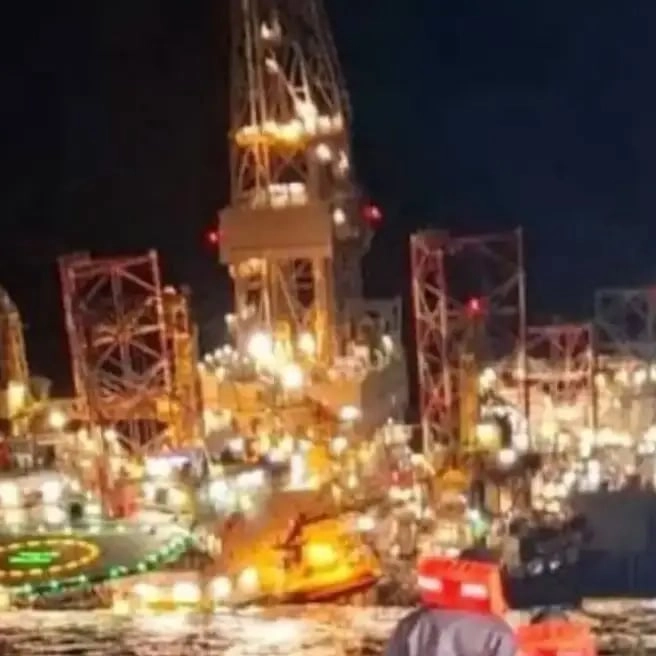
How the seabed can suddenly give way beneath an oil rig as Prospector 5 operator reveals sinking findings


Tragic scenes have unfolded, as footage of an oil rig sinking off the coast of Gabon has made its way online. On October 24, the Prospector 5 offshore jack-up drilling rig sank with 115 workers on board. Although 110 were rescued, one fatality has since been confirmed, and four people are still missing.
An Indian national was found deceased, while the remaining four who are missing are said to include three Gabonese nationals and another expatriate.
Prospector 5 is owned and operated by Borr Drilling, with a preliminary investigation citing a 'punch-through' event as the reason for the incident.
What is a punch-through event?

As reported by Reuters, the Prospector 5 crew was executing jacking and preloading operations at around 20:40 local time, with the seafloor suddenly giving way.
Advert
The rig was constructed in 2014 and was deployed near the coastal town of Mayumba as part of a new offshore drilling campaign for BW Energy.
A punch-through event is a geotechnical failure when one or more legs of a mobile jack-up rig plunge into the seabed floor. Compared to kicking the leg out from under a three-legged stool, it causes the rig to tilt. This can cause a loss of structural integrity or even a total capsize.
Previously writing on LinkedIn, offshore operations specialist Gabr Mohamed explained that jack-up rigs rely on massive legs that have footings known as spudcans. Jack-up rigs are supported by three or four legs, and during the preloading and jacking process, spudcans are driven into the seabed.
Spudcans anchor a rig securely to the seafloor, and a punch-through event is triggered when one punctures through the strong upper layer into the weaker material below.
A typical scenario might see the spudcan appear stable on a stiff clay layer, but a sudden collapse occurs when it slips into soft clay beneath. Mohamed reiterates that sudden leg penetration can record between one and two meters within seconds, causing hull tilt or leg overload without warning.
Can you prevent punch-through events?
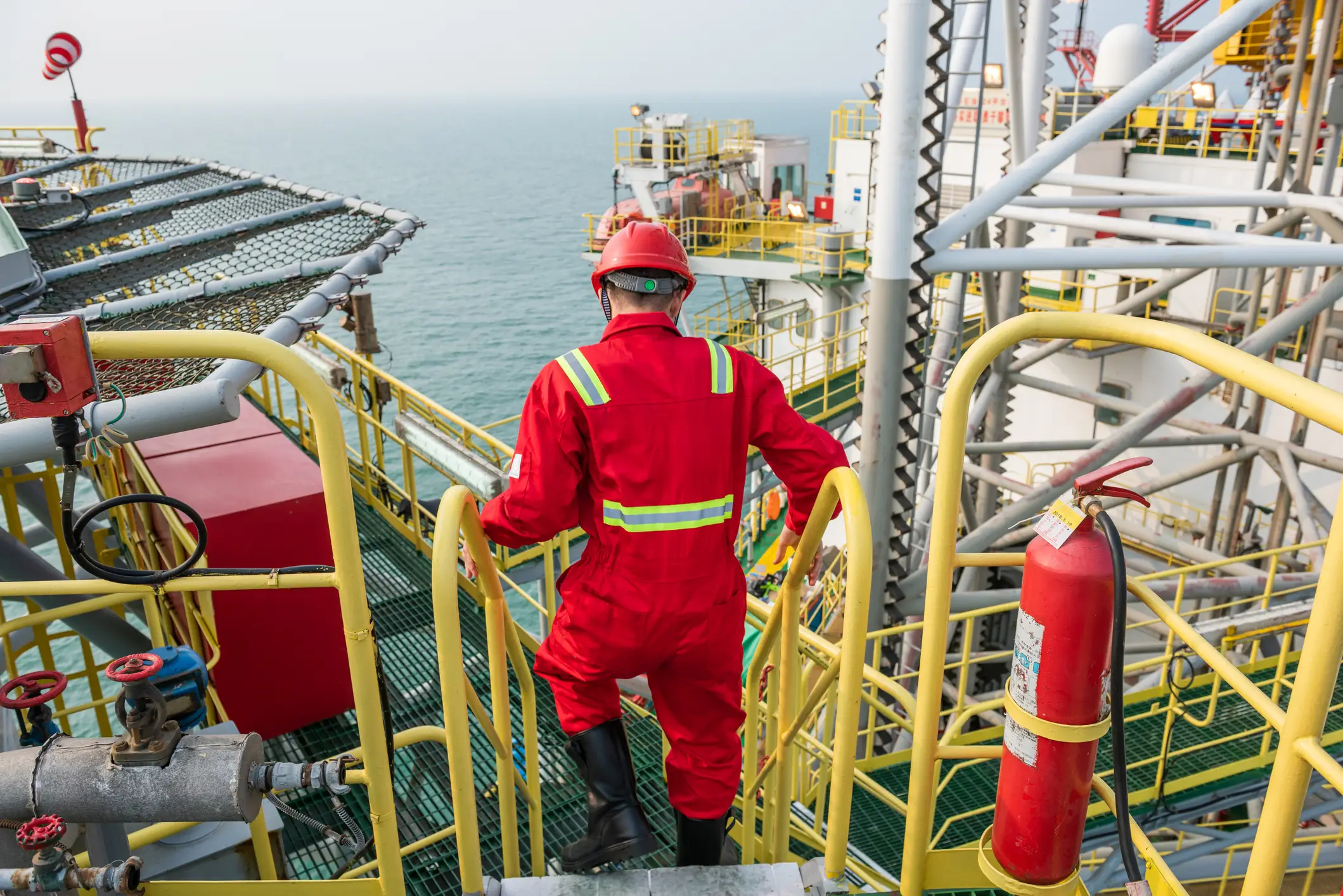
Pisys Limited is a Health, Safety, Environment, and Quality (HSEQ) software development and operations training simulator company that prepares companies like Borr Drilling for critical safety incidents like a punch-through event.
On its own page looking at punch-through events, Pisys warns that it's "one of the most serious hazards in offshore drilling operations."
Punch-through events are more common in areas where carbonate sands and stiff clays sit on top of soft clays or silts, noting the Middle East, South-East Asia, Australia, the North Sea, and West Africa as particular danger zones.
The fact that Gabon sits on the west coast of Central Africa fits the brief, and as carbonate sands can appear fine under initial loading, punch-throughs are hard to predict.
Pisys says that site investigation data like cone penetration tests and soil borings can be used to assess punch-through risk, but it only provides a limited area and depth. Even geotechnical data can't completely eliminate the risk of a punch-through event, which is why crew training and response capability are said to be essential.
Punch-through events can't be trained for on a live rig, and although many jack-up crews might never experience one, the limited response time makes them especially dangerous.
Thankfully for the Prospector 5 incident, the fact that the rig was only in its jacking phase instead of drilling new wells means the risk of a major oil blowout was minimal.
Environmental teams were quickly deployed to the Mayumba coastline but report that there are no initial signs of any leaks.
Responding in the aftermath of the incident, Borr Drilling Chief Executive Bruno Morand said: "We are deeply concerned for those who remain unaccounted for and everyone affected by this incident. Our immediate priority is supporting the ongoing search and rescue efforts and the welfare of all personnel involved."