
Could Prospector 5 ever be brought back up? What recovering a sunken oil rig would take


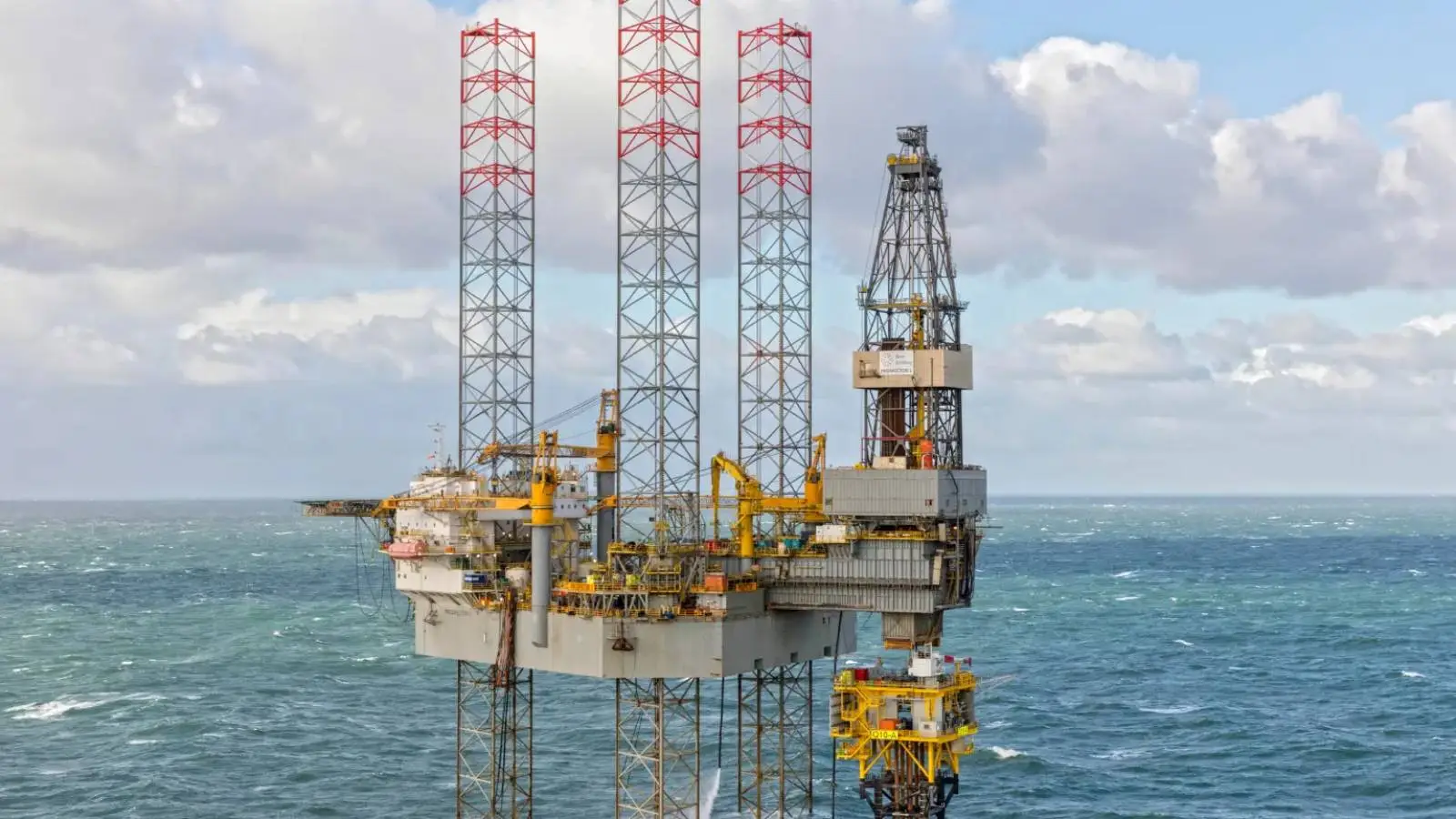
There were dramatic scenes on October 24, as Borr Drilling's Prospector 5 oil rig was seen sinking into the Atlantic Ocean off the coast of Gabon in West Africa. There were 115 people onboard when the incident happened, with 110 being rescued, one fatality later being confirmed, and four still missing.
A preliminary investigation from Borr Drilling cited a punch-through event, which has been branded one of the most dangerous but unpredictable situations that can happen to an oil rig.
While some oil rig workers might never experience a punch-through event, the potentially deadly incident causes one of the rig's legs to break through a harder surface level on the seafloor and rapidly sink into softer material beneath.
With a rapid acceleration of sinking by up to two meters in a matter of seconds, the world watched this unfold via social media footage that showed it happening to the Prospector 5. Because the rig was in its jacking phase instead of drilling any new wells, environmental teams have said there are no initial signs of any oil leaking, but elsewhere, some might be asking whether Prospector 5 could be salvaged.
Could the Prospector 5 rig be salvaged?
Advert
While we imagine the immediate efforts are focused on search and rescue for the four who are still missing, could Borr Drilling eventually turn its efforts to salvage? There are several issues going against the idea of a salvage, notably because Prospector 5 sank around 50 kilometers offshore Mayumba and rests in deep water. This makes refloating or recovering the main hull a logistical and financial nightmare, with structural integrity being another hurdle.
Punch-through events massively affect the structure of a rig via twisting or buckling, compared to what would happen if you kicked a legs out from a three-legged stool.
Looking at historical examples, punch-through events typically lead to total economic hull loss and wreck removals that take months or even years to complete.
Wreck removals are important to clear shipping lanes and limit the environmental impact of a rig sinking.
In 2013, Smit Salvage was contracted to remove the wreck of the Perro Negro 6 in Angola after it suffered a similar punch-through event. This was a massive undertaking that took around 10 months and needed a fleet of diving support vessels to chop up the hull and remove the rig's twisted legs from the ocean floor.
The Troll Solution rig sank in the Gulf of Mexico in 2015 and was originally going to be refloated. Due to its proximity to an active oil platform, it was eventually deemed too risky, and instead, it was dismantled via an underwater 'guided guillotine'.
Again, similar to the Prospector 5, the Naga 7 experienced a punch-through event in 2021. The massive weight and deep waters meant it took until the end of 2024 to completely get rid of the Naga 7.
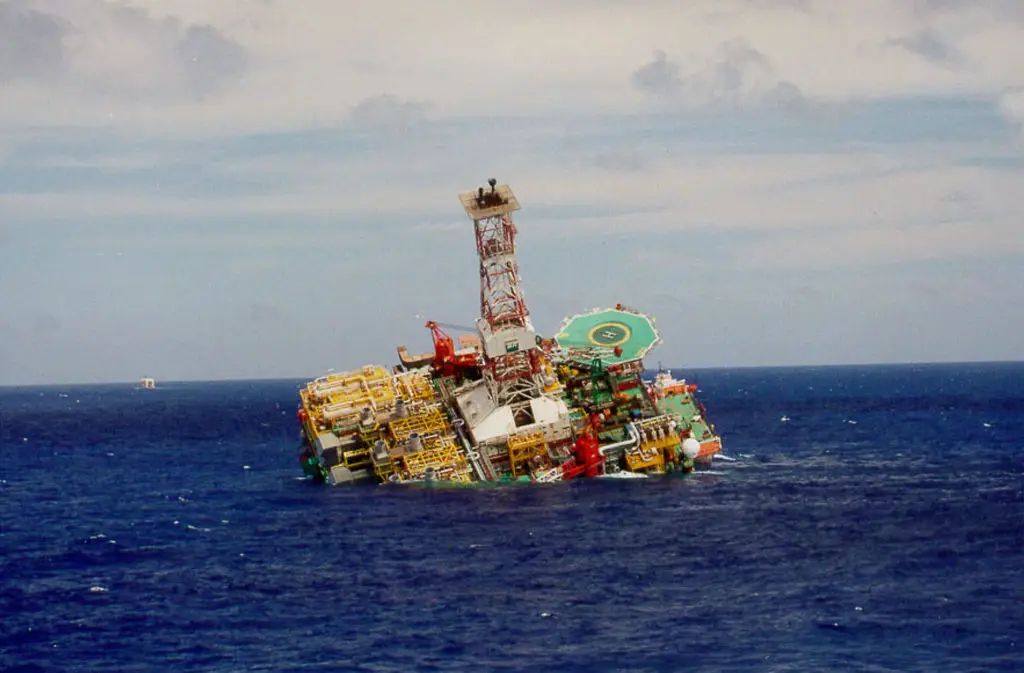
One of the worst disasters involved a series of explosions in 2001, killing 11 people on the Petrobras 36 (P-36) in Brazil. Known as the biggest oil platform in the world, it was declared a total loss, as now-iconic images show it sinking to the ocean floor.
What is the financial impact the Prospector 5 sinking could have on Borr drilling?
For all of these, one of the biggest challenges is safely removing the hundreds of metric tons of marine diesel, hydraulic fluids, and other drilling chemicals that are used by rigs.
With the Prospector 5, the first stage will likely see salvage divers being deployed to seal its internal fuel vents and pump it to the surface to mitigate the possibility of future leaks.
When it comes to the Naga 7, rig owner Velesto Energy issued a notice of abandonment and received an insurance payout of approximately $125.6 million.
Stock market analyst TIKR also notes financial troubles, with Borr Drilling stocks dropping by 8% in the aftermath of the Prospector 5 incident.
The rig was booked through until the middle of 2027 by BW Energy, and with Borr's net debt being 3.6 times its Earnings Before Interest, Taxes, Depreciation, and Amortization (EBITDA) in fiscal 2025, what the insurance company pays out could be crucial.
Borr's net debt has come down from 10.2 times EBITDA in 2022, and even though 3.6x in fiscal 2025 is substantial, the company's revenue is predicted to grow from $1 billion in 2026 to $1.35 billion in 2028.
TIKR says one rig is a small part of Borr's overall operations; however, analysts are expected to trim 2027's earnings expectations without the Prospector 5.
UNILADTech reached out to Borr Drilling for comment.