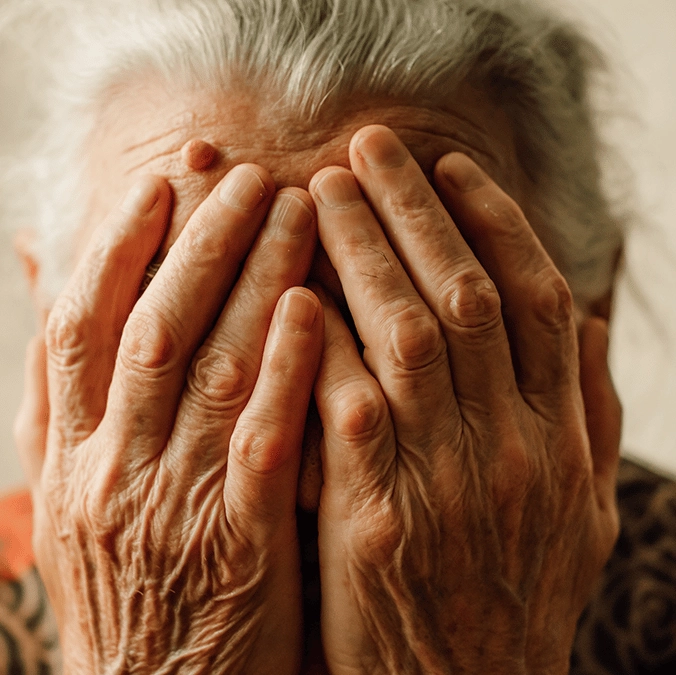
Scientists warn this facial feature could be an early warning sign of dementia


With dementia said to affect 1 in 3 people born today, the alarming growth in neurodegenerative diseases is an obvious cause for concern. Some 7.2 million Americans over the age of 65 are said to be living with dementia in 2026, and with that costing $781 billion a year, being able to diagnose early is the key to trying to stop this harrowing disease in its tracks.
There was some recent positive news when it was thought that an existing shingles vaccination could be a secret weapon in stopping dementia, although it's a slow process.
Even though you might associate dementia with your later life, fears that one YouTuber was diagnosed with it at the age of just 41 prove why we need to be paying attention now.
Although he no longer claims he has dementia, he pointed to early warning signs and apparent symptoms like forgetting he'd watched a specific movie and "pretty big memory flaws."
Advert
According to researchers in China, there's a visual cue that someone could be suffering from dementia.

The team suggests that looking older than you are could be linked to having a higher risk of developing dementia. Before you go reaching for the anti-wrinkle cream, the study explains how crow's feet around the eyes lead to higher odds of cognitive impairment and dementia when you're older.
Looking at 150,000 residents in the United Kingdom, the research claims that looking older is related to a 60% higher risk of being diagnosed with dementia.
A further study maintains that those with the most crow's feet had twice the chance of a 'measurable cognitive impairment' than those with the least.
Published in the Alzheimer’s Research and Therapy journal, the team reiterated (via The Independent): "We found that high perceived facial age was associated with high risk of cognitive impairment and incident dementia."
Participants were asked questions like "Do people say that you look younger than you are, older than you are, about your age, do not know, and prefer not to answer?”
They then completed questionnaires to measure cognitive function over a period of several years. Researchers insist there's a correlation between 'perceived age' and a significant decline in cognitive function.

Those who said that people think of them as older than they are had a 61% higher chance of dementia than those who are typically seen as looking younger.
Authors continued: "We observed a significant positive association of the difference between perceived facial age and chronologic age with odds of cognitive impairment."
The same paper included a different study where people had pictures of themselves presented to a panel of 50 strangers. The panel was asked: “How old do you think this person looks?”
The total number of wrinkles above the cheeks and around the eyes was also counted, noting that the most intense signs of aging had the strongest link to cognitive impairment. It's important to remember that while cognitive decline doesn't always lead to dementia, the study suggests it could be an early warning sign.
There were similar links between those who had a higher Alzheimer’s disease polygenic risk score and those who had a high BMI or spent more time outdoors in summer.
They concluded that there's the potential to use facial aging as an early indicator for dementia diagnosis.