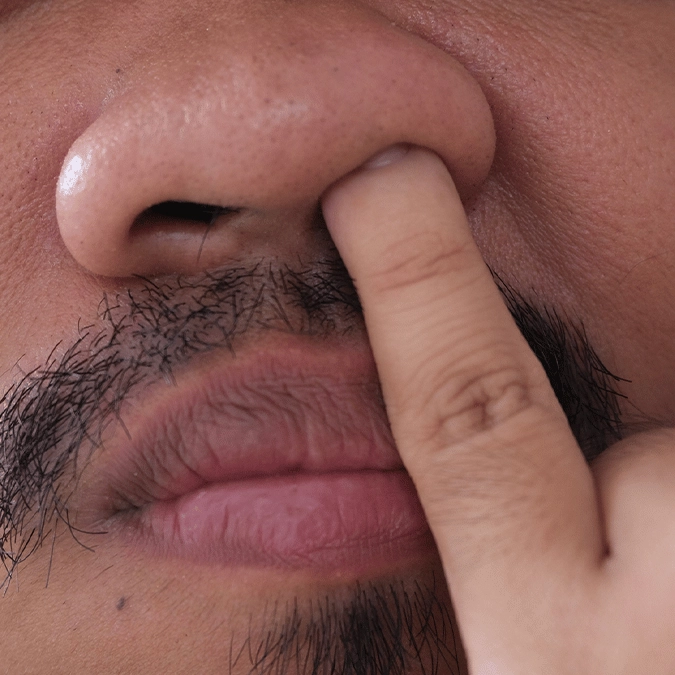
Experts warn nose picking could lead to this incurable disease following worrying research


There are some gross habits out there, and whether people will admit to it or not, biting your nails, peeing in the shower, and not washing your hands after using the toilet are just some of the nastiest.
Another horrible habit is picking your nose, with a 1995 Wisconsin study finding that 91% of 1,000 surveyed adults admitted to doing it.
Aside from digging for gold being seen as a disgusting habit, it turns out we could be opening ourselves up to an incurable disease while poking around up there.
According to the Centers for Disease Control and Prevention (CDC), picking your nose can lead to Chlamydia pneumoniae, as well as further fears that it can be linked to Alzheimer's.
Advert
You might associate Chlamydia with STIs, and it's true that Chlamydia infections are the most common bacterial sexually transmitted diseases in human beings.
Referred to as a 'type of bacteria that can cause respiratory tract infections', Chlamydia pneumoniae infections are generally mild but can develop into more serious cases that might need antibiotics to clear.

The bacteria attack the lining of your respiratory tract, which includes the throat, windpipe, and lungs. In upper respiratory cases, Chlamydia pneumoniae can lead to ear infections, sinus infections, and sore throats, while lower respiratory cases are linked to bronchitis, laryngitis, and full-blown pneumonia.
Even though smelling your farts can apparently help prevent Alzheimer's, the New York Post reported on how a team from Australia's Griffith University investigated the theory that trauma to the nasal lining can allow germs to be transmitted to the brain. In turn, it's thought that this could trigger inflammation and the formation of the deadly amyloid plaques associated with Alzheimer's.
Although some think they're getting closer to fully reversing Alzheimer's, we're still a long way off from curing this harrowing disease.
In 2022, the Griffith University team looked at mice and how Chlamydia pneumoniae could potentially deposit amyloid beta protein in the brain.
All ages are at risk of contracting Chlamydia pneumonia, although those over the age of 65 are more at risk. Outbreaks tend to occur in crowded places like college dorms, prisons, military facilities, hospitals, and retirement homes.
In extreme cases, it can develop into worsening asthma, as well as swelling of the brain (encephalitis) or heart (myocarditis). There are also long-term infections said to contribute to arthritis, asthma, and atherosclerosis (where plaque builds in blood vessels).
Neuroscientist James St John warned: "We’re the first to show that Chlamydia pneumoniae can go directly up the nose and into the brain, where it can set off pathologies that look like Alzheimer’s disease.
"We saw this happen in a mouse model, and the evidence is potentially scary for humans as well.”
A separate review from 2023 maintained that Alzheimer’s neuroinflammation could be partially caused by pathogens entering the brain through the olfactory system.
It was theorized that microorganisms were able to change the bacterial makeup in the nose, leading to a chronic low-level brain infection, neuroinflammation, and then Alzheimer’s.
In December 2025, neurosurgeon Betsy Grunch said we need to up our nasal hygiene and stop excavating up there with our own fingers.