
Breakthrough trial shows new drug slows Alzheimer’s progression


The world 'miracle cure' is thrown around a lot these days, and you only have to look at the death rates from a whole host of incurable diseases to see we're a long way from eradicating the most deadly.
Still, with biohacker Bryan Johnson claiming he'll have solved the key to human immortality by 2039, does this mean the likes of cancer, heart disease, and Alzheimer's will all be a thing of the past by then?
Like with cancer, there are tons of research being conducted into Alzheimer's, which is a relief considering it appears to be on the rise.
For the first time ever, there are over seven million people over the age of 65 living with Alzheimer's in the USA, with deaths from Alzheimer's more than doubling since 2000, and the costs of the disease tipped to reach $384 billion in 2025.
Advert
Even more worryingly, the Alzheimer's Association claims costs will climb to $1 trillion by 2050, while the number of people diagnosed with Alzheimer's will have tripled.
Research continues, but alongside the bizarre claim that farts could actually reduce your risk of Alzheimer's, a new drug trial has the potential to stop the disease in its tracks.

Undertaken by a team at Northwestern University, the trial involves a drug called NU-9. Tested on mouse models of Alzheimer's, NU-9 supposedly proved effective in stalling the disease before it gets started.
Researchers discovered a previously unknown toxic sub-species of amyloid beta oligomers. These toxic clusters of peptides are linked to some of the brain's earliest changes, which include "neuronal dysfunction, inflammation and activation of immune cells."
The amyloid beta oligomers are thought to form harmful plaque clumps that are associated with Alzheimer's.
After administering NU-9, fewer oligomers were found in the brains of the mice and their support cells (called astrocytes) were kept in a calmer state.
The findings were published in Alzheimer’s & Dementia: The Journal of the Alzheimer’s Association, with hopes that the trial could point to a new strategy on how to tackle Alzheimer's in its earliest stages before patients are struck by cognitive decline and other debilitating symptoms.
Northwestern’s Daniel Kranz is the study's first author, explaining how catching Alzheimer's early is key to combating it: "Alzheimer’s disease begins decades before its symptoms appear, with early events like toxic amyloid beta oligomers accumulating inside neurons and glial cells becoming reactive long before memory loss is apparent.
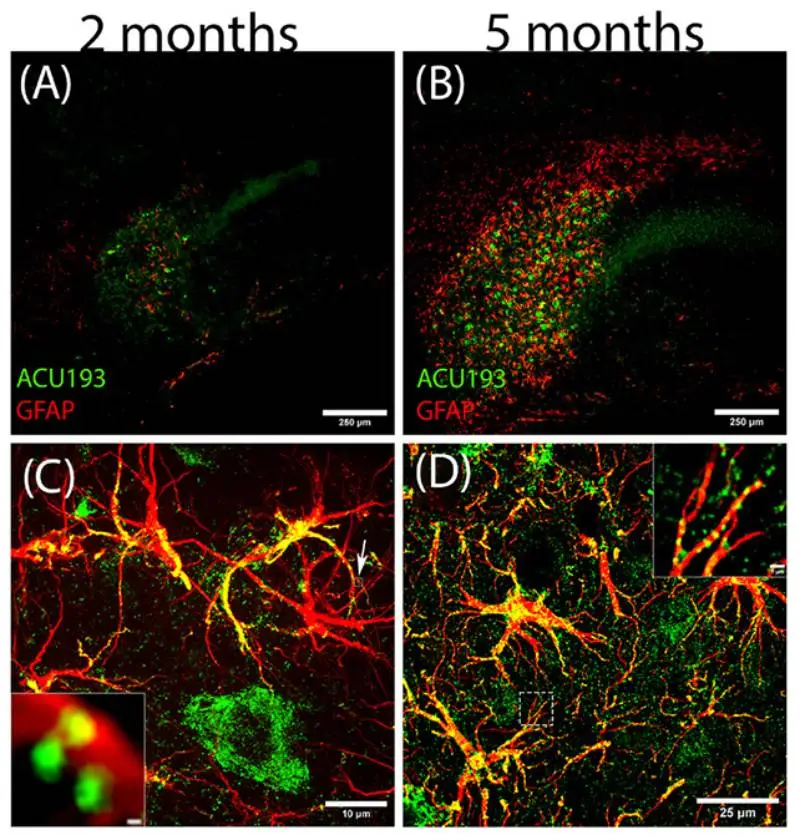
"By the time symptoms emerge, the underlying pathology is already advanced. This is likely a major reason many clinical trials have failed. They start far too late. In our study, we administered NU-9 before symptom onset, modeling this early, pre-symptomatic window."
Key co-author Richard Silverman invented NU-9 and previously invented pregabalin (Lyrica) to treat fibromyalgia, nerve pain, and epilepsy.
Silverman apparently conceived NU-9 around 15 years ago, with a multi-year effort trying to discover a small molecule that could stop the toxic protein aggregate buildup that's associated with neurodegenerative diseases.
NU-9 was already showing promise in 2021, and in 2024, it received clearance from the U.S. Food and Drug Administration to begin human clinical trials.
Discussing the trial, neurobiologist William Klein said: "These results are stunning. NU-9 had an outstanding effect on reactive astrogliosis, which is the essence of neuroinflammation and linked to the early stage of [Alzheimer's] disease."
The team is currently testing NU-9 in additional models of Alzheimer’s disease, focusing on an animal model of late-onset disease that will hopefully reflect typical human aging more accurately.