ALS patient speaks for the first time in years just by thinking


New scientific trials from Elon Musk's Neuralink have given a man suffering from ALS the ability to speak again, and he's able to do so simply by thinking of what he wants to say.
Amyotrophic laterial sclerosis, more commonly referred to as ALS or Lou Gehrig's disease, is a rare neurodegenerative disorder that among other things makes speaking incredibly difficult – if not impossible – for those suffering from it.
It is currently deemed to be incurable, and while there remains no official scientific breakthrough for the disease, one of Elon Musk's most experimental companies might just have discovered a way to provide significant relief to those suffering with it.
Known as the VOICE Study within the company, this clinical trial serves as a means of speech restoration, using an implant within the brain to translate your thoughts through neural activity into text that can then be read out loud by your phone or a computer.
How does Neuralink's speech restoration work?
According to the company, the VOICE Study aims to evaluate the effectiveness of its N1 Implant in restoring speech among those suffering from ALS, primary lateral sclerosis, a spinal cord injury, or a stroke.
Advert
The study employs "the N1 Implant, which is an investigational brain-computer interface designed to help people with severe speech impairment output verbal thoughts as text or directly to speech."
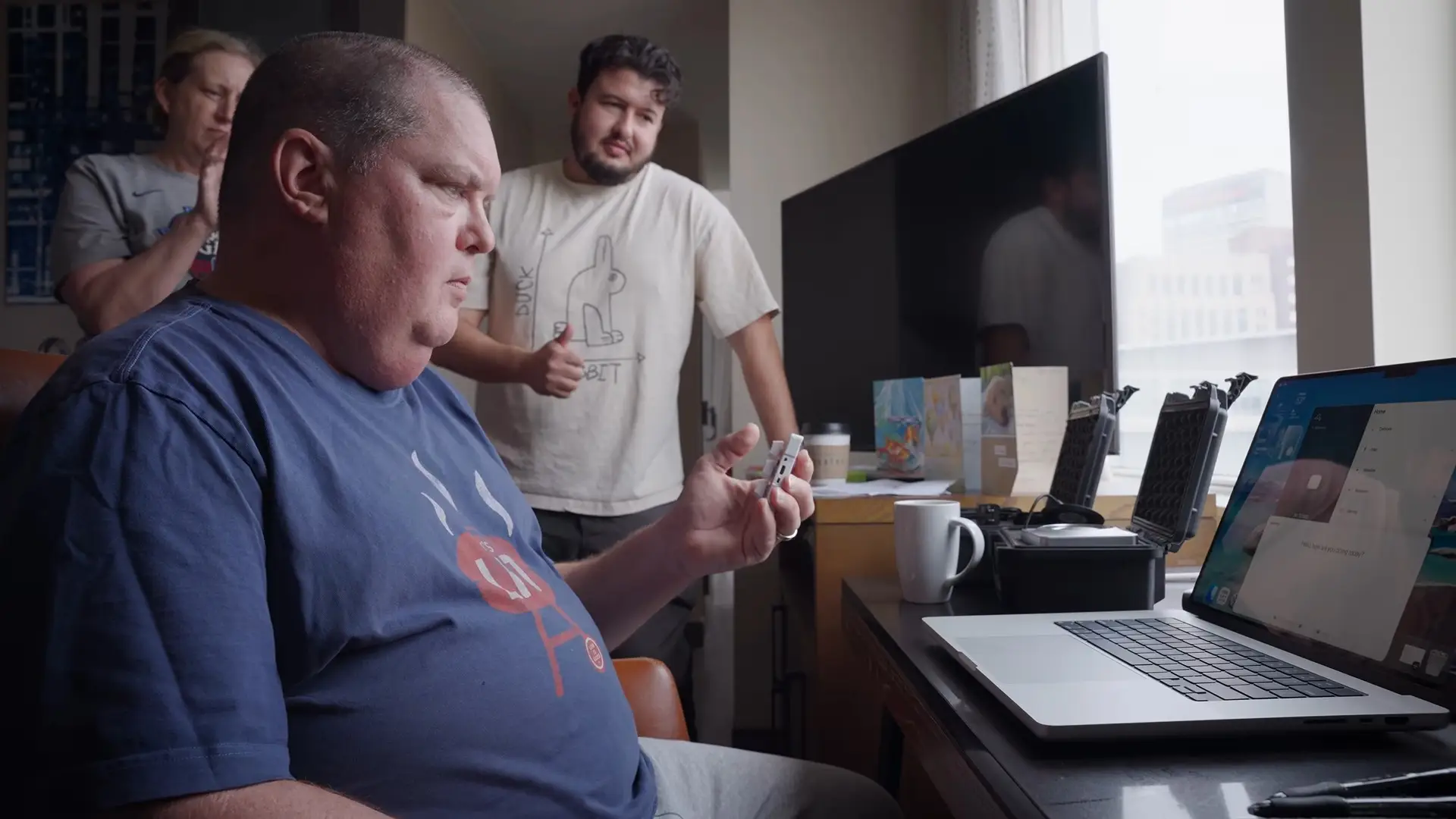
Patients first received this Neuralink implant as far back as January 2024, with numerous patients undergoing the procedure and receiving the N1 chip inside of their brain in order to attempt speech restoration.
Detailing the process in a promotional video, Neuralink followed the story of Terry – who has suffered with bulbar-onset ALS, making it difficult for him to speak with his loved ones – as he successfully received an N1 implant.
After the procedure was successfully completed, researchers instructed Terry to train an algorithm that would read his brain waves as he was mimicking speech, and then doing the same by simply thinking what he wanted to say.
He was subsequently able to 'talk' again despite the disease remaining uncured, giving him and his family great relief as they were able to communicate with each other once more.
What else does Neuralink do?
While Neuralink is making impressive strides in the world of health, its general goal is for everyone to have one of its chips implanted in their brain in order to unlock information that might be lost between neural activity and our actions.
In the short-term Neuralink's chips could provide independence to those suffering from paralysis, as it theoretically allows them to control external devices like phones or computers without the use of their limbs, and the company is even working on tech that aims to restore sight in blind individuals or those with impaired vision.
Looking towards the future, however, Musk clearly intends to employ neuralink in establishing a stronger connection between man and machine – especially as AI becomes more sophisticated, capable, and perhaps even sentient – linking our consciousness in a way that's simply not possible right now.
Whether that actually takes off remains to be seen — and whether it's something that we'll actually want to engage with, considering the risks outlined by the industry right now, is another question entirely.