NASA detects unusual activity brewing in ocean waters off the east coast


NASA has detected unusual activity in ocean waters off the East Coast of the USA.
NASA is incredible at revealing things about our planet that would otherwise go entirely unnoticed, from mapping the drift of tectonic plates to tracking the warming of Earth's oceans over decades, as well as the deceleration of our planet's rotation.
Now the space agency has identified something unfolding in the waters of the northeastern US coast.
Using satellite imagery, scientists spotted swirling green and blue plumes spreading through the shallow coastal waters of the Mid-Atlantic Bight, the stretch of ocean running from the coastlines of Massachusetts down to North Carolina.
Advert

The patterns are reportedly blooming across Delaware Bay, Chesapeake Bay and other shallow areas along the coast and resemble coloured smoke.
What NASA is observing is a phytoplankton bloom, which is a periodic explosion in the growth of microscopic plant-like organisms that live in ocean water.
As spring arrives, river runoff carrying meltwater from higher elevations flows downstream into coastal waters, bringing nutrients that feed phytoplankton growth. The increased daylight and warming water temperatures then cause a sudden and dramatic surge in phytoplankton populations that can spread across vast areas of the ocean in a relatively short period of time.
The researchers also identified diatoms, a specific variety of phytoplankton known for rapid spring growth, as the primary driver of the current bloom.
“Diatoms typically dominate blooms early in the spring, but we are seeing some signs of coccolithophores mixed in as well,” explained Anna Windle, a research scientist currently at Goddard Space Flight Center.
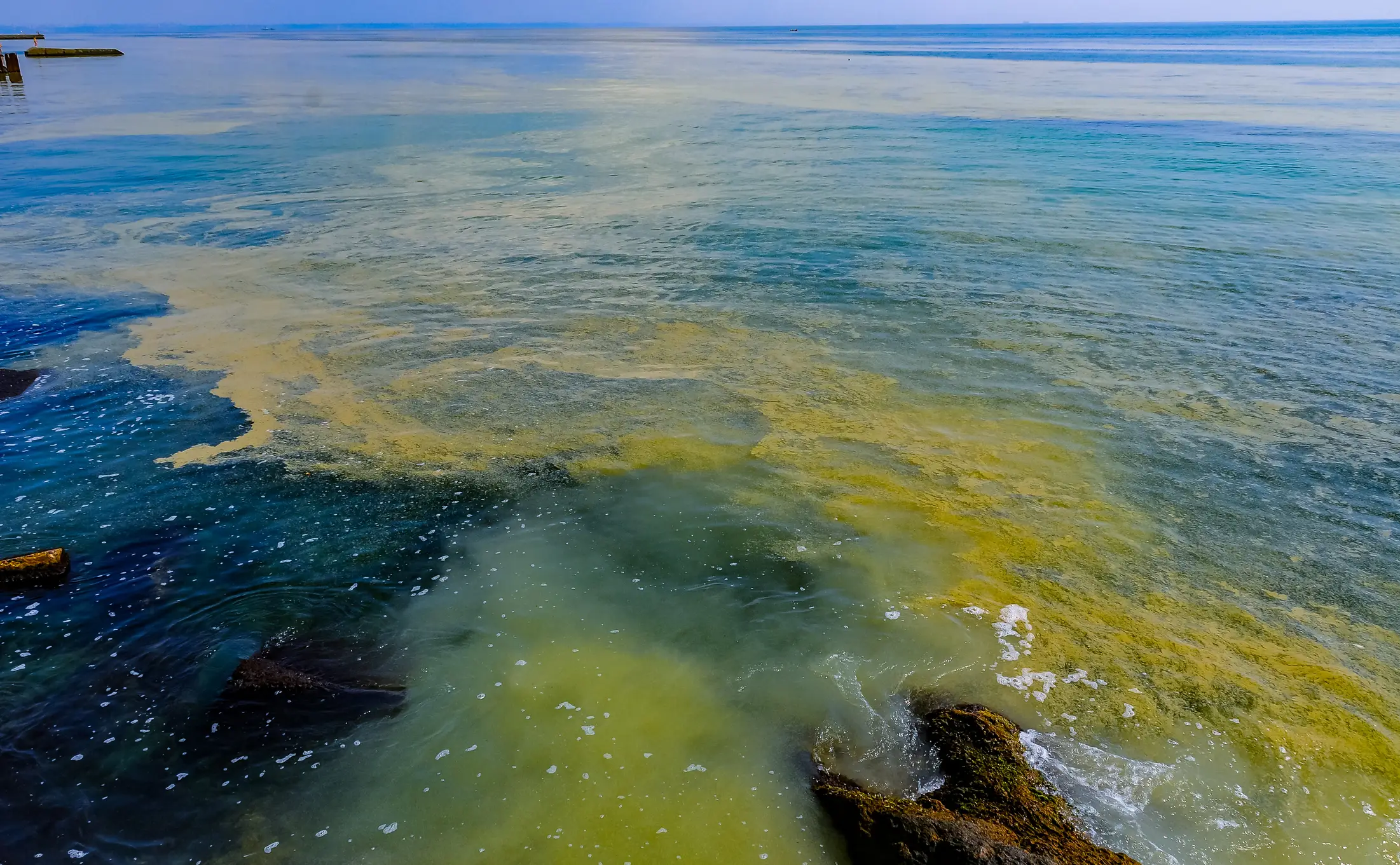
Identifying and categorising these blooms is more difficult in coastal regions than in the open ocean due to the addition of sediments, organic matter and other material.
“This mix creates optical complexity that has long made it harder for scientists to distinguish and categorise phytoplankton blooms in shallow coastal zones compared to the deeper, darker, more uniform waters of the open ocean,” said Adam Voiland in a recent update for NASA’s Earth Observatory.
To overcome that challenge, NASA has been running several missions over the past two years, including PACE (Plankton, Aerosol, Cloud, Ocean Ecosystem) alongside the longer-established Aqua and Terra satellites.
Together, these missions provide overlapping layers of data that give scientists a clearer and more complete picture of what is happening beneath the surface.
Windle also confirmed that data collected by NASA's PACE mission has verified that the vivid colours are in fact the result of phytoplankton blooms.