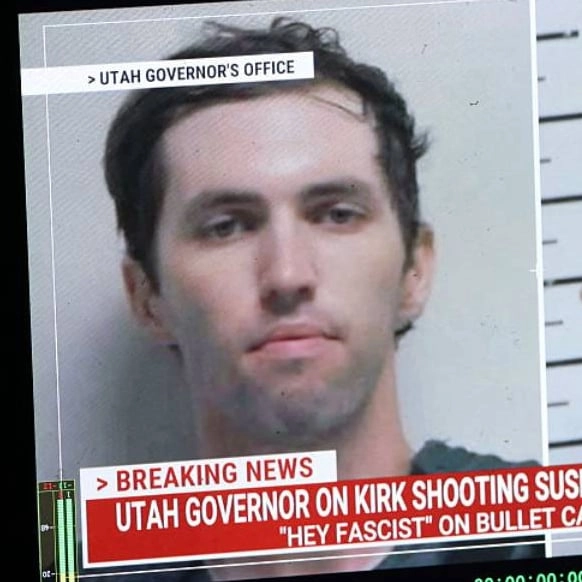
Man accused of killing Charlie Kirk pleads with Utah judge for tech ban in his case

Over six months after Charlie Kirk was shot dead at Utah Valley University, the Turning Point USA co-founder is never far from the news. While Kirk made a name for himself due to his conservative views, the world was shocked when he was assassinated during a talk on gun violence on September 10, 2025.
An FBI manhunt ensued, with Tyler Robinson eventually being named as the main suspect. Robinson was eventually arrested on September 11 and transferred to Utah County Jail in Spanish Fork, speaking just three words during his first appearance.
Robinson faces seven criminal charges ranging from aggravated murder to felony discharge of a firearm causing serious bodily injury, with the prosecution seeking the death penalty. The widowed Erika Kirk has spoken out about Robinson's trial and decried the defense's attempts to keep it private while saying, "Let everyone see what true evil is. This is something that could impact a generation and generations to come."
Prosecutors have backed up Erika Kirk's sentiments, saying that cameras will help avoid conspiracy theories and stop 'distorted narratives', maintaining that "transparency serves as a corrective to misinformation."
Advert
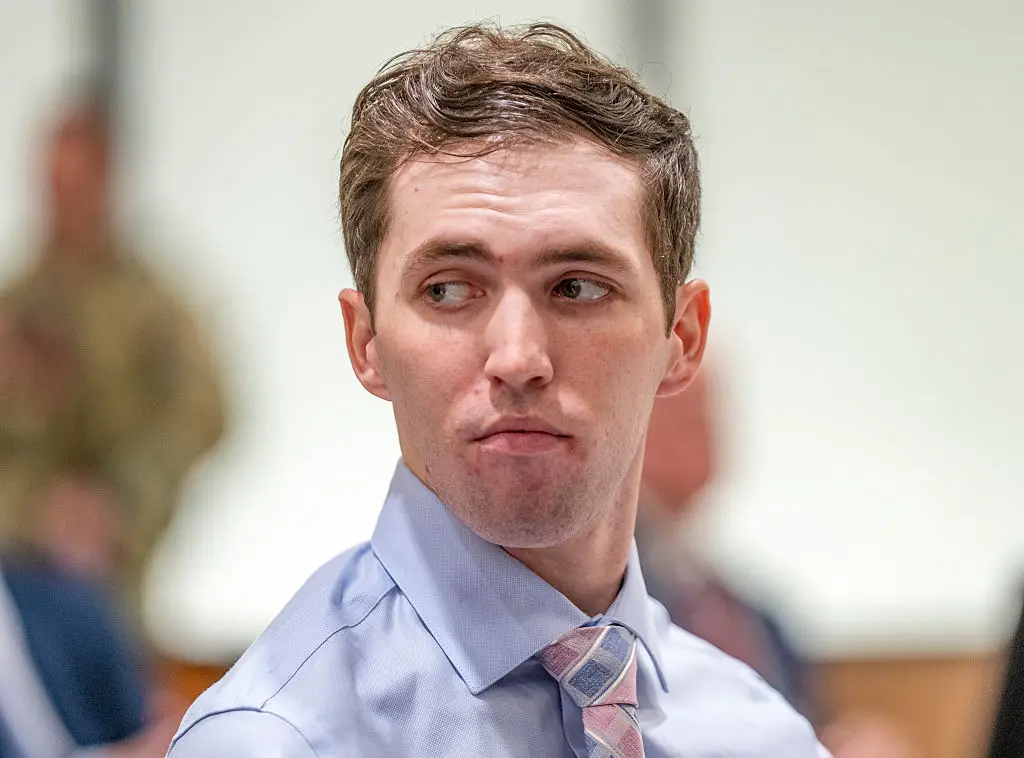
As reported by the Associated Press, Robinson's attorneys have argued against this and claim that biased coverage is in danger of swaying potential jurors. Numerous examples were given, including a New York Post story that suggested Robinson confessed to killing Kirk in a December 11 courtroom conversation. This story used 'lip reading analysis' to support the headline, despite the conversation between Robinson and his attorney being inaudible.
In a request to the courts, Robinson's counsel wrote: "The predominant purpose being served by the live stream coverage has not been the educational reporting of the court proceedings, but rather advertising profit, sensationalism, political agendas, and, most prominently, the vilification of Mr. Robinson."
Robinson has not yet entered a plea, although there are fears that the media is in danger of sensationalizing the trial.
District Court Judge Tony Graf has already shared his disdain about the attention being put on the trial, famously pausing Robinson's first court appearance so a camera could be moved after it violated a courtroom decorum order and showed the defendant in shackles.
There's been similar media scrutiny from Luigi Mangione's trial, with the man accused of killing UnitedHealthcare CEO Brian Thompson grabbing front-page news as he's marched into court in shackles. Mangione's team has compared him to a 'human ping-pong ball', while others have dubbed the whole thing a "spectacle of inequality' due to his supposed manifesto on the state of the healthcare system.
As for Robinson, Mike Judd, a lawyer for a coalition of media organizations, has been fighting to preserve access. Saying that Graf has been focused on rules inside the courtroom instead of what's being said outside, Judd claimed: "The court can do all of that in order to try to control what gets fed into that media ecosystem. You reduce the likelihood of somebody publishing things that you think may be of potentially biasing concern later on."
States, including Utah, give judges the power to decide whether cameras are allowed in their courtrooms, although they're typically excluded from federal courts. University of Utah law professor Teneille Brown reminded the outlet: "There’s Supreme Court precedent that says courts generally need to be open to the public, but that’s not an absolute right. Even if they allow public access, that does not equal a right to broadcast or record."
Robinson's lawyers are also looking to delay his May preliminary hearing, but no matter what, this crucial appearance is where prosecutors have to prove there's enough evidence to take the case to trial.