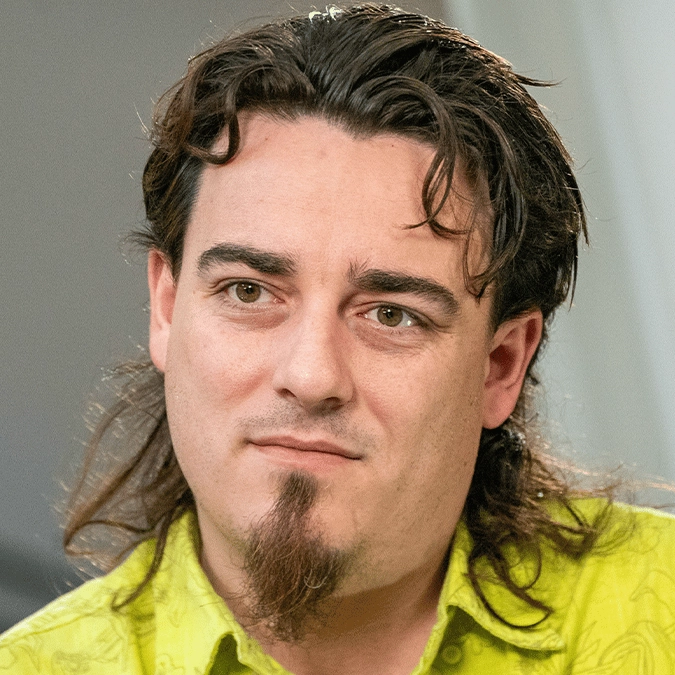
Inside tech boss’ $1 billion plan to develop bizarre floating city designed to last 1,000 years


There are complaints that things just aren't built to last these days, but hoping to defy that, tech billionaire Palmer Luckey has unveiled his grand plans for a floating city that's supposed to survive for the next 1,000 years.
While you might know Luckey as the founder of Oculus, he's since moved into a different industry as he co-founded Anduril Industries, focusing on autonomous drones for military applications. As a pretty controversial figure, we recently reported on Palmer Luckey's plans for Warhound, a company that would genetically engineer the 'Captain America' of dogs of war. It's fair to say that some of Luckey's plans are pretty out there, like the NerveGear VR headset that would kill you if you died in a game.
He's now being compared to a real-life version of BioShock's Andrew Ryan as he discusses SLAB.
What is Palmer Luckey's SLAB?
There's been a lot of chatter about how concerns about data centers and their damage to the planet could be mitigated by sending them up to space, although SLAB could try to address this by moving them out to sea.
Advert
Still, Luckey has reiterated that his ambitious project is more than just a floating data center, saying it's "way cooler than that."
Vowing to make America 'great' again, SLAB is a floating seastead that's due to last a thousand years and serve as its own sovereign state where companies could operate outside the laws which Luckey thinks are currently 'crippling' industries ranging from metal processing to medical research, oil refining to chemical engineering.
As well as supposedly being cheaper than building on land and circumventing state/local laws, Luckey took to X to explain how he and some friends gave SLAB a $1 billion valuation back in 2017.
Even though he says there's a long way to go, he claims there's been "significant progress towards my goal of reviving manifest destiny and westward expansion."
Reiterating that SLAB is designed to make America 'stronger' and act as a "relief valve for ill-considered or outdated rules and regulations," it's a not-so-subtle jab at the government.
It comes at an interesting time for tech, as while President Donald Trump held his own Super Intelligence summit to argue against AI regulation, tech experts and even Elon Musk have championed further restrictions.
Luckey says he's only talking about SLAB because some outlets got wind of the idea and have been calling it a floating AI data center, adding: "It is way cooler than that, way older than that, and I hate looking like a hype-chasing consensus loser, so now you have to read this tweet."
The internet reacts to SLAB
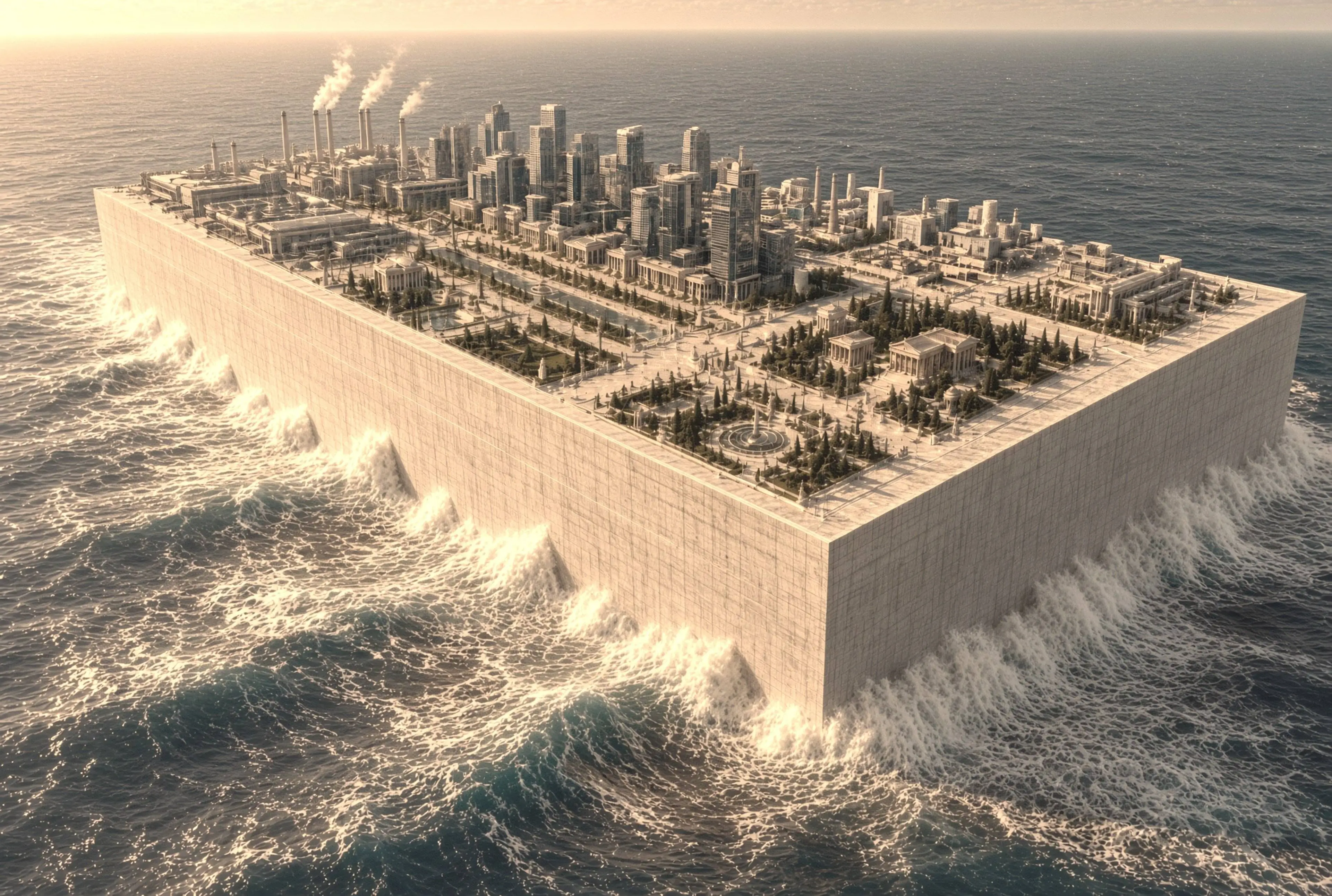
An AI rendering of SLAB instead shows it as more of a floating fortress that sits on the surface, with offices and apartments alongside giant refinery towers and what appears to be a data center.
Seasteading is the idea of creating permanent dwellings in international waters, and according to the Seasteading Institute, they can "provide the means for rapid innovation in voluntary governance and reverse environmental damage to our oceans...and foster entrepreneurship."
When it comes to seasteading in general, critics see them as a refuge for the wealthy to potentially evade taxes and other legislation.
The Seasteading Institute was founded with seed money from PayPal co-founder Peter Thiel, who has held several conferences and started The Floating City Project.
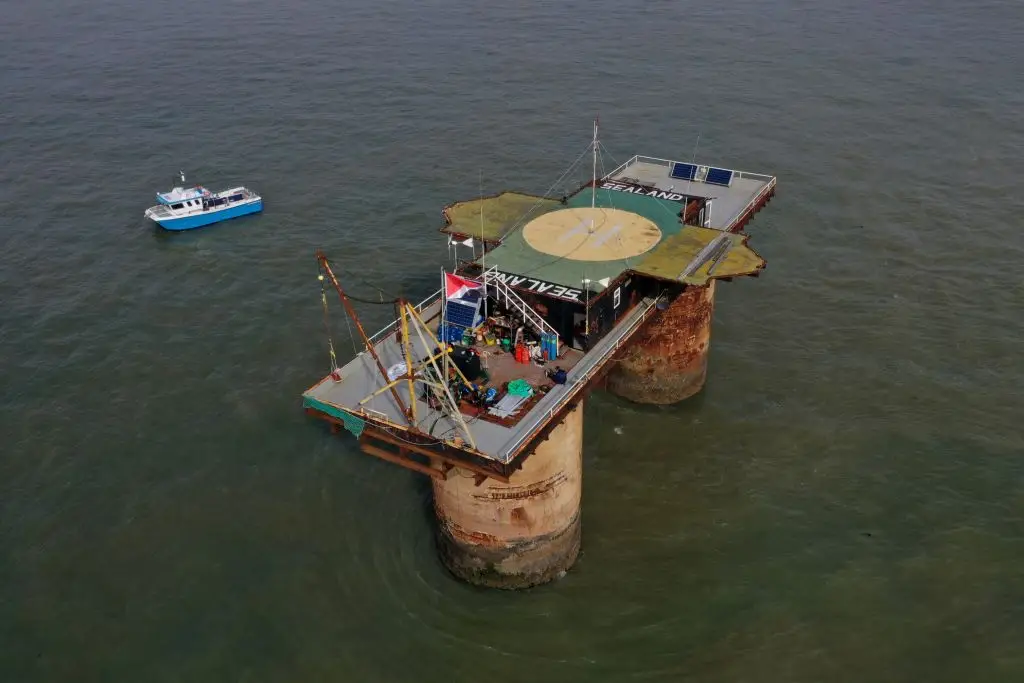
It's largely unproven as a concept, although Pirate Bay once looked at buying the Principality of Sealand.
As for the BioShock reference, Luckey's replies are filled with those comparing it to the underwater city of Rapture. Appearing in 2K's BioShock from 2007, Rapture was designed as an underwater utopia that was free from government control, religion, and moral limits on science. Things didn't go well, with the first two games charting the aftermath of Rapture's downfall.
Over on X, many balked at Luckey's idea, with one person writing: "Give a libtertarian enough time and money and he'll inevitably try and reinvent Bioshock from first principles
Another added: "I’d advise you to play the game Bioshock and see how that panned out."
A third compared it to Karl Stomberg's Atlantis in The Spy Who Loved Me as they concluded: "Did you root for the bad guy in every Bond movie?"