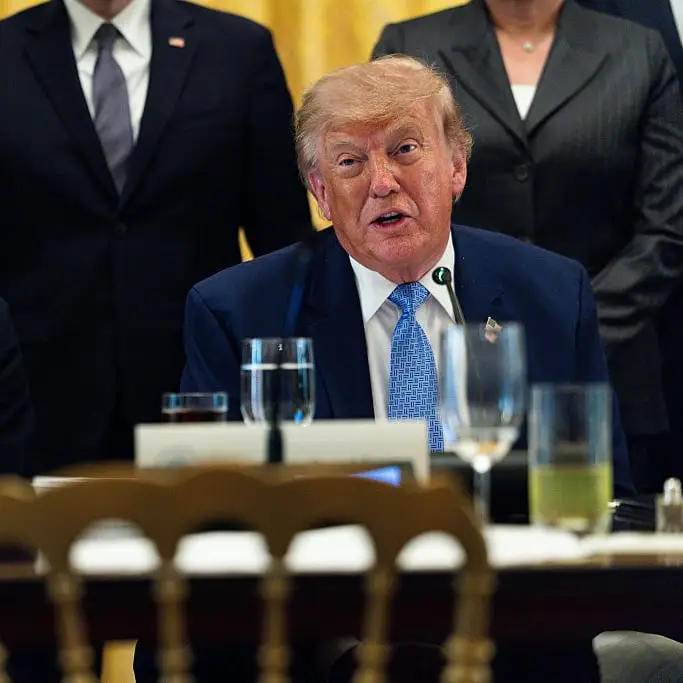
Seating plan at Trump's AI dinner reveals most powerful people in the world right now


One of the most important meetings in the world of technology just took place this week, as numerous tech execs joined US President Donald Trump to discuss the transition to 'Super Intelligence' — and something as simple as a seating plan hinted towards who currently holds the most power.
The purpose of the meeting was to officially rename artificial intelligence as Super Intelligence, as Donald Trump believes this new term best reflects the current status and growth potential of the rapidly evolving technology.
Conjoined to the new executive order was also a 'morally binding' agreement signed by many of the tech world's leading figures, where they agreed to improve their controls and conduct internal audits independently of the government, despite previous calls for political intervention from companies like OpenAI and Anthropic.
That therefore required their attendance at a packed 'Super Intelligence Luncheon', and many are taking the now-published seating plan as evidence of Trump's closest allies, and subsequently those who are likely among the world's most powerful people.
AI dinner seating plan explained
Shared by President Trump himself on his Truth Social page, the seating plan for the East Room dinner saw the nation's leader sit opposite Vice President JD Vance at the center of the table, joined then by eight individuals on either side, making 32 attendees in total.
Advert
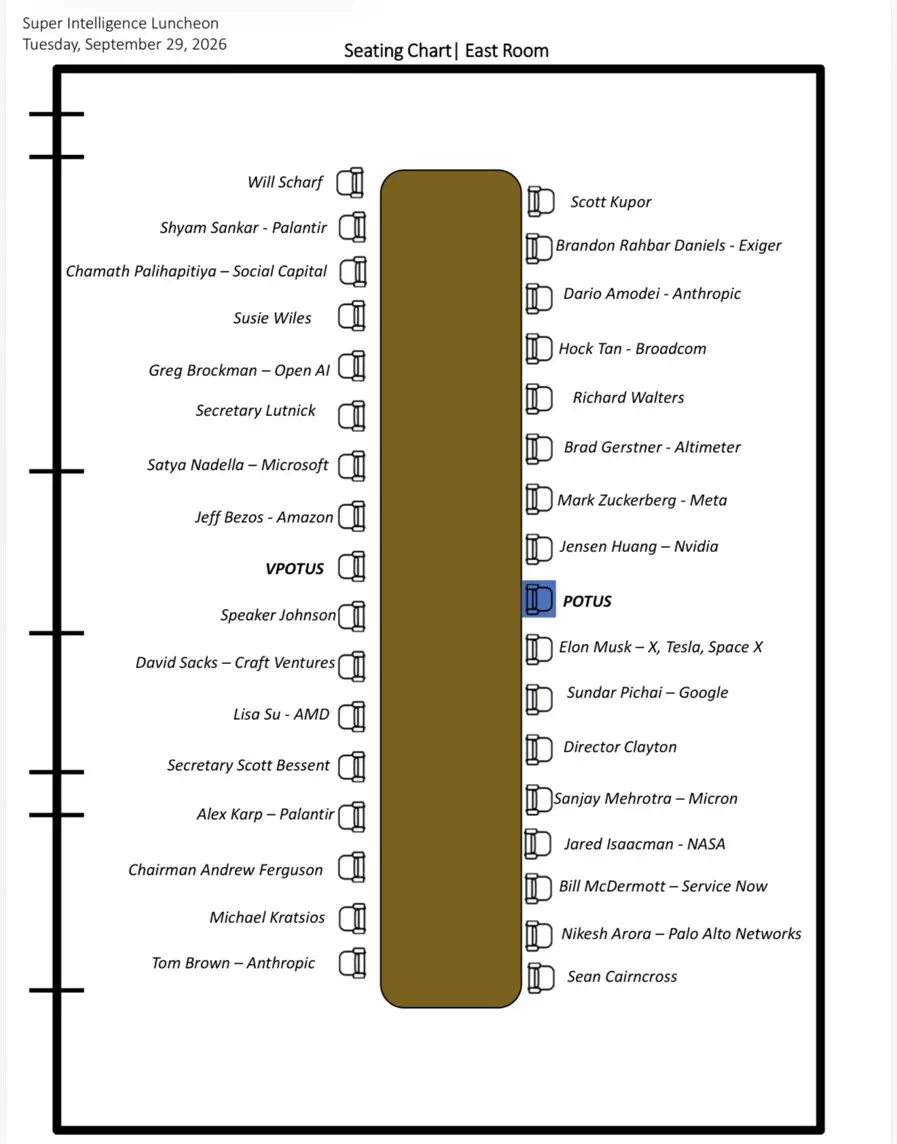
Not every one of these figures are involved with the tech sector, as House Speaker Mike Johnson, Commerce Secretary Howard Lutnik, and White House Chief of Staff Susie Wiles were among the government representatives seated, but most of the other names were made up of those with key stakes in the AI industry.
The closest four names to President Trump were Nvidia's Jensen Huang and Elon Musk to his left and right, and then Google's Sundar Pichai and Mark Zuckerberg of Meta one place removed.
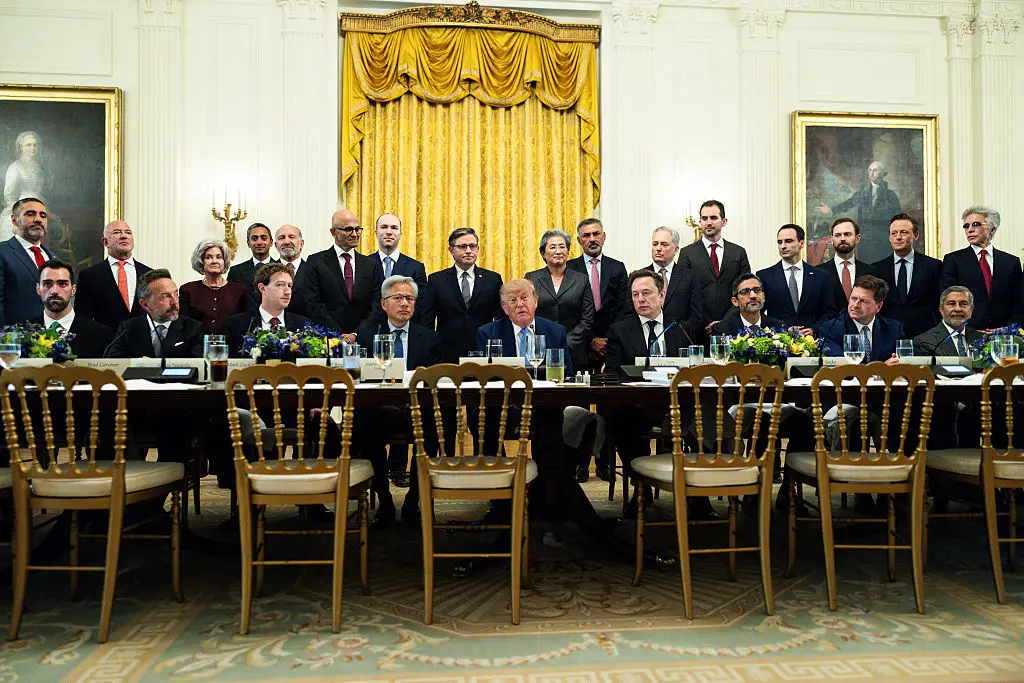
Jeff Bezos also earned himself a place to the left of Vance, with Microsoft's Satya Nadella sat to the Amazon co-founder's left.
It's therefore safe to assume that these individuals are at the top of the 'food chain' when it comes to tech and AI, and perhaps the only mild surprise is the proximity of Elon Musk considering the past clashes that he's had with the president.
Intriguingly, Anthropic CEO Dario Amodei is sat towards the top of the table – far away from Trump or Vance – and Greg Brockman, OpenAI CEO and the sole representative for ChatGPT, holds a similarly distant position.
Who are the winners and losers?
It would be easy enough to say that the clear 'winners' of this dinner are all of those in attendance, as they're clearly deemed important enough to be there in the first place at the apex of the AI conversation, but it's safe to assume that some will be happier with their placement than others.
As mentioned, those in the immediate proximity of both President Trump and Vice President Vance can be presumed to hold the greatest amount of power, and that's no surprise considering Musk's continued associated with government operations and the almost unchallenged dominance that Nvidia has right now.
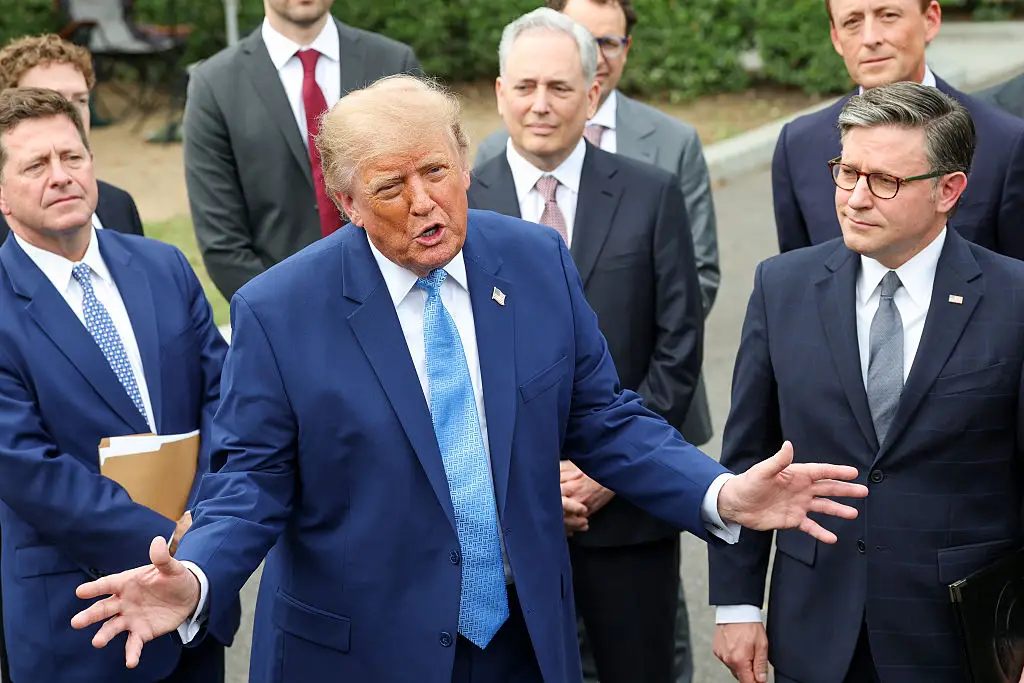
One thing to consider is that Huang notably stood by Trump in opposition to companies like Anthropic and OpenAI following their recent calls for slowed development, and that could perhaps explain the somewhat distant placement of representatives from those two companies.
Musk, however, also agreed with Amodei following his ominous essay, so it's unclear quite how much of an impact this could have had.
Notable absentees include OpenAI CEO Sam Altman – who was busy representing the company at DevDay – but perhaps most the most glaring omission was any representative from Apple.
Tim Cook – who has previously attended dinners with Trump and holds a more diplomatic-facing role as Apple's Executive Chairman now – was nowhere to be seen, and the same can be said for new CEO John Ternus, who took over from Cook this month.