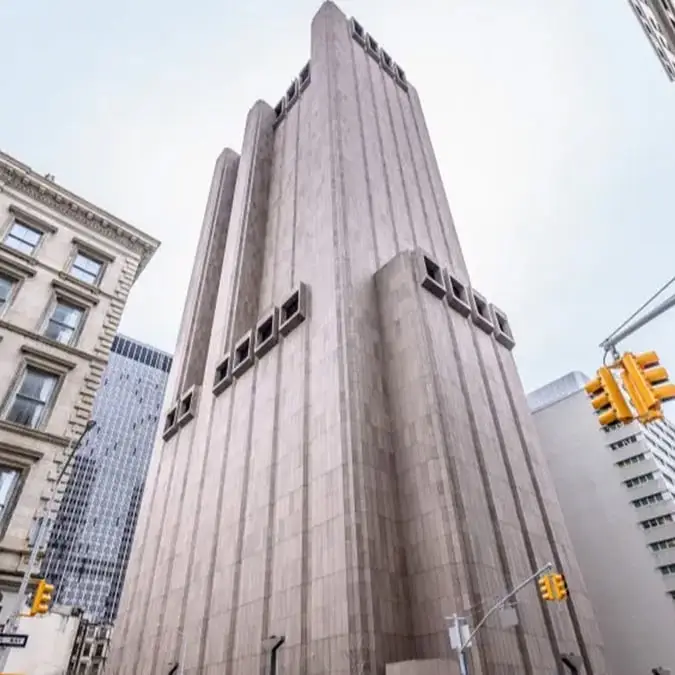
'Dark secret' behind eerie 29-storey windowless New York skyscraper


There is a ‘dark secret’ lurking behind an eerie 29-storey skyscraper in New York City that strangely doesn’t have any windows.
The enormous concrete block stands out due to the building not having windows, making it appear mysterious.
Many people walking past have wondered what could be going on inside the building but now all has been revealed.
It turns out that the official name for the skyscraper is the AT&T Long Lines building and it serves as a phone exchange or wire center.
Advert

This is because, in the days before the industry went digital, the phone lines needed to be physically connected to their destination on the other end.
In the days even further back, this required an operator to physically connect you but, by the time the building was being constructed in 1969, it had long since been done automatically.
That requires automatic infrastructure to do it and that equipment all had to go somewhere while technology marches on.
These days, the concrete building houses data and communications infrastructure with AT&T having moved out back in 1999.
However, the secretive nature of being windowless has sparked all manner of speculation over what really goes on inside.
A man who said he'd been inside the building told the Daily Mail he'd worked on the place, and while inside there had been certain rooms he'd been forbidden to enter as well as some parts of the building that were entirely off-limits.
He also claimed he once found confidential papers in the building detailing what to do in the event of a radiation attack.

The windowless skyscraper has 29 floors and three basement levels, and according to The Intercept it was built to survive an atomic blast and safeguard the communications technology housed within.
There have also been claims that 33 Thomas Street also has enough supplies to keep 1,500 people alive for two weeks in the event of a disaster, but the building's security is there to keep the machines going rather than shelter life.
A major communications hub like it would be a prime target in the event of a conflict so it makes sense for it to be sturdy enough to survive a massive attack.
It's since been suggested that the site could even be used as a National Security Agency (NSA) surveillance site, with the likes of non-profit organisation The Intercept claiming that there was enough evidence provided by several sources, such as NSA whistleblower Edward Snowden.
A former AT&T engineer even claimed that there is a 'major gateway switch' which connects calls from the US to the rest of the world but in reality, we'll probably never know.