How one surgeon in London operated on cancer patient 1,500 miles away


One surgeon in London performed a life-saving operation to remove a vital organ on a cancer patient from a whopping 1,500 miles away.
The patient in question was in an operating theatre in Gibraltar where the robot-assisted telesurgery was conducted.
This has made the London Clinic the first hospital in the UK to successfully perform this type of surgery.
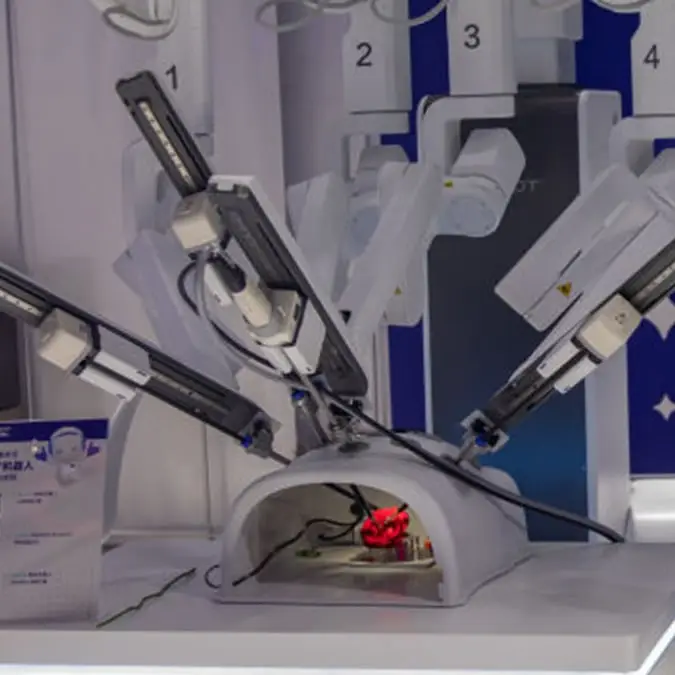
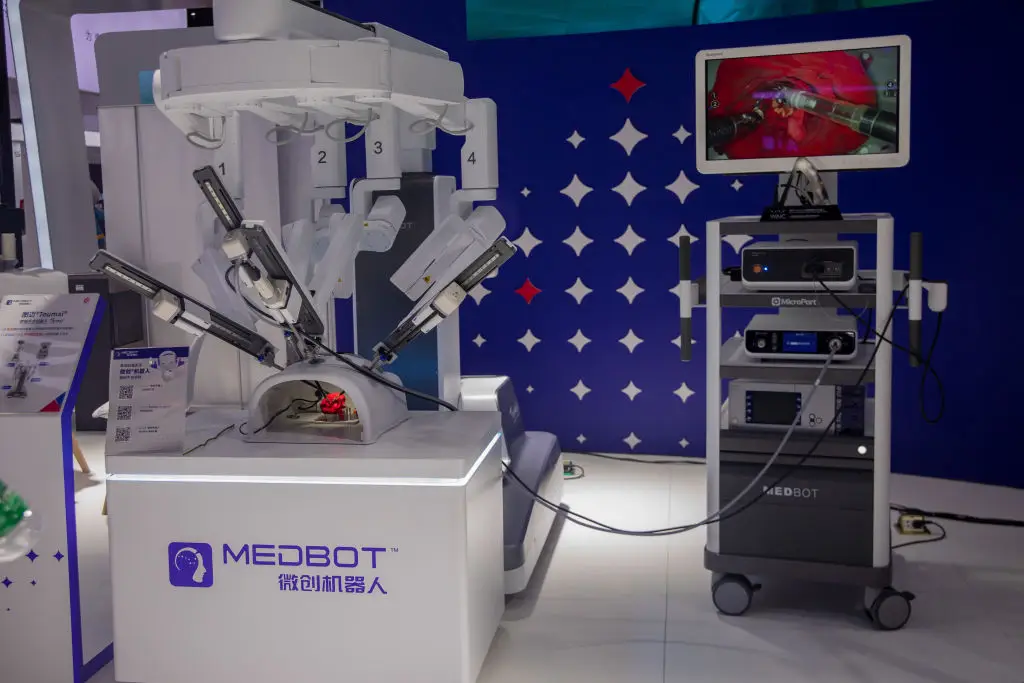
So, how does it work? The operation involved the Toumai Robotic Surgery System, which is an advanced, Chinese-developed, four-arm endoscopic system used for surgery.
Advert

Over in London, the surgeon, Professor Prokar Dasgupta, controlled the arms and the camera remotely from a console.
A team local in Gibraltar was also on standby just in case the connection from London dropped but the surgery was completed using the robotic system without any issues.
Modern medicine has certainly come a long way in the last couple hundred years, especially as one infamous surgery resulted in a whopping 300% mortality rate.
This was long before anesthesia was introduced to the world of medicine and surgeries would be painful and terrifying, so the focus was on the speed of procedures which is how Robert Liston became famous.
Renowned for his speedy operations, including his record-breaking 28-second leg amputation, Liston’s cases became famous.
However, one particular case is notorious for more morbid reasons, as these surgeries didn’t always go to plan.
In an effort to perform this amputation as quickly as possible, Liston removed the patient’s leg in under two and a half minutes.
But in his haste, the surgeon had also accidentally slashed the coat tails of a spectator.
The person was so terrified by what had happened, that he dropped dead from terror.
In the process, Liston had also accidentally sliced off three fingers of his surgical assistant.
Following the surgery, both the assistant and the patient came down with gangrene and both of them died a few days later.
This gave the operation a 300% mortality rate and is still the only surgery in the world with that rate.
This wasn’t the only surgery that went wrong for Liston as, in another case, he attended to a young boy who presented a pulsating tumor in his neck.
Liston diagnosed this as an abscess, although his house surgeon disagreed, claiming that it looked more like a carotid artery aneurysm.
Arguing over the matter, Liston said: “Whoever heard of an aneurysm in one so young?”
The man went on to quickly lance the lesion and was soon proven wrong when the boy almost immediately bled to death after haemorrhaging out from the damaged aneurysm.