Elon Musk loses legal battle to halt landmark state ban on AI ‘nudification’ apps


Elon Musk has been hit with a major blow has he loses a legal battle against the state of Minnesota, with the law banning the use of AI 'nudification' technology and apps now set to go ahead effective immediately.
Many were taken aback when Elon Musk decided to launch this lawsuit, as in essence it was the world's richest man using his might in favor of people's ability to use AI technology – which in this case likely involved his own tool, Grok – to generate nude or pornographic images of people, often without their consent.
Grok has already been involved in a similar controversy regarding this potential use as an update to the AI model allowed people to 'undress' people, with seemingly no limits or guardrails on the age of the targeted subject.
This led to images of children being presented in a sexual manner – including photos of Ashley St. Clair as a child, who is the mother of one of Musk's kids, without her consent – bringing potentially significant legal threats of its own.
Advert
While Musk's legal challenge was unsuccessful in the end, it shows that the short-term trillionaire believes the ability to generate sexual and pornographic content to be a core feature of AI tools going forward.
Minnesota's new 'nudification' ban explained
As reported by Fox 9 Minneapolis-St. Paul, the law proposed by the state of Minnesota prohibits the use of AI tools to generate pornographic content without the consent of any individual depicted in the images or videos created, with a prospective penalty of at least $500,000 for anyone caught doing so for either themselves or on behalf of someone else.
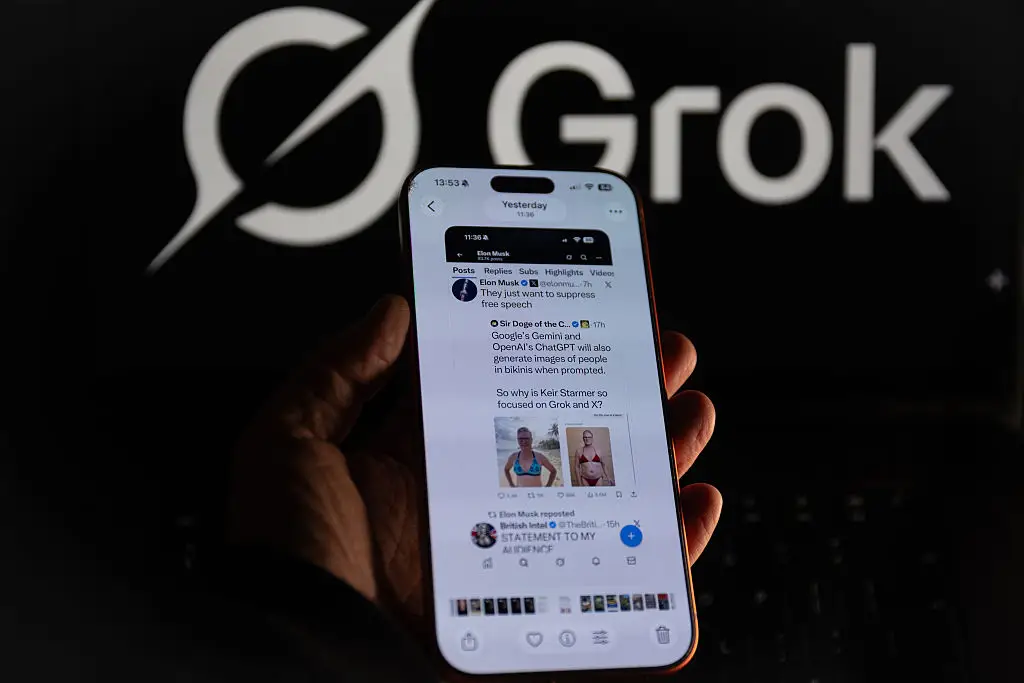
While Grok, and Musk by extension, is far from the only AI model to be impacted by the newly-implemented ban, the tech mogul's tool was arguably the biggest company to allow for content within this realm and therefore would be disproportionately impacted compared to its closest rivals.
For example, beyond the concerns surrounding the generation of sexually-explicit content involving minors – a feature which has since been 'patched' following the controversy and a call-out from Musk himself – Grok allows its users to discuss 'NSFW' topics with its various avatars, including ones that are more scantily dressed.
What was Musk's lawsuit trying to do?
Filed in the U.S. District Court of Minnesota, Elon Musk's lawsuit was attempting to place a temporary restraining order (TRO) on the state's new law, which sought to block its implementation and therefore continue to allow people to use 'nudification' services.
xAI argues within the lawsuit that the now-imposed law would enact an "overbroad, content-based ban on free speech and the tools of visual expression in a clumsy attempt to prohibit 'nudification'," arguing that its service already "strictly prohibits its users from generating nude or sexualized images of people without their consent."
One of the biggest reasons why Musk's lawsuit was swiftly shut down was the delay between the law's signing and the proposed TRO, which was roughly three months — something the judge took to indicate that the "harm is not immediate."
This is similar to the reason why Musk's legal claims against Sam Altman and OpenAI were shut down, as he is now dealt another major legal blow despite his influence, power, and overwhelming wealth.