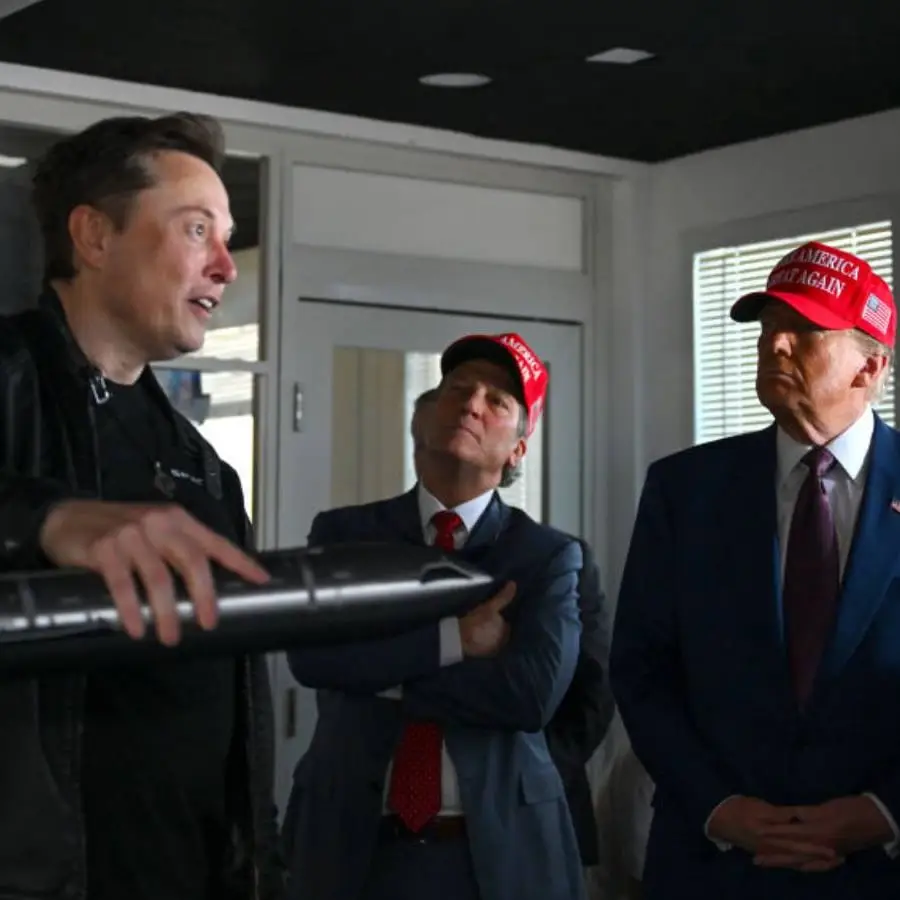
Elon Musk could be suffering 'AI psychosis' after experts issue warning over space data centers


For the world's richest, it looks like our future is written in the stars (quite literally). With Earth in danger of being ravaged by climate change and dwindling resources, some of the biggest companies around are upping their endeavors to conquer outer space.
We've already seen Elon Musk's Starlink launch over 10,000 satellites into orbit in an attempt to connect the world, although there are fears that things are already getting cramped up there amid concerns about Kessler syndrome.
The world's richest man is also reaching for the Moon and beyond with SpaceX, and while he's scaled back some of his plans to colonize Mars, he's also looking to the cosmos as a potential way to solve our current data center crisis.
What are Elon Musk and Jeff Bezos' orbital data center plans?
The colossal footprint of Meta's Hyperion campus in Louisiana is said to be around half the size of lower Manhattan, so building orbital data centers is one way around a mounting list of problems. There's also a theory that positioning these data centers in sun-synchronous orbits can provide these massive projects with unlimited energy without putting a strain on our power grid, although space being a thermodynamic prison throws up its own problems with cooling.
Advert
Speaking at the World Economic Forum ahead of SpaceX acquiring xAI in February 2026, Musk said it's a "no-brainer for building solar-powered AI data centers in space," adding that "the net effect is that the lowest cost place to put AI will be space and that will be true within two to three years, three at the latest."
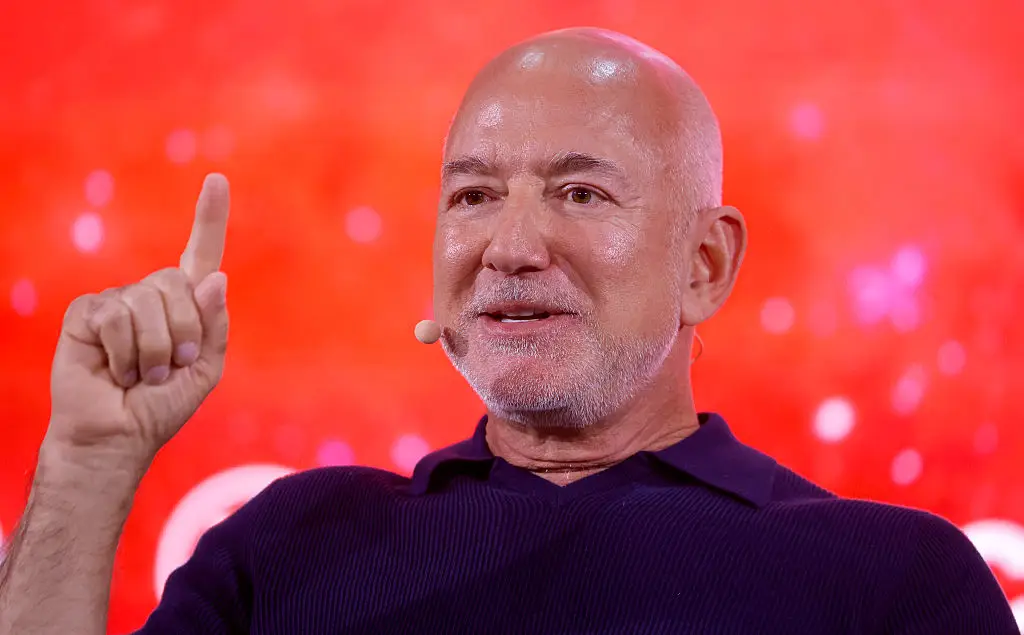
In March 2026, Jeff Bezos' Blue Origin submitted plans to the Federal Communications Commission, planning on sending 51,600 data center satellites into low Earth orbit as part of 'Project Sunrise'. Bezos also told CNBC that although a timeline of two to three years feels a little ambitious, data centers in space are a 'very realistic' outcome.
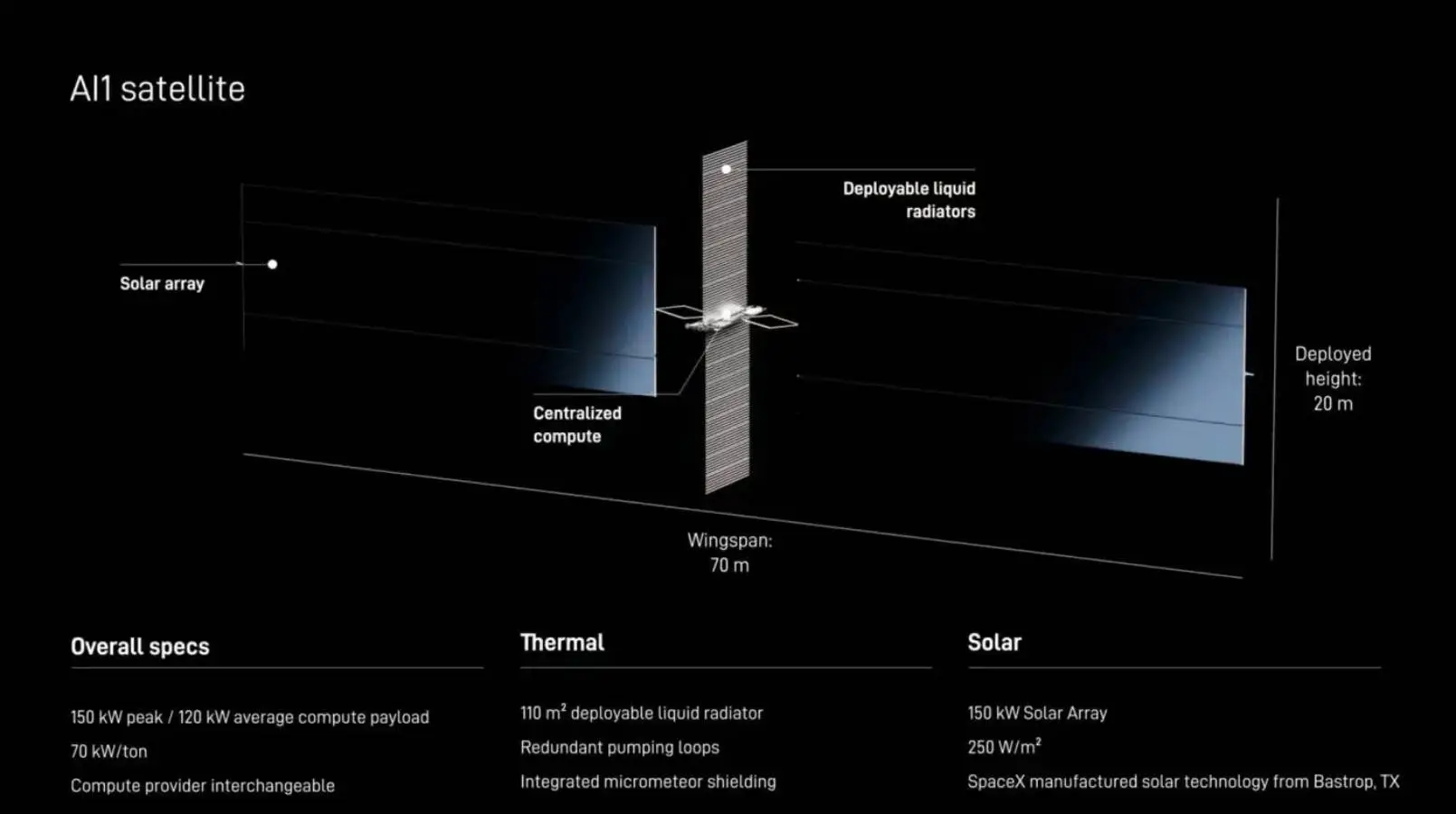
Musk backed up his own ambitious plans when he shared a closer look at the massive AI1 satellite in June 2026. As the largest satellite SpaceX would've launched to date, the AI data center is set to stand at 20 meters tall and have a 70-meter wingspan.
Musk and Bezos could be suffering from 'AI psychosis'
These grand plans are all well and good, but as reported by Futurism, there are plenty of skeptics. In a pretty brutal YouTube thumbnail, Real Engineering's Brian McManus claimed that people who believe the hype are suffering from 'AI psychosis'. The Irish aeronautical engineer discussed Starcloud, which is a company that managed to raise $170 million to develop a data center spacecraft.
Calling out the entire thesis, McManus complained: "It really seems like anyone with some renders and a white paper written by someone being gassed up by an overly agreeable AI can get VC funding these days.
“Billionaires will attempt to pull the rug over your eyes and convince you that this technology makes total sense, but reality is, this technology is dumb."
For Starcloud to reach its proposed capacity of five gigawatts of compute, its huge solar panels are set to cover an area that's nearly 5,000 times the surface area of the International Space Station’s own panels.
McManus goes on to argue: "Even ignoring the pumps, coolant, radiation shielding, fuel, inertia wheels, structures, and other stuff, Starcloud’s station exceeds 113 million kilograms."
As that's more than an aircraft carrier sitting in orbit, he reminds us it's more than six times the total mass launched into space.
We also have to contend with AI hallucinations from ionizing particles passing through satellites, there’s the fact that even the smallest bit of debris could punch a hole in the panels, and what about the fact that AI chips only last between two and four years down on Earth, let alone in the wild conditions of space?
Finally, sticking massive data centers in space would make them an easy target as warfare looks increasingly like it'll move to the stars.
Even though Musk and Bezos have deep pockets and plenty of backing, it feels like we're still some way off looking to the skies and being convinced that our data center woes are solved.