
AI makes 4-day workweek technically possible today but federal reality keeps it decades away


It has been nearly 90 years since the 40-hour workweek was established in the United States, yet calls to amend that benchmark amid the AI revolution could be blocked by federal governance.
When it comes to AI and employment it's the survivability of their jobs that most people are worried about, especially as countless experts have predicted that just a handful of roles will survive the improvements made in the next few years.
What could emerge as a blessing in relation to the capability of AI to do our work, however, is lessened workloads and subsequently reduced hourly schedules, breaking free from the hegemony set for nearly a century in America.
It certainly makes sense – to the point where prominent politicians like Bernie Sanders have tabled bills that reduce the working week – but don't expect the decision to be made lightly with potentially decades of waiting expected amid federal fightback.
How AI could lead to a reduced workweek
The Fair Labor Standards Act, established in 1938, mandates that workers are entitled to overtime pay once they pass the 40-hour threshold during a working week, making that number the standard for full-time employment in most cases ever since.
Advert
In the wake of massive AI productivity gains that could change, however, with Bernie Sanders and California Rep. Mark Takano proposing the 'Thirty-Two Hour Workweek Act' on two separate occasions, as per Fortune.

This, as the name suggests, would lower the overtime threshold for non-exempt employees to 32 hours from 40 hours, implicitly reducing the number of days employees are expected to work from five to four in turn.
"At a time when artificial intelligence and robotics will radically transform our economy, it is imperative that the financial gains from this new technology benefit working families, not just a handful of billionaires and corporate CEOs," Sanders proclaimed alongside the bill's announcement.
Why federal action could halt progress for this bill
Even if the bill was passed it would only reach the 32-hour weekly threshold after four years, with no requirement for that time to be split across a reduced period with the same daily hours.
On top of this, intense corporate lobbying and concerns from Congress regarding labor costs would likely amount a significant amount of pressure on the bill, making its passing a challenge that could take years, if not decades, to realize.
The difficulty in implementing reduced workweeks on a federal level lie in the expectation that salary isn't reduced despite the drop in hours, and it's believed that employers across the nation would contest this significantly.
There would also be pressure from businesses that would be impacted by the reduced working hours in a reflection of the push against remote working, with real estate, office development, and even something as simple as lunchtime food establishments all impacted by the change.
There is also the question of whether this should impact industries and sectors that currently don't benefit from the productivity gains of AI, with it disproportionately reducing the workload of while-collar employees.
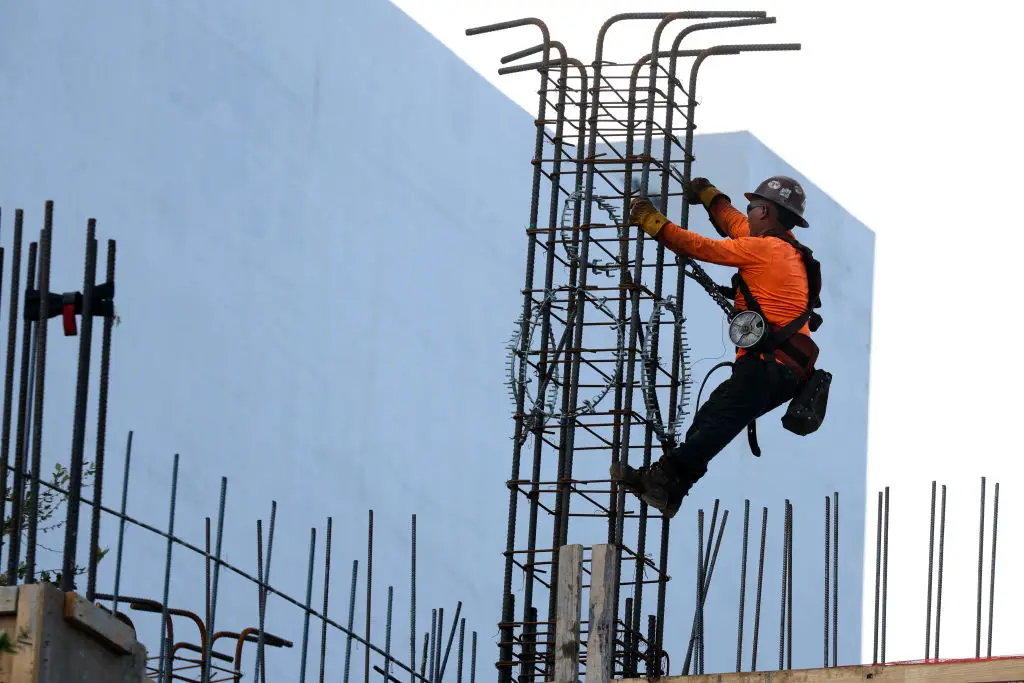
The argument would be that workers in the hospitality, construction, or healthcare sectors, for example, would see their hours reduced at a point at which AI cannot 'compensate' for the loss, making this a proposal that's understandably difficult for the American political spectrum to universally agree upon.