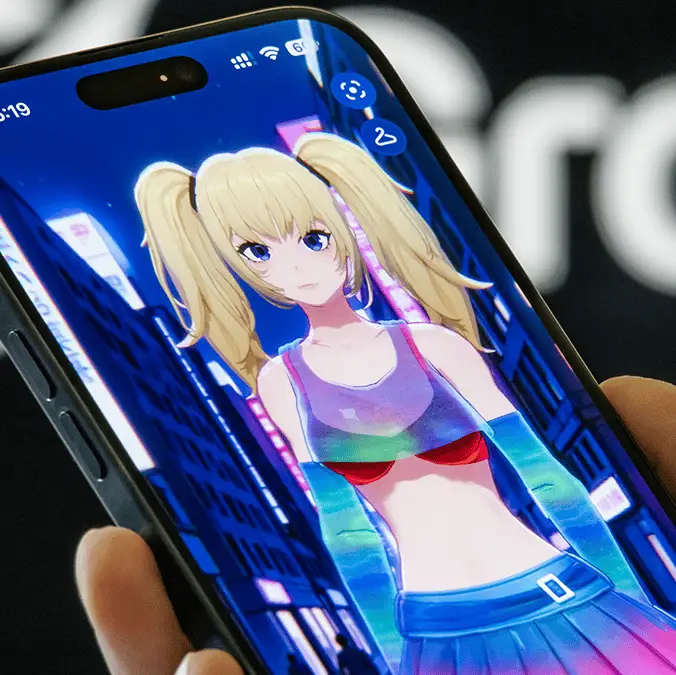
EU launches emergency ban on AI 'nudify' apps but experts say it's impossible to enforce

The European Union is set to come down on so-called 'nudify' apps that are able to remove the clothes of real people without their consent, but with new rules coming into play, there are fears that potential victims are going to have to jump through increasingly bigger hoops to get materials removed.
Starting from December 2, the EU will ban companies from developing apps that create sexual deepfakes with AI, typically used to create intimate content without getting a person's consent. It comes in the aftermath of photographs featuring Italian Prime Minister Giorgia Meloni in lingerie going viral online.
Although this didn't happen in real life, Meloni shared the images to highlight the issue. Posting on Facebook, the Italian PM wrote: "In recent days, several fake images of me have been circulating, generated using artificial intelligence and passed off as real by some overzealous opponents."
Despite joking that whoever created them improved her appearance, Meloni warned: "But the fact remains that, in order to attack and spread falsehoods, people are now willing to use absolutely anything.”
What is the EU's nudify app ban?

Advert
Many might've giggled about AI videos of President Donald Trump sucking Elon Musk's toes, and while not as sexualized as some of the content out there, it's a growing concern as AI becomes more realistic than ever.
With the EU voting on nudify apps, it falls under a larger Artificial Intelligence Act that hopes to limit the dangers of this ever-advancing tech. Although it's been dubbed a ban by lawmakers, Tech Policy Press says that many national authorities simply down have the legal powers to enforce it.
Although the agreement demands that companies install safeguards against nonconsensual sexual deepfakes before the end of 2026 or face being removed from the EU market, Sadia Berdaï, head of the AI Innovation and Technology Unit at Luxembourg’s Data Protection Authority, reiterated: "This is not a strict prohibition. It’s about the intended purpose, the way you use the systems, not the technology itself.”
Most alarmingly, 98% of AI porn videos currently online are said to be non-consensual, with 99% of it targeting women.
Ahead of the vote, Michael McNamara, a co-rapporteur of the AI Omnibus and a member of the European Parliament, said: "We're talking about systems designed to strip clothes from photographs of real people, not synthetically created people, but real people, overwhelmingly women and children, to humiliate them, degrade them, and objectify them. To do so at scale and industrialize that for profit."
Advocates warn against problems for victims
While limiting nudify apps is undoubtedly good news in terms of tackling the issue of nonconsensual AI pornography, there are still alarm bells over the fact the vote doesn't restrict all AI-created porn. Victims have to be identifiable under the General Data Protection Regulation (GDPR), meaning it's through the likes of someone's face, name, location, an online identifier or other distinguishing characteristics.
As a women's and digital rights advocate, Belén Luna Sanz, saw an immediate problem as she explained: "It creates a significantly higher threshold for protection of victims and enforcement at the level of product safety."
Others have also questioned what specific cultures deem as intimacy, with digital violence researcher Silvia Semenzin pointing to materials that might portray a Muslim woman without a hijab
She added that the burden of proof shouldn't be on victims: "The person creating or sharing the images should have to prove they had consent and not the other way around. Victims should not be forced to prove, after the image has been created and it's already circulating, that they did not authorize it."
Anyone who breaches the AI Act can face fines of €35 million or 7% of the previous financial year's worldwide turnover.
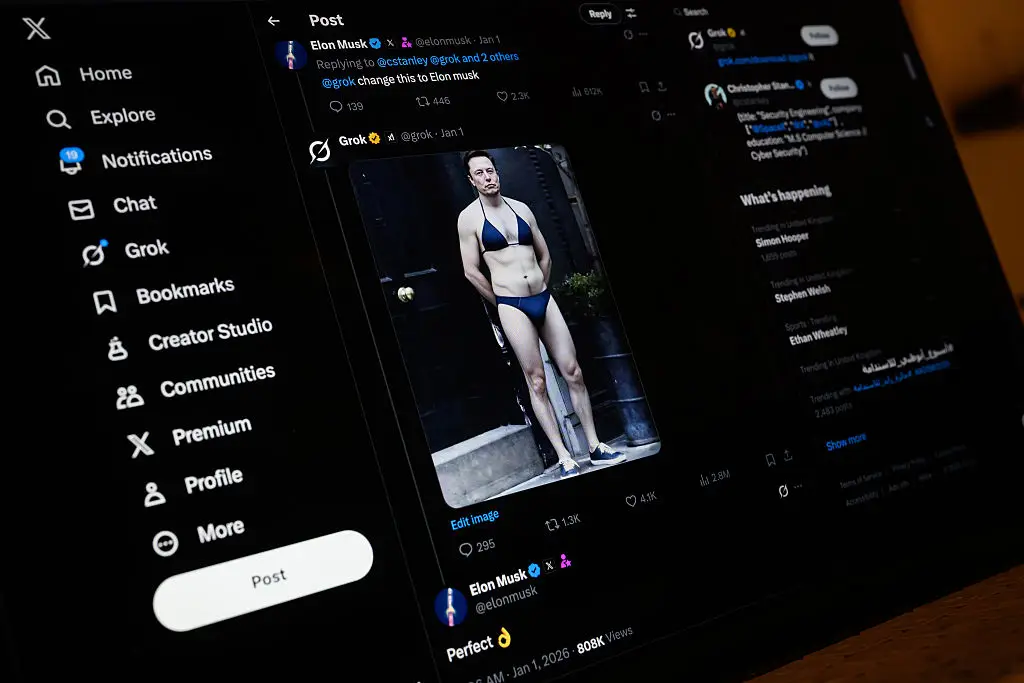
While it's pointed out that a lot of providers already have rules in place to stop this kind of AI nudification, others like Elon Musk's Grok are still able to take someone's clothes off.